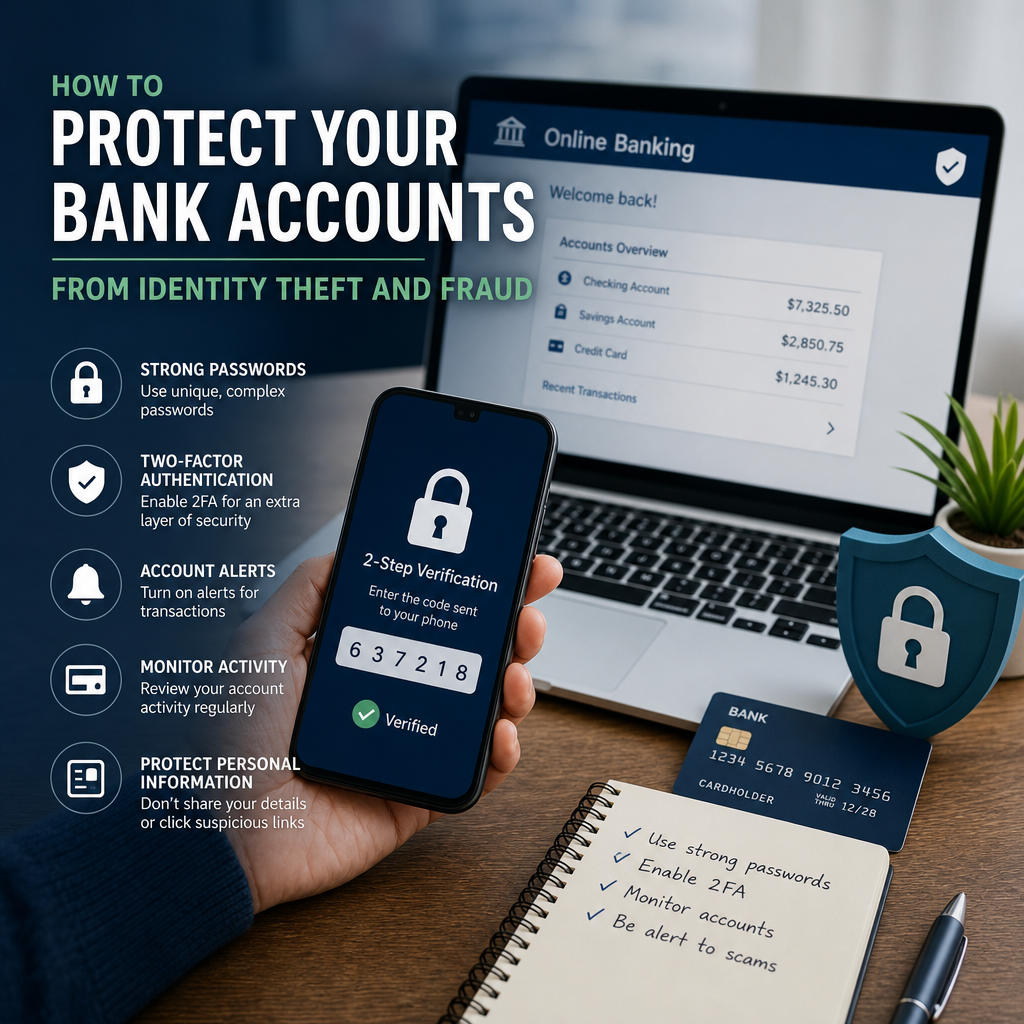
How to Protect Your Bank Accounts From Identity Theft and Fraud
Learn how to protect bank accounts from identity theft and fraud with simple habits that make a big difference, from spotting phishing scams to securing your login details. A few proactive steps can help you catch suspicious activity early and keep your money safe.
By: Mary Smith on July 25, 2026
Identity theft and banking fraud can happen faster than most people expect. A stolen password, a phishing email, or a compromised debit card number can lead to unauthorized withdrawals, new-account fraud, or a locked account that takes hours to fix. The good news is that you can reduce your risk significantly by using smart, consistent habits to protect your bank accounts from identity theft and fraud.
This guide breaks down practical steps you can take today, from securing online access to monitoring transactions and responding quickly if something looks wrong. Whether you bank primarily on your phone, at a local branch, or online, these strategies can help you stay a step ahead of criminals.
How Identity Theft and Bank Fraud Typically Start
Before you can protect your accounts, it helps to understand how criminals gain access in the first place. Many attacks rely on small mistakes or stolen information that seems harmless on its own.
Common ways bank account fraud begins
Phishing emails or texts that mimic your bank
Weak or reused passwords across multiple accounts
Data breaches that expose login credentials
Skimming devices placed on ATMs or gas pumps
Malware installed through unsafe downloads or links
Social engineering calls that trick you into sharing information
Stolen mail containing statements, checks, or personal details
Fraudsters often combine several pieces of information to impersonate you. For example, they may use your name, address, and the last four digits of your Social Security number to try to reset a password or open an account.
How to Protect Your Bank Accounts From Identity Theft and Fraud
The best protection comes from layering multiple defenses. No single tool is enough on its own, but strong habits can make your accounts much harder to attack.
1. Use strong, unique passwords for every financial account
A password should be long, unpredictable, and completely different from the ones you use elsewhere. If one password is stolen in a breach, a unique password prevents criminals from trying it on your bank login.
Good password habits
Use at least 12 characters when possible
Mix uppercase and lowercase letters, numbers, and symbols
Avoid names, birthdays, pet names, and common phrases
Never reuse bank passwords for email or shopping sites
Store passwords in a reputable password manager
Your email account matters here, too. If someone gains access to your email, they can often reset your banking password. Protect email with the same care you give your financial accounts.
2. Turn on multi-factor authentication
Multi-factor authentication, often called MFA or two-factor authentication, adds an extra step when you log in. Instead of relying on a password alone, your bank may ask for a code sent to your phone, a push notification, or a biometric scan.
Why MFA helps
Even if a criminal steals your password, they usually cannot log in without the second factor. That extra layer can stop many account takeover attempts.
Best practices for MFA
Enable it on your bank account and email account
Prefer app-based authentication or push approval when available
Be cautious with text-message codes if your bank offers a more secure option
Never share one-time codes with anyone who calls or messages you
A bank representative will not need your MFA code to “verify” you in a legitimate call.
3. Set up account alerts
Real-time alerts can help you catch fraud early. Most banks allow you to receive notifications by text, email, or app whenever certain events happen.
Alerts worth enabling
Logins from a new device
Password changes
Large withdrawals or transfers
Debit card purchases
ATM withdrawals
Changes to contact information
Zelle, ACH, or wire transfers
Alerts help you act quickly. If you notice a transaction you did not make, you can contact your bank immediately and limit the damage.
4. Review statements and transactions regularly
Many people only look at their bank statements once a month, but frequent review can make a big difference. Small unauthorized charges may go unnoticed if they are hidden among routine purchases.
What to check
Small “test” charges you do not recognize
Transactions in unfamiliar locations
Multiple withdrawals in a short period
Transfers to accounts you do not know
Changes to your contact or mailing information
A quick weekly review of your bank app can help you catch fraud before it grows. If you spot something suspicious, report it right away.
5. Protect your debit card and ATM use
Debit cards are convenient, but they can also expose your checking account directly. If someone uses your debit card fraudulently, the money comes from your bank account, not a credit line.
Safe debit card habits
Use ATMs in well-lit, secure locations
Inspect card readers for loose parts or strange attachments
Cover the keypad when entering your PIN
Avoid using debit cards on unfamiliar websites
Consider using credit instead of debit for online purchases when appropriate
Freeze or lock your card in your banking app when not in use
If your bank offers virtual card numbers or card controls, use them for added protection. These features can reduce exposure during online shopping.
6. Be careful with checks and mailed documents
Even in a digital world, paper documents still matter. A stolen check can reveal your account number, routing number, and signature. Bank statements can provide enough information to help fraudsters target you.
Paper security tips
Store checkbooks in a secure location
Use a permanent pen to prevent alteration when writing checks
Shred bank statements and old checks before discarding them
Pick up mail promptly
Consider a locked mailbox or P.O. box if mail theft is a concern
If you rarely use paper checks, ask your bank about digital alternatives such as bill pay or electronic transfers.
7. Secure your phone, email, and computer
Your banking security depends heavily on the devices you use to access it. A compromised phone or email account can lead directly to account takeover.
Device protection basics
Keep your operating system and apps updated
Use a screen lock, PIN, or biometric authentication
Avoid public Wi-Fi when logging into financial accounts
Install reputable antivirus or mobile security software if needed
Do not download unfamiliar files or apps
Log out of banking sessions on shared devices
If you lose your phone, contact your mobile carrier and your bank quickly. A lost phone can expose both your messages and your financial apps.
8. Watch out for phishing, smishing, and vishing
Fraudsters often pretend to be your bank to pressure you into revealing sensitive information. The message may look urgent: suspicious charge, account locked, immediate verification required.
Red flags to watch for
Messages that create panic or urgency
Links that do not match your bank’s official website
Requests for passwords, PINs, or security codes
Poor spelling, strange formatting, or generic greetings
Caller ID that looks legitimate but is spoofed
A real bank will not ask you to confirm your password by text or email. If you receive a suspicious message, do not click the link. Instead, go directly to your bank’s official app or website, or call the number on the back of your card.
9. Monitor your credit and personal information
Bank fraud often connects to broader identity theft. Criminals may try to open new credit accounts, change your address, or use your identity to access financial products.
Helpful monitoring steps
Review your credit reports regularly
Watch for unfamiliar accounts or inquiries
Check that your address and phone number are correct
Consider a fraud alert or credit freeze if your information is exposed
A credit freeze can make it harder for someone to open new accounts in your name. It does not stop all fraud, but it adds a valuable layer of protection.
10. Keep your banking details private
The more people who know your financial details, the easier it is for scammers to misuse them. Some identity theft cases begin with overly shared information on social media or in casual conversations.
Information to guard carefully
Full account numbers
Routing numbers
Login credentials
MFA codes
Social Security number
PINs and security answers
Do not post photos of checks, bank cards, or account screenshots. Even partial details can help criminals piece together a larger fraud attempt.
What to Do If You Suspect Fraud
Fast action matters. If you think someone accessed your account or made an unauthorized transaction, respond immediately.
Steps to take right away
Contact your bank’s fraud department
Use the number on your card or the bank’s official website.
Ask them to freeze or close the affected account if needed.
Change your passwords
Update your bank password and email password first.
Use new, unique credentials.
Review recent activity
Look for transfers, card purchases, payee changes, and login attempts.
Dispute unauthorized transactions
Ask your bank about the dispute process and deadlines.
Place a fraud alert or credit freeze
Do this if your personal information may have been compromised.
File an identity theft report if appropriate
This can help document the issue for banks, creditors, and law enforcement.
Document everything
Save emails, texts, screenshots, dates, and names of bank representatives.
The sooner you report fraud, the better your chances of limiting losses and correcting the account activity.
Extra Protection for High-Risk Situations
Some people face a higher risk of identity theft, including older adults, frequent online shoppers, remote workers, and anyone who has recently had personal data exposed in a breach. If that sounds like you, consider adding more safeguards.
Additional security measures
Use separate email addresses for banking and shopping
Keep savings accounts disconnected from everyday payment activity when possible
Set withdrawal and transfer limits
Ask your bank about account access restrictions
Use secure document storage for tax records and statements
Review beneficiary and contact information periodically
These steps do not eliminate risk, but they can make it harder for criminals to move money or alter account settings.
Building Habits That Make Fraud Less Likely
The strongest defense is consistency. Most people do not need complicated tools to stay safe; they need habits that are easy to repeat.
A simple monthly routine
Check bank statements and recent app activity
Confirm your contact information is correct
Review saved devices and login sessions
Update passwords if any account has been compromised
Test account alerts to make sure they are working
Shred any outdated financial paperwork
If you build these steps into a regular routine, protecting your bank accounts becomes much easier and less stressful.
Frequently Asked Questions
How can I tell if my bank account has been compromised?
Warning signs may include unfamiliar transactions, password change emails you did not request, login alerts from unknown devices, missing funds, or changes to your contact information. If anything looks unusual, contact your bank immediately and review all recent activity.
Is a debit card more dangerous than a credit card?
Debit cards can be more risky in some situations because fraudulent charges come directly from your checking account. Credit cards often offer stronger fraud protections and do not give thieves direct access to your cash. Still, both card types should be protected carefully.
Should I use my bank app on public Wi-Fi?
It is safer to avoid logging into financial accounts on public Wi-Fi. If you must access your bank, use a trusted mobile network or a secure personal hotspot. Public networks can make it easier for attackers to intercept data or trick you into unsafe connections.
What should I do if I accidentally gave a scammer my bank details?
Contact your bank right away. Change your passwords, review account activity, and ask whether your card or account should be frozen. If you also shared personal information like your Social Security number, consider a credit freeze and monitor your credit reports closely.
Can a credit freeze help protect my bank accounts?
A credit freeze does not stop someone from using an existing bank account, but it can help prevent new accounts from being opened in your name. It is a useful tool if your personal information has been exposed or if you want stronger identity theft protection overall.
Learning how to protect your bank accounts from identity theft and fraud is one of the smartest financial habits you can build. Criminals often rely on speed, distraction, and small security gaps, which means everyday choices make a real difference. Strong passwords, multi-factor authentication, account alerts, secure devices, and regular statement reviews all work together to reduce risk. Just as important, knowing how to respond quickly can help limit losses if fraud does occur.
You do not need to make your banking life complicated to stay safer. Start with the basics: secure your login credentials, turn on alerts, watch for suspicious messages, and review account activity often. Then add extra layers like card controls, a credit freeze, and careful document handling if your situation calls for it. The more deliberate your habits become, the harder it is for identity thieves and fraudsters to succeed. Take a few minutes today to strengthen your defenses, and you will be better prepared for whatever comes next.
Mary S, CFP®, is a Certified Financial Planner with over 12 years of experience in personal finance, retirement planning, and wealth management. She writes educational content that helps readers understand financial concepts and make informed decisions based on reliable information.