Checking vs. Savings Accounts: Differences, Fees, and Best Uses
Wondering which account is right for your money? A checking vs savings account comparison shows that checking is best for everyday spending, while savings helps you keep cash सुरक्षित, grow it with interest, and reach your goals faster.
By: Mary Smith on July 25, 2026
Choosing between a checking vs. savings account is one of the first money decisions many people make, but it’s also one of the most important. These two account types may look similar at a glance, yet they serve very different purposes. One is built for everyday spending and bill paying. The other is designed to help you store money safely while earning some interest.
If you understand how a checking account and a savings account work, it becomes much easier to manage cash flow, avoid unnecessary fees, and build better financial habits. In this guide, we’ll break down the differences, common fees, best uses, and smart ways to use both accounts together.
What Is a Checking Account?
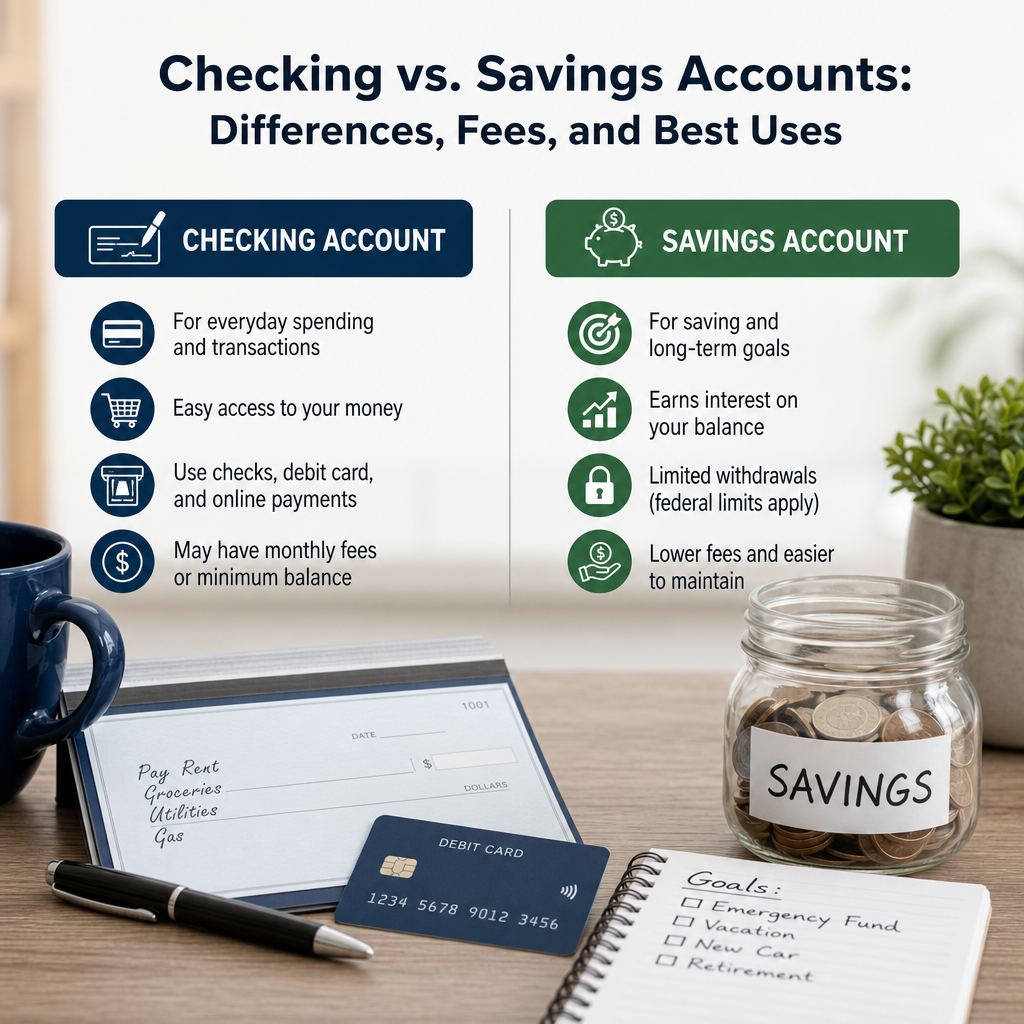
A checking account is a deposit account made for frequent transactions. It gives you easy access to your money so you can pay bills, make purchases, withdraw cash, and transfer funds.
Most checking accounts come with features like:
A debit card
Online and mobile banking
Direct deposit
Bill pay tools
ATM access
Check-writing capability
Checking accounts are ideal for money you need to use regularly. Think of rent, groceries, gas, subscriptions, and everyday spending. Because they are built for convenience, they usually pay little or no interest.
Best uses for a checking account
A checking account works best when you need quick access to cash. Common examples include:
Paying monthly bills
Receiving your paycheck
Using a debit card for purchases
Managing a household spending budget
Keeping funds available for emergencies you may need right away
What Is a Savings Account?
A savings account is designed to hold money you do not plan to spend right away. The goal is to keep funds safe while earning interest over time.
Savings accounts are often used for:
Emergency funds
Vacation savings
Holiday spending
Car repairs
Down payments
Short-term financial goals
Because the money is meant to stay put, savings accounts usually offer limited transactions compared with checking accounts. Many banks and credit unions also provide tools to help you set aside money automatically.
Best uses for a savings account
A savings account is a strong choice for money you want to protect from impulse spending. For example:
Building a $1,000 starter emergency fund
Saving up for a new laptop
Setting aside money for school expenses
Creating a sinking fund for annual costs like insurance premiums or car registration
Checking vs. Savings Account: The Main Differences
Understanding the checking vs. savings account comparison comes down to a few core differences: accessibility, interest, transaction limits, and fee structures.
1. Access to your money
Checking accounts offer the fastest access. You can spend from them daily without much restriction. Savings accounts are still accessible, but they are meant for less frequent withdrawals and transfers.
2. Interest earnings
Savings accounts usually pay interest, though rates vary by financial institution and market conditions. Checking accounts typically pay little or no interest unless you have a special rewards or interest-bearing account.
3. Transaction limits
Savings accounts may limit certain withdrawals and transfers. Checking accounts are built for frequent use and generally allow unlimited spending and payments.
4. Purpose
Checking is for spending and cash flow. Savings is for storing and growing money gradually.
5. Overdraft risk
Checking accounts can be overdrawn if you spend more than you have available. Savings accounts are less likely to be used that way, especially if they are kept separate from daily spending.
Common Fees to Watch For
Fees can quietly eat into your balance if you do not know what to look for. Whether you choose a checking account or savings account, it helps to read the account terms carefully.
Fees on Checking Accounts
Checking accounts may include several common fees:
Monthly maintenance fees
Some banks charge a monthly fee just for keeping the account open. You may be able to avoid it by:
Keeping a minimum balance
Setting up direct deposit
Using electronic statements
Linking accounts at the same institution
Overdraft fees
If your transaction exceeds your available balance, the bank may cover it and charge you an overdraft fee. This can happen with debit card purchases, checks, ACH payments, or automatic withdrawals.
ATM fees
Using an out-of-network ATM can trigger fees from both your bank and the ATM owner.
Paper statement fees
Some institutions charge a fee if you request mailed paper statements instead of electronic ones.
Stop payment fees
If you ask the bank to stop a check or scheduled payment, you may be charged a service fee.
Fees on Savings Accounts
Savings accounts can also carry fees, though they may differ from checking fees.
Monthly maintenance fees
Just like checking, some savings accounts charge a monthly fee unless you meet certain requirements.
Excess transaction fees
Certain savings accounts limit withdrawals or transfers. If you exceed those limits, a fee may apply. Rules can vary by bank, so always check the account agreement.
Minimum balance fees
Some savings accounts require a minimum balance to avoid fees or to earn the highest interest rate.
Transfer fees
Less common, but some institutions charge for moving money in certain ways, especially if you use expedited transfers or external transfer services.
How to Avoid Unnecessary Banking Fees
You do not need to accept fees as a normal part of banking. A little planning can make a big difference.
Practical ways to reduce fees
Choose accounts with no monthly maintenance fee
Enroll in direct deposit
Keep a cushion in your checking account
Link checking and savings for overdraft protection
Use in-network ATMs
Set up low-balance alerts
Review account disclosures before opening an account
Example: A simple fee-avoidance strategy
Suppose you keep one checking account for daily expenses and one savings account for emergencies. You can set up automatic transfers each payday so money moves into savings before you spend it. This reduces the risk of overdrafts and helps you avoid keeping too much cash sitting in checking, where it may be easier to spend.
When a Checking Account Makes the Most Sense
A checking account is usually the right choice for money you need to access quickly and often.
Use checking for:
Groceries and household spending
Rent or mortgage payments
Utility bills
Transportation costs
Online purchases
Payroll deposits
Checking accounts are also useful if you want to track spending more closely through a debit card or budgeting app. Many people use checking as the “spending hub” for monthly cash flow.
When a Savings Account Makes the Most Sense
A savings account is better for money you want to preserve for future use.
Use savings for:
Emergency reserves
Travel savings
Holiday gifts
Car maintenance
Home repairs
Short-term goals
Savings accounts are especially helpful when you want to separate spending money from goal-based money. That separation can reduce impulse spending and make progress easier to see.
Why Most People Need Both
For many households, the smartest answer in the checking vs. savings account debate is not choosing one over the other. It is using both together.
A common two-account setup
A simple setup may look like this:
Checking account: Receive income and pay bills
Savings account: Store emergency funds and goal-based savings
This system creates structure. Checking handles the flow of money in and out. Savings protects money you do not want to touch.
Real-life example
Imagine you get paid every two weeks. Your paycheck deposits into checking. You automatically move part of it into savings for emergencies and a vacation. The rest stays in checking for rent, food, gas, and everyday spending. This setup helps you stay organized without constantly moving money around manually.
How to Choose the Right Account for Your Needs
If you are opening an account for the first time or switching banks, think about how you actually use money.
Ask these questions:
How often will I need this money?
Do I want to earn interest?
Am I trying to build savings habits?
Will I use ATMs often?
Do I want to avoid fees as much as possible?
Do I need online banking and mobile deposit?
Features to compare
Before opening any account, compare:
Monthly fees
Minimum balance requirements
ATM network size
Interest rate or APY
Mobile app quality
Overdraft policies
Customer service options
A good account should fit your habits, not force you into awkward workarounds.
Tips for Using Checking and Savings Together
A well-planned system can make money management feel much easier.
1. Automate savings
Schedule automatic transfers from checking to savings each payday. Even small amounts add up over time.
2. Keep checking lean
Avoid leaving too much money in checking if you tend to spend it quickly. Keep enough for bills and a small buffer, then move the rest to savings.
3. Use savings for goals, not everyday spending
If you dip into savings for regular purchases, it becomes harder to build financial stability.
4. Review accounts regularly
Check for fees, balance changes, and unnecessary subscriptions. A monthly review can help you catch problems early.
5. Align account structure with your budget
If you use a zero-based budget, envelope method, or pay-yourself-first plan, your checking and savings accounts can support that strategy well.
Special Considerations for Students, Families, and Freelancers
Different situations call for different account setups.
Students
Students may want a checking account with no monthly fee, a strong mobile app, and easy ATM access. A savings account can still help build good habits, even if the balance starts small.
Families
Families often benefit from keeping household spending in checking while saving for larger goals in a separate savings account. This can make it easier to track emergency money, vacation funds, or school-related expenses.
Freelancers and self-employed workers
Freelancers may use checking for business cash flow and savings for taxes, irregular income, and future expenses. Some people even maintain separate accounts for personal and business finances to stay organized.
Frequently Asked Questions
What is the biggest difference between a checking and a savings account?
The biggest difference is purpose. A checking account is made for daily spending and bill payments, while a savings account is meant for storing money you do not need right away. Checking offers easier access, and savings is designed to help you hold funds longer and often earn interest.
Can I use a savings account like a checking account?
You can, but it is usually not a good idea. Savings accounts may have transaction limits, and frequent withdrawals can trigger fees or reduce the benefit of saving. If you need regular access to money, a checking account is the better fit.
Do checking accounts earn interest?
Some do, but many do not. Interest-bearing checking accounts are available, though they may have special requirements such as direct deposit, debit card usage, or minimum balances. Compare the interest rate and fee structure before choosing one.
Which account is better for an emergency fund?
A savings account is usually better for an emergency fund because it keeps the money separate from everyday spending while remaining accessible when needed. In some cases, people keep a small emergency cushion in checking for immediate needs and the rest in savings.
How can I avoid banking fees?
To avoid banking fees, look for no-fee accounts, maintain required balances, use direct deposit, and stay within transaction limits. Also, use in-network ATMs and enable alerts so you can catch low balances before overdrafts happen.
Understanding the difference between a checking vs. savings account can make everyday money management much easier. Checking accounts are best for frequent transactions, bill payments, and spending you need to access quickly. Savings accounts are better for protecting money, building an emergency fund, and working toward future goals. When used together, they create a simple but powerful structure for organizing your finances.
The key is not just choosing an account type, but choosing the right role for each one in your financial life. Pay attention to fees, minimum balances, transfer limits, and interest rates so your money works harder for you instead of quietly slipping away in unnecessary charges. If you are just getting started, a basic two-account setup can be a strong foundation. If you already have accounts, reviewing how you use them may reveal easy ways to save more and spend with greater confidence.
Take the time to compare your options, automate good habits, and make your accounts support your goals—not complicate them.
Mary S, CFP®, is a Certified Financial Planner with over 12 years of experience in personal finance, retirement planning, and wealth management. She writes educational content that helps readers understand financial concepts and make informed decisions based on reliable information.