Emergency Funds: How Much to Save and Where to Keep It
An emergency fund can be the difference between a temporary setback and a financial crisis, giving you a safety net when life throws you an unexpected expense. Learn how much to save and the safest places to keep it so your money is ready when you need it most.
By: Mary Smith on July 25, 2026
Life has a way of surprising us at the worst possible moment. A car repair, a medical bill, a sudden job loss, or a broken appliance can throw even a well-planned budget off track. That’s why an emergency fund is one of the most important parts of personal finance. It gives you a financial cushion when the unexpected happens, helping you avoid credit card debt, protect long-term savings, and stay calm under pressure.
But a common question remains: How much should you save in an emergency fund, and where should you keep the money? The answer depends on your income, expenses, job stability, and risk tolerance. In this guide, you’ll learn how to build an emergency fund that fits your life, where to store it safely, and how to use it wisely.
What Is an Emergency Fund?
An emergency fund is money set aside specifically for unplanned expenses or financial disruptions. It is not for vacations, holiday shopping, or planned home upgrades. Instead, it exists to cover true emergencies and keep you from borrowing money when life gets expensive.
Common emergency fund uses include:
Medical bills not covered by insurance
Car repairs after an accident or breakdown
Urgent home repairs, like a leaking roof
Temporary loss of income
Emergency travel for family matters
A strong emergency fund creates breathing room. It helps you make decisions based on what’s best, not on what you can afford in the moment.
How Much Should You Save in an Emergency Fund?
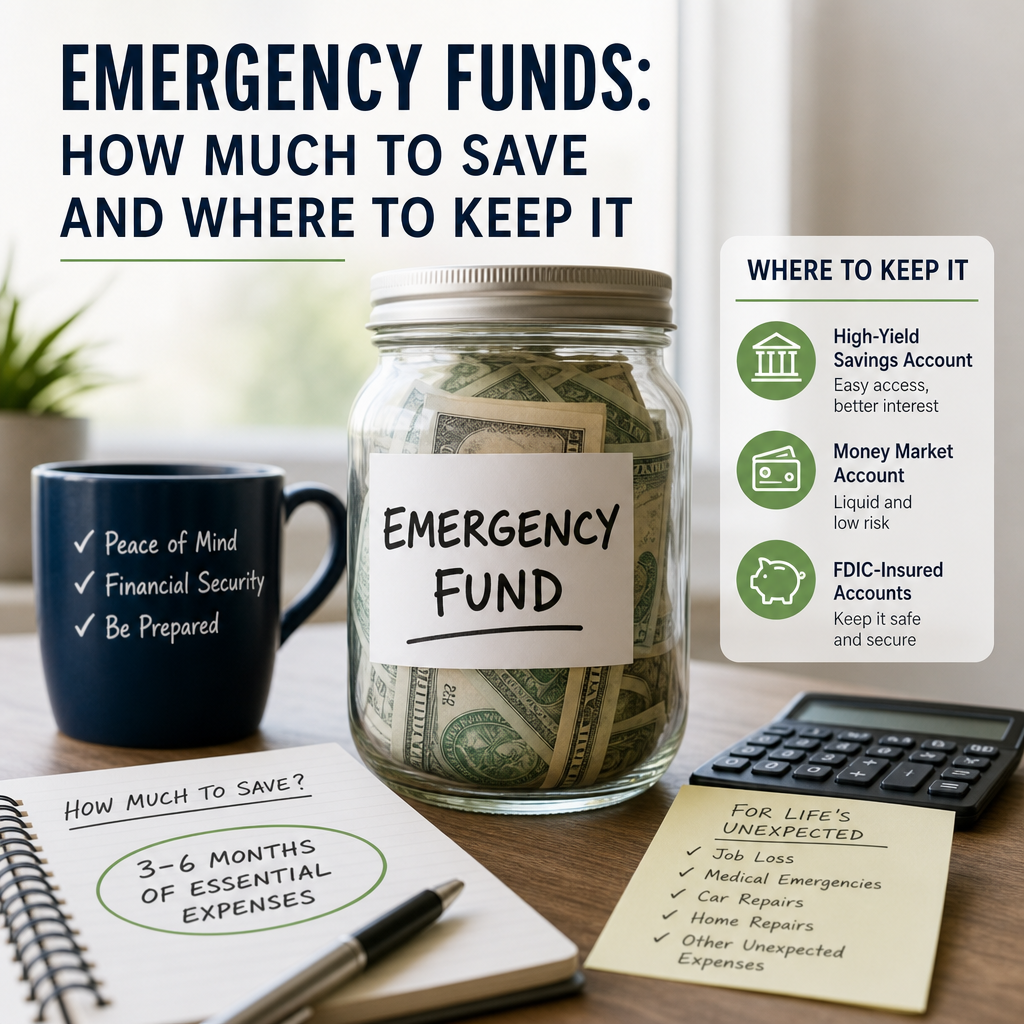
There is no single number that works for everyone. The right emergency fund amount depends on your personal situation, but a widely used rule of thumb is to save three to six months of essential living expenses.
That means focusing on what you truly need to cover each month, such as:
Rent or mortgage
Utilities
Groceries
Transportation
Insurance premiums
Minimum debt payments
Childcare or other essential costs
Start With a Smaller Goal if Needed
If saving several months of expenses feels overwhelming, begin with a starter emergency fund of $500 to $1,000. That smaller cushion can handle many common surprises and gives you momentum.
This approach is especially helpful if you are:
Living paycheck to paycheck
Paying off high-interest debt
Starting a new job
Recovering from a financial setback
Once your starter fund is in place, continue building toward a larger target.
When Three Months Is Enough
A three-month emergency fund may be sufficient if you have:
A stable job
Two-income household support
Low monthly expenses
Strong job prospects in your field
This level can also work well for people with dependable health coverage and minimal financial obligations.
When You May Want Six Months or More
A larger emergency fund is often a better choice if you:
Are self-employed or freelance
Work in a volatile industry
Have dependents
Own a home with likely repair costs
Have a single income supporting the household
Would face difficulty finding new work quickly
In these cases, a six-month reserve provides extra protection and can prevent a temporary disruption from becoming a long-term crisis.
How to Calculate Your Emergency Fund Target
Before you decide how much to save, figure out your essential monthly expenses. This gives you a more accurate target than using income alone.
Step 1: Add Up Essentials
List only the costs you would need to cover during a financial emergency:
Housing
Utilities
Food
Transportation
Insurance
Minimum debt payments
Basic childcare or dependent care
Necessary prescriptions or healthcare costs
Step 2: Multiply by the Number of Months You Want
If your essential expenses total $3,000 per month, then:
3 months = $9,000
6 months = $18,000
That range gives you a practical target based on your lifestyle and risk level.
Step 3: Adjust for Your Situation
Ask yourself:
How stable is my income?
How quickly could I get another job if needed?
Do I have a partner’s income to rely on?
Would a surprise expense create debt immediately?
Your answers can help you decide whether to aim for the low end or high end of the range.
Where to Keep Emergency Fund Money
Once you’ve set a goal, the next question is just as important: Where should you keep the money? The best emergency fund account is safe, accessible, and separate from everyday spending.
Best Place: High-Yield Savings Account
For most people, a high-yield savings account is the best place to keep emergency fund money. It offers:
Easy access
Separate storage from checking accounts
Usually better interest rates than traditional savings accounts
Low risk compared with investments
The goal is not to chase returns. The goal is to keep your money available when you need it, while earning a little interest along the way.
Other Good Options
Depending on your situation, you may also consider:
Traditional savings account: Fine for immediate access, though the interest may be low
Money market account: Often provides check-writing or debit access with competitive rates
Cash management account: Some financial institutions offer flexible accounts with savings-like features
The key is liquidity. You should be able to reach the money quickly without penalties.
Where Not to Keep an Emergency Fund
Some places are too risky or too inconvenient for emergency savings. Avoid using accounts that reduce access or expose your money to market swings.
Avoid These Options for Core Emergency Savings
Stocks and mutual funds: Values can drop when you need money most
Retirement accounts: Early withdrawals can trigger taxes and penalties
Certificates of deposit (CDs): Money may be locked up until maturity
Checking accounts: Too easy to spend accidentally
Cryptocurrency: Volatile and not appropriate for a cash reserve
Your emergency fund should be dependable, not speculative.
How to Build an Emergency Fund Faster
Building an emergency fund doesn’t always happen all at once. Small, repeatable habits can make a big difference.
1. Automate Transfers
Set up automatic transfers from checking to savings right after payday. Even $25 or $50 per week adds up over time.
2. Use Windfalls Wisely
Tax refunds, bonuses, cash gifts, or side-hustle income can accelerate your progress. Consider directing a portion of unexpected income into savings.
3. Trim Temporary Spending
Look for short-term changes you can make without hurting your quality of life, such as:
Pausing subscriptions
Eating out less often
Reducing impulse purchases
Delaying nonessential upgrades
4. Save in Milestones
Instead of focusing on the full target, break it into smaller goals:
First $500
Then $1,000
Then one month of expenses
Then three months
Then six months
Each milestone builds confidence and makes the process feel manageable.
5. Keep It Separate
Use a different bank or account from your everyday checking account. Separation reduces the temptation to spend the money on non-emergencies.
How to Know When to Use Emergency Fund Money
An emergency fund should be reserved for true emergencies. That means situations that are urgent, necessary, and unexpected.
Good reasons to use it include:
Losing your job
A car breaking down when you rely on it for work
Emergency medical or dental expenses
Urgent home repairs after storm damage
Travel for a serious family emergency
Not every inconvenience qualifies. Try to avoid using the fund for:
Sales or limited-time deals
Planned vacations
Holiday expenses
Routine maintenance
Lifestyle upgrades
A simple test: Would this expense threaten your basic stability if you didn’t pay for it? If yes, it may qualify as an emergency.
How to Rebuild After Using Your Emergency Fund
Using your emergency fund is not failure. In fact, it means the fund did its job. The important part is rebuilding it afterward.
Steps to Replenish It
Review what caused the withdrawal
Adjust your budget temporarily
Resume automatic transfers
Redirect extra income toward savings
Refill the fund before focusing on other goals
If you had to use a large portion of the fund, don’t panic. Prioritize restoring at least a starter balance as quickly as possible.
Emergency Funds and Other Financial Goals
An emergency fund should work alongside your other financial priorities, not compete with them. In many cases, it makes sense to save for emergencies while also paying down debt or investing.
Balancing Savings and Debt
If you have high-interest debt, you may choose to build a small starter emergency fund first, then focus extra money on debt repayment. That gives you a buffer without putting all your cash toward loan payments.
Balancing Savings and Investing
Investing is important for long-term growth, but it should not replace emergency savings. Market investments may lose value at the wrong time, and you might need to sell at a loss during a crisis.
A healthy financial plan usually includes:
A starter emergency fund
Debt repayment strategy
Retirement contributions
A larger cash reserve over time
Tips for Couples and Families
If you share finances with a partner or support children or other dependents, your emergency fund needs may be higher.
Discuss the Plan Together
Talk about:
How much you both consider “enough”
Which account will hold the money
What counts as an emergency
Who can access the account if needed
Include Family-Specific Costs
Families may need to account for:
Childcare disruptions
School-related surprises
Healthcare expenses
Larger housing costs
Extra transportation needs
A shared emergency fund can reduce conflict and make financial decisions easier during stressful times.
Emergency Fund Checklist
Use this quick checklist to evaluate your progress:
[ ] I know my essential monthly expenses
[ ] I have a starter emergency fund
[ ] My money is in a safe, accessible account
[ ] I am contributing automatically
[ ] I understand when to use the fund
[ ] I have a plan to rebuild after withdrawal
If you can check most of these boxes, you’re on the right track.
Frequently Asked Questions
How much should a beginner save in an emergency fund?
A beginner can start with $500 to $1,000. This amount won’t cover every crisis, but it can handle many common surprises and prevent small setbacks from becoming bigger problems. After that, work toward three to six months of essential expenses.
Is three months of expenses enough for an emergency fund?
It can be enough for people with stable jobs, low expenses, and strong support systems. However, if your income is irregular or you support a family, six months or more may be safer. The right amount depends on your risk level and financial obligations.
Should I keep my emergency fund in a checking account?
You can, but it’s usually not the best option. Checking accounts make the money too easy to spend, and they often pay little to no interest. A separate high-yield savings account is generally a better choice because it keeps the money accessible but distinct from daily spending.
Can I invest my emergency fund?
Not if it’s your main emergency reserve. Investments can lose value, and you may need the money at the wrong time. Emergency savings should stay in safe, liquid accounts. If you have extra cash beyond your emergency target, you can consider investing that separately.
What counts as a real emergency?
A real emergency is usually unexpected, necessary, and urgent. Examples include job loss, medical bills, car repairs, and emergency home repairs. Planned expenses, vacations, and sales purchases do not count. A good rule is to ask whether the expense threatens your financial stability if you don’t pay it.
An emergency fund is one of the simplest and most powerful tools for financial stability. It helps you handle unexpected expenses without relying on debt, protects your long-term goals, and gives you peace of mind when life becomes unpredictable. The best emergency fund amount depends on your needs, but for many people, the right target is three to six months of essential expenses. If that feels too large right now, start smaller and build steadily.
Just as important as how much you save is where you keep it. A separate high-yield savings account is usually the best choice because it keeps your money safe, accessible, and out of the way until you truly need it. From there, automate deposits, use windfalls wisely, and define what counts as a real emergency so your fund stays ready for the right moment.
Whether you’re starting with $500 or working toward a larger cushion, every step matters. The sooner you begin, the sooner you create a financial backstop that can make stressful moments far more manageable.
Mary S, CFP®, is a Certified Financial Planner with over 12 years of experience in personal finance, retirement planning, and wealth management. She writes educational content that helps readers understand financial concepts and make informed decisions based on reliable information.