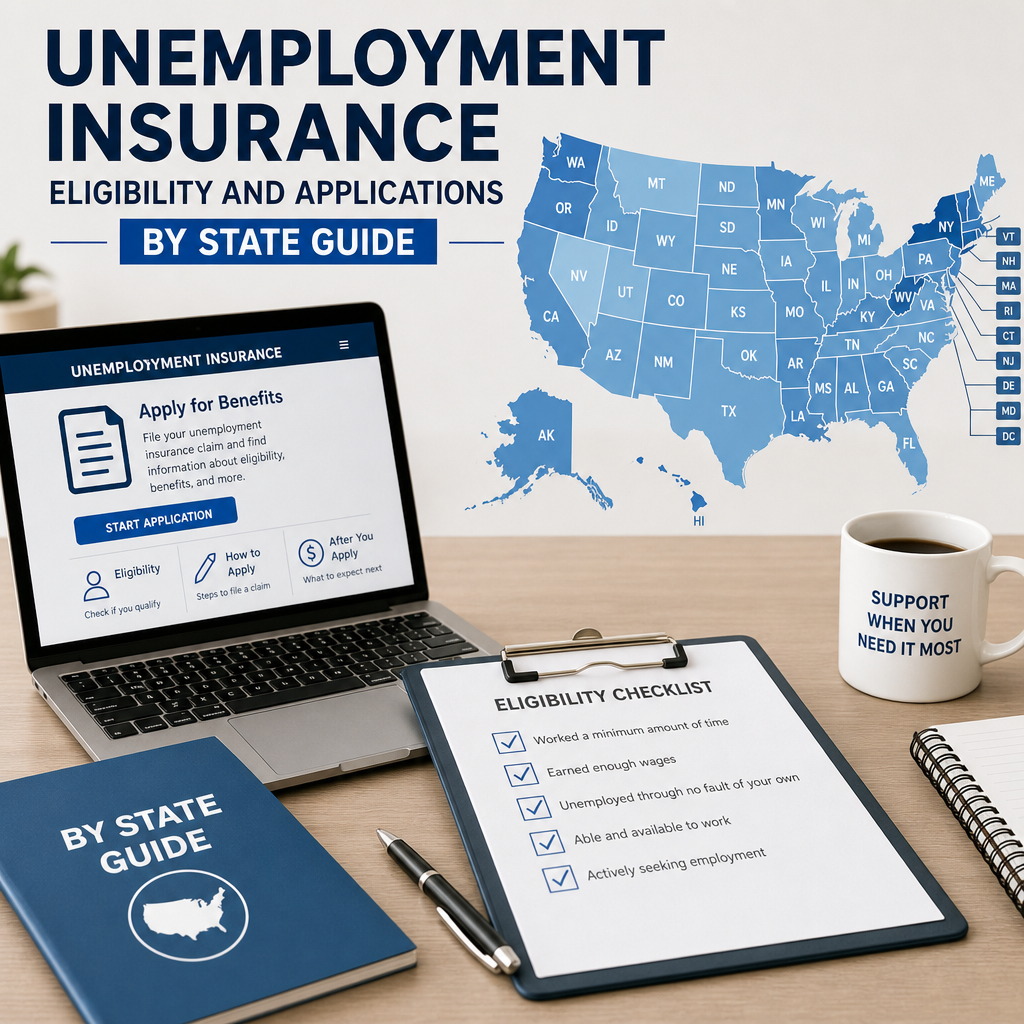
Unemployment Insurance Eligibility and Applications by State Guide
Unemployment insurance eligibility can vary from state to state, but the basic goal is the same: to provide temporary financial help when you lose a job through no fault of your own. Learn what qualifies, how to apply, and what to expect so you can file with confidence and avoid delays.
By: Emilly Adams on July 24, 2026
Losing a job is stressful, and the first questions many people ask are practical ones: Am I eligible for unemployment insurance? How do I apply? How does my state handle it? While the general purpose of unemployment insurance is the same across the U.S.—to provide temporary financial support to eligible workers who lose their jobs through no fault of their own—the rules, weekly amounts, and application steps vary by state.
Understanding unemployment insurance: eligibility and applications by state can help you avoid delays, file correctly the first time, and get the support you may qualify for as quickly as possible. This guide explains the basics, highlights what typically differs from state to state, and shows you how to navigate the process with confidence.
What Is Unemployment Insurance?
Unemployment insurance is a state-administered program that provides temporary payments to workers who are unemployed and meet specific eligibility requirements. These benefits are usually funded by employer payroll taxes, not by the worker directly.
Although each state runs its own program, unemployment insurance generally exists to help cover basic expenses while you look for new work. It is not meant to replace your full income, but it can serve as a financial bridge during a job transition.
Common purposes of unemployment insurance
Replace a portion of lost wages temporarily
Support workers while they search for new employment
Stabilize household finances after layoffs or business closures
Help eligible workers maintain some income during reduced hours in certain cases
How Unemployment Insurance Eligibility Works
Eligibility rules are state-specific, but most states evaluate a few core factors. If you are researching unemployment insurance: eligibility and applications by state, these are the main standards you should expect.
1. You must be unemployed through no fault of your own
In most cases, you may qualify if you were laid off, your position was eliminated, or your employer closed. If you quit voluntarily or were fired for misconduct, you may be denied benefits, depending on the state and circumstances.
That said, “fault” is not always black and white. Some states recognize good-cause quits, such as leaving unsafe work conditions, and may still allow benefits.
2. You must have earned enough wages in your base period
States look at your work and earnings during a set period called the base period. This usually covers the first four of the last five completed calendar quarters before you file a claim.
To qualify, you generally must have:
Worked enough weeks or hours
Earned a minimum amount of wages
Been employed in covered work
Each state sets its own minimum earnings threshold. Some states also use alternative base periods if you don’t qualify under the standard one.
3. You must be able, available, and actively seeking work
In most states, you must be physically and mentally able to work, available for suitable work, and actively looking for a job. This often means:
Being ready to accept work immediately
Keeping a record of job contacts
Applying for jobs each week
Attending interviews or job fairs if required
Some states may waive job search requirements in limited situations, such as temporary closures or approved training.
4. You must meet state-specific rules
States may add rules about:
Residency or work authorization
Union hiring hall status
School attendance or full-time training
Severance pay or pension income
Part-time work and reduced hours
Self-employment or gig work
Because the details differ, always check your state workforce agency’s website before filing.
Why State Rules Matter So Much
A claim that is valid in one state might be handled differently in another. That is why unemployment insurance: eligibility and applications by state requires careful attention to local rules.
For example, states vary in:
Weekly benefit amounts
Maximum number of weeks payable
Waiting periods
Job search documentation
Appeal deadlines
Identity verification steps
Tax treatment of benefits
Even neighboring states may have very different procedures. If you worked in more than one state, moved recently, or earned wages across state lines, your claim may involve special filing instructions.
How to Apply for Unemployment Insurance
In most states, you apply online through the state’s department of labor or workforce agency. Some states also allow phone, mail, or in-person applications, but online filing is usually fastest.
Before you apply, gather these documents
Having your information ready can reduce delays:
Social Security number
Government-issued ID
Mailing address and phone number
Email address
Employment history for the past 18 months
Employer names, addresses, and phone numbers
Dates you worked for each employer
Reason for separation from your last job
Pay stubs or W-2 forms if requested
Alien registration number or work authorization documents, if applicable
Bank account or debit card information for payment setup
Step-by-step application process
Go to your state unemployment website
Find the official portal for your state’s workforce agency.
Create an account or sign in
You may need to set up a secure user profile before filing.
Complete the initial claim
Enter your work history, separation details, and personal information accurately.
Submit identity verification if requested
Some states require document uploads or additional verification steps.
Certify each week
After filing, you usually must certify weekly or biweekly that you remain unemployed and eligible.
Respond to notices quickly
If the state asks for more information, send it by the deadline.
Important filing tips
File as soon as possible after becoming unemployed
Use exact employer names and dates
Don’t guess if you’re unsure; verify details first
Keep copies of every submission
Check your mail and email regularly for agency notices
What Happens After You Apply
After you submit your claim, the state reviews your work history, earnings, and reason for separation. Your former employer may also be contacted.
If approved, you’ll receive a monetary determination showing:
Your weekly benefit amount
Your maximum benefit amount
Your base period wages
Your claim start date
If denied, you may have the right to appeal. Appeal deadlines are often short, so act quickly if you disagree with the decision.
Common Reasons Claims Are Delayed or Denied
Many unemployment claims are delayed for simple, avoidable reasons. Understanding them can save time.
Frequent issues include:
Missing or incorrect employer information
Identity verification problems
Inconsistent separation details
Failure to certify weekly
Not meeting wage requirements
Not being available for work
Missing deadlines for requested documents
Working too many hours to qualify
If your claim is delayed, keep certifying each week if your state allows it. In some states, you may receive back pay for eligible weeks once the issue is resolved.
Special Situations That Can Affect Eligibility
Not everyone fits a standard layoff scenario. Here are a few situations where state rules can become more complicated.
Quitting a job
You may still qualify in some states if you left for a valid work-related reason, such as:
Unsafe working conditions
Harassment or discrimination
Lack of payment
Major schedule changes
Necessary relocation in certain situations
You will usually need documentation.
Being fired
If you were terminated, the key question is why. Benefits may still be available if you were let go for reasons other than misconduct, such as poor fit, lack of work, or performance issues that do not rise to misconduct.
Part-time workers
Part-time workers may qualify if they meet wage and availability rules. Some states allow partial benefits if you are working reduced hours.
Self-employed or gig workers
Traditional unemployment insurance usually does not cover independent contractors or self-employed workers unless a special program is in place. During certain emergency periods, federal or state programs may temporarily expand coverage, but those programs are not permanent.
Working across state lines
If you worked in multiple states, your wages may be combined or your claim may be filed in one state based on where you worked. This is common for commuters and remote workers.
How State Benefit Amounts Are Determined
States use different formulas to calculate weekly benefits. Most consider your wages during the base period and apply the state’s own formula and minimum/maximum limits.
Your weekly benefit amount may be affected by:
Past earnings
Number of dependents, in some states
State maximums and minimums
Other income, such as severance or pension payments
Part-time earnings while collecting benefits
Because benefit amounts vary widely, use your state agency’s benefit estimator if available.
How to Stay Eligible While Receiving Benefits
Getting approved is only part of the process. You must continue meeting the rules each week.
To stay eligible, you usually need to:
File weekly or biweekly certifications
Search for work
Record job search activities
Accept suitable work
Report earnings honestly
Report any changes in availability
Respond to agency notices on time
If you return to work, begin full-time school, or become unavailable for work, you usually must stop claiming benefits and notify the agency.
Where to Find Your State’s Official Rules
Because unemployment insurance is state-run, the best source is your state workforce agency. Their website usually includes:
Eligibility standards
Application portal
Benefit calculator
Weekly certification instructions
Appeals process
Contact information
FAQs and downloadable forms
If you are unsure where to start, search for your state plus “unemployment insurance” or “workforce agency.” Always confirm you are on an official government site before entering personal information.
Practical Example
Suppose you worked full-time in Ohio for two years and were laid off when your department closed. You apply for benefits online through Ohio’s workforce agency, provide your employer details, and certify each week that you are available for work and actively applying.
Now compare that with a worker in Texas who quit a job after repeated unpaid wages. That person may need to provide documentation and explain the separation carefully. The worker could still be eligible, but the claim will likely be reviewed more closely.
These examples show why unemployment insurance: eligibility and applications by state is not one-size-fits-all. The basic structure is similar nationwide, but the details can change the outcome of a claim.
Frequently Asked Questions
1. Can I get unemployment insurance if I was fired?
Possibly. It depends on the reason for the termination and your state’s rules. If you were fired for misconduct, benefits are often denied. If you were let go because of performance issues, lack of work, or another non-misconduct reason, you may still qualify.
2. How long does it take to get approved for unemployment benefits?
Processing times vary by state and by claim complexity. Simple claims may be handled quickly, while claims requiring identity verification or employer review can take longer. Filing early and responding promptly to requests can help avoid delays.
3. Do I have to look for work while receiving unemployment?
In most states, yes. You typically need to be actively searching for work and keep records of your job contacts. Some states or situations may have exceptions, such as approved training or temporary emergency programs.
4. Can I work part-time and still receive unemployment insurance?
Often, yes. Many states allow partial benefits if your hours and earnings are below a certain limit. You must report all earnings honestly when certifying your weekly claim.
5. What if I moved to a different state after losing my job?
You may still be able to file a claim, but the correct filing state depends on where you worked and earned wages. If you worked in more than one state, your claim may need special handling. Check both the state where you lived and the state where you worked before filing.
Understanding unemployment insurance: eligibility and applications by state can make a difficult time more manageable. While the overall purpose of the program is consistent across the country, each state sets its own rules for wage requirements, benefit amounts, job search expectations, and application procedures. That means the best way to avoid delays is to use your state’s official unemployment website, gather your documents before filing, and respond quickly to any requests for more information.
If you recently lost your job, don’t wait to explore your options. Filing promptly, certifying on time, and staying organized can improve your chances of getting the benefits you may qualify for without unnecessary setbacks. Even if your situation is unusual—such as part-time work, a recent move, or a disputed separation—your state agency can often guide you through the next step. The key is to act early, stay accurate, and keep learning about the rules that apply in your state.
Emily A, holds a Master's degree in Public Administration (MPA) and has over 7 years of experience researching federal and state assistance programs. She writes educational content focused on government benefits, public policy, and community resources, using information from official agencies to help readers understand available programs and eligibility requirements.