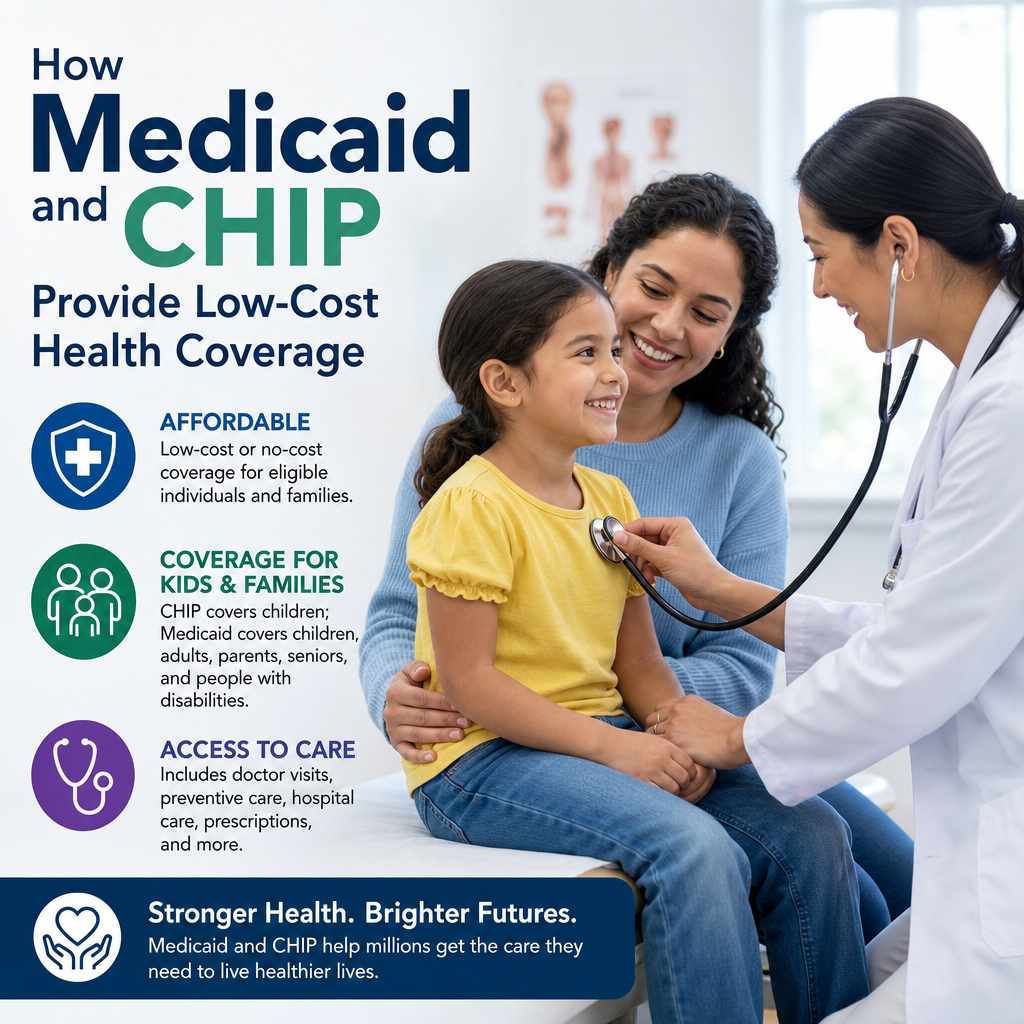
How Medicaid and CHIP Provide Low-Cost Health Coverage
Medicaid and CHIP provide low-cost health coverage by reducing premiums, copays, and other out-of-pocket expenses for eligible families. They also make it easier to get essential care like checkups, prescriptions, and treatment without worrying about overwhelming medical bills.
By: Emilly Adams on July 24, 2026
Health coverage can feel complicated and expensive, especially for families trying to balance rent, food, child care, and medical bills. That is where Medicaid and CHIP provide low-cost health coverage for millions of people across the United States. These programs help eligible children, pregnant people, parents, older adults, and people with disabilities access care without facing overwhelming costs.
If you are trying to understand who qualifies, what benefits are included, and how these programs differ, this guide breaks it down in plain English. You will also learn how Medicaid and CHIP can lower out-of-pocket costs, support preventive care, and make it easier to get treatment when you need it.
What Medicaid and CHIP Are
Medicaid and the Children’s Health Insurance Program, or CHIP, are public health coverage programs that help eligible individuals and families pay for medical care.
Medicaid at a glance
Medicaid is a joint federal and state program. Each state runs its own Medicaid program within federal guidelines, so specific rules can vary by location. In general, Medicaid helps cover:
Doctor visits
Hospital care
Lab tests
Prescription drugs
Pregnancy-related care
Long-term care services
Home health services
Mental health and substance use treatment
CHIP at a glance
CHIP provides low-cost health coverage for children in families who earn too much to qualify for Medicaid but still cannot afford private insurance. In some states, CHIP also covers pregnant individuals. Depending on the state, CHIP may be delivered through:
A Medicaid expansion program
A separate CHIP plan
A combination of both
Together, these programs help close coverage gaps for low- and moderate-income families.
How Medicaid and CHIP Provide Low-Cost Health Coverage
The biggest advantage of Medicaid and CHIP is cost. These programs are designed to reduce the financial burden of health care, especially for families with limited income.
Lower monthly premiums
Many Medicaid enrollees pay little to nothing in monthly premiums. CHIP may also have low premiums, depending on income and state rules. This can make coverage much more manageable than many private insurance plans.
Reduced out-of-pocket expenses
Medicaid and CHIP often keep copays, deductibles, and coinsurance low. In some cases, there may be no cost at the point of care for certain services. That matters when a child needs a checkup, a parent needs medication, or someone has to see a specialist.
Coverage for preventive care
These programs emphasize preventive services, which can help catch health issues early. Covered preventive care may include:
Well-child visits
Vaccinations
Screenings
Annual checkups
Prenatal care
Developmental assessments
Preventive care is not just good medicine; it can also reduce the chance of bigger bills later.
Protection from major medical costs
Even with good planning, serious illness or injury can happen. Medicaid and CHIP help protect families from the financial shock of emergency care, hospitalization, and ongoing treatment.
Who Can Qualify for Medicaid and CHIP
Eligibility depends on several factors, including income, household size, age, pregnancy status, disability, and state rules. Because Medicaid and CHIP are administered by states, requirements may differ.
Common groups that may qualify for Medicaid
Medicaid can cover:
Children
Pregnant individuals
Parents and caretakers
Adults with low income in states that expanded Medicaid
Seniors
People with disabilities
Individuals needing long-term care
Common groups that may qualify for CHIP
CHIP usually serves:
Children under age 19
Families whose income is too high for Medicaid but too low for private coverage
In some states, pregnant people
Income limits and state differences
Income limits are often based on the Federal Poverty Level, but the exact threshold depends on the state and the eligibility category. Some states expanded Medicaid, which allows more adults to qualify. Others have narrower rules. That is why checking your state’s program details is important.
What Services Medicaid and CHIP Cover
The exact benefits vary by state, but many services are similar across programs. Understanding these benefits can help families use coverage more confidently.
Medical care for everyday health needs
Coverage usually includes primary care, which is the first stop for routine health needs. This may include:
Sick visits
Physical exams
Chronic condition management
Referrals to specialists
Pediatric and family health services
CHIP focuses heavily on children’s health, but many Medicaid programs also support family-centered care. Common services include:
Immunizations
Hearing and vision care
Dental checkups and treatments
Behavioral health services
Screenings for development or learning concerns
Pregnancy and postpartum care
Medicaid often covers prenatal visits, labor and delivery, and postpartum care. In many states, this support can help improve access to maternity care and reduce financial stress during pregnancy.
Mental health and substance use treatment
Many state programs cover counseling, therapy, medication management, and treatment for substance use disorders. For people facing mental health challenges, affordable coverage can be critical.
Long-term services and supports
Medicaid is a major payer for long-term services, including nursing facility care and certain home- and community-based services. This makes it especially important for seniors and people with disabilities who need ongoing support.
Medicaid vs. CHIP: What’s the Difference?
Although Medicaid and CHIP work together, they are not the same program.
Medicaid
Covers a broad range of eligible groups
Often has no premiums or very low costs
May include long-term care services
Can cover children, adults, pregnant individuals, seniors, and people with disabilities
CHIP
Primarily covers children
Designed for families who earn too much for Medicaid
Usually has low premiums and cost-sharing
Focuses on pediatric care and family access to coverage
Which one is better?
There is no single “better” option. The right program depends on who needs coverage and whether the household meets the rules. In some cases, children in the same family may qualify for CHIP while parents qualify for Medicaid.
Why These Programs Matter for Families
Health coverage is about more than insurance cards and paperwork. Medicaid and CHIP give families stability.
They make care easier to access
When coverage is affordable, people are more likely to seek care before a problem gets worse. That means fewer delays in treatment and better continuity of care.
They support children’s development
Children need regular checkups, dental visits, vaccinations, and screenings to stay healthy and meet developmental milestones. CHIP and Medicaid help make those services accessible.
They reduce medical debt risk
Unexpected medical bills can quickly create financial strain. By lowering costs, these programs help reduce the chance that a family will have to choose between medical care and essential household expenses.
They help communities stay healthier
When more people have access to preventive care and treatment, communities benefit through better public health outcomes and more consistent care for chronic conditions.
How to Apply for Medicaid or CHIP
Applying is usually straightforward, though the process varies by state.
Step 1: Check your state’s eligibility rules
Visit your state Medicaid agency or health insurance marketplace to review income limits and coverage categories.
Step 2: Gather documents
You may need:
Proof of identity
Social Security numbers, if available
Proof of income
Proof of citizenship or immigration status, if required
Household information
Pregnancy verification, if applying based on pregnancy
Step 3: Submit an application
You can often apply:
Online through your state Medicaid office or marketplace
By phone
In person
By mail
Step 4: Respond to follow-up requests
The state may ask for additional documents or clarification. Respond quickly to avoid delays.
Step 5: Review your plan options
If approved, check what services are covered, which providers accept the plan, and whether you need referrals for specialists.
Tips for Using Coverage Wisely
Once enrolled, a few simple habits can help you get the most from your benefits.
Choose an in-network provider
If your state plan uses a managed care network, staying in-network may help you avoid extra costs or coverage problems.
Schedule preventive visits early
Do not wait until your child is sick or your symptoms worsen. Use covered preventive services to stay ahead of problems.
Keep records organized
Save your insurance card, approval letter, and contact information for member services. Having these handy can make appointments and billing questions easier.
Ask about extra benefits
Some plans may offer transportation help, dental coverage, vision care, or care coordination. It never hurts to ask what is available.
Report changes promptly
If your household income, address, or family size changes, update your state agency. That can help prevent gaps in coverage.
Common Myths About Medicaid and CHIP
There is a lot of misinformation about public health coverage. Let’s clear up a few common myths.
Myth: Medicaid and CHIP are only for people who are unemployed
Not true. Many people who work still qualify, especially if their income is modest or they have dependents.
Myth: CHIP is only for very young children
CHIP usually covers children and teens under age 19, not just toddlers or elementary-age children.
Myth: You cannot get good care with public coverage
Many doctors, clinics, hospitals, and specialists accept Medicaid and CHIP. Access depends on location and provider availability, but coverage can support quality care.
Myth: Applying is too hard
The process can take time, but many states offer online applications and help through caseworkers, navigators, or community organizations.
Frequently Asked Questions
1. Can adults qualify for Medicaid?
Yes. In many states, adults with low income can qualify for Medicaid, especially if the state expanded the program. Eligibility also depends on factors such as pregnancy, disability, age, and household size.
2. Is CHIP the same as Medicaid for children?
Not exactly. CHIP and Medicaid both help children get affordable health coverage, but they are separate programs in many states. Medicaid often covers children with lower incomes, while CHIP helps families who earn too much for Medicaid but still need low-cost coverage.
3. Do Medicaid and CHIP cover dental and vision care?
Often, yes. Children’s dental and vision services are commonly covered, and some states also provide dental or vision benefits for adults. Coverage details vary by state, so it is important to check your plan.
4. Can my child have CHIP if I have private insurance?
It depends on your state and income. In some cases, children may still qualify for CHIP even if a parent has employer-sponsored insurance, especially if that coverage is too expensive or does not meet state rules.
5. What if I move to another state?
You must report your move and apply under the new state’s rules. Medicaid and CHIP do not automatically transfer from one state to another, so coverage may change when you relocate.
Medicaid and CHIP provide low-cost health coverage that helps millions of people access care without facing the full weight of medical expenses. For families with limited income, these programs can make a real difference by lowering premiums, reducing out-of-pocket costs, and supporting preventive care, pregnancy services, pediatric care, mental health treatment, and more.
If you are trying to understand your options, the best next step is to check your state’s eligibility rules and apply as soon as possible if you may qualify. Even if you are unsure whether your household fits the requirements, it is worth looking. These programs exist to help eligible people get the care they need while protecting family budgets from high medical costs.
Whether you are applying for yourself, your child, or another family member, learning how Medicaid and CHIP work can help you make smarter health coverage decisions and avoid missing out on benefits that may already be available to you.
Emily A, holds a Master's degree in Public Administration (MPA) and has over 7 years of experience researching federal and state assistance programs. She writes educational content focused on government benefits, public policy, and community resources, using information from official agencies to help readers understand available programs and eligibility requirements.