Weatherization Assistance Program: Lower Home Energy Costs
Weatherization assistance can help make your home more comfortable and affordable by reducing drafts, improving insulation, and cutting energy waste. For eligible households, it’s a smart way to lower utility bills without paying for major upgrades upfront.
By: Emilly Adams on July 24, 2026
If your home feels drafty in winter, overheated in summer, or expensive to keep comfortable year-round, weatherization assistance may be exactly what you need. This federal and state-supported program helps eligible households make their homes more energy efficient, which can lead to lower utility bills, better indoor comfort, and fewer problems caused by air leaks, poor insulation, and inefficient heating and cooling systems.
For many families, energy costs are a major part of the monthly budget. Weatherization assistance can reduce waste without requiring homeowners or renters to pay for major improvements upfront. That makes it a practical option for households that need real savings and long-term value.
What Is Weatherization Assistance?
Weatherization assistance is a program designed to improve a home’s energy efficiency, especially for households with limited income. In the United States, the best-known option is the Weatherization Assistance Program (WAP), which is funded through the U.S. Department of Energy and administered by states, territories, and tribal governments.
The goal is simple: help homes use less energy while staying safe and comfortable.
Common weatherization improvements may include:
Sealing air leaks around windows, doors, and ducts
Adding insulation to attics, walls, or floors
Repairing or replacing inefficient heating systems
Improving ventilation and moisture control
Installing energy-efficient lighting
Upgrading minor energy-related components when needed for safety or performance
These updates can make a noticeable difference in homes that lose heat in the winter or struggle to stay cool in the summer.
How Weatherization Assistance Lowers Home Energy Costs
Weatherization works because it tackles the hidden causes of energy waste. When air leaks, poor insulation, or aging equipment force your heating and cooling system to work harder, your utility bills often rise.
Reducing heat loss and air leakage
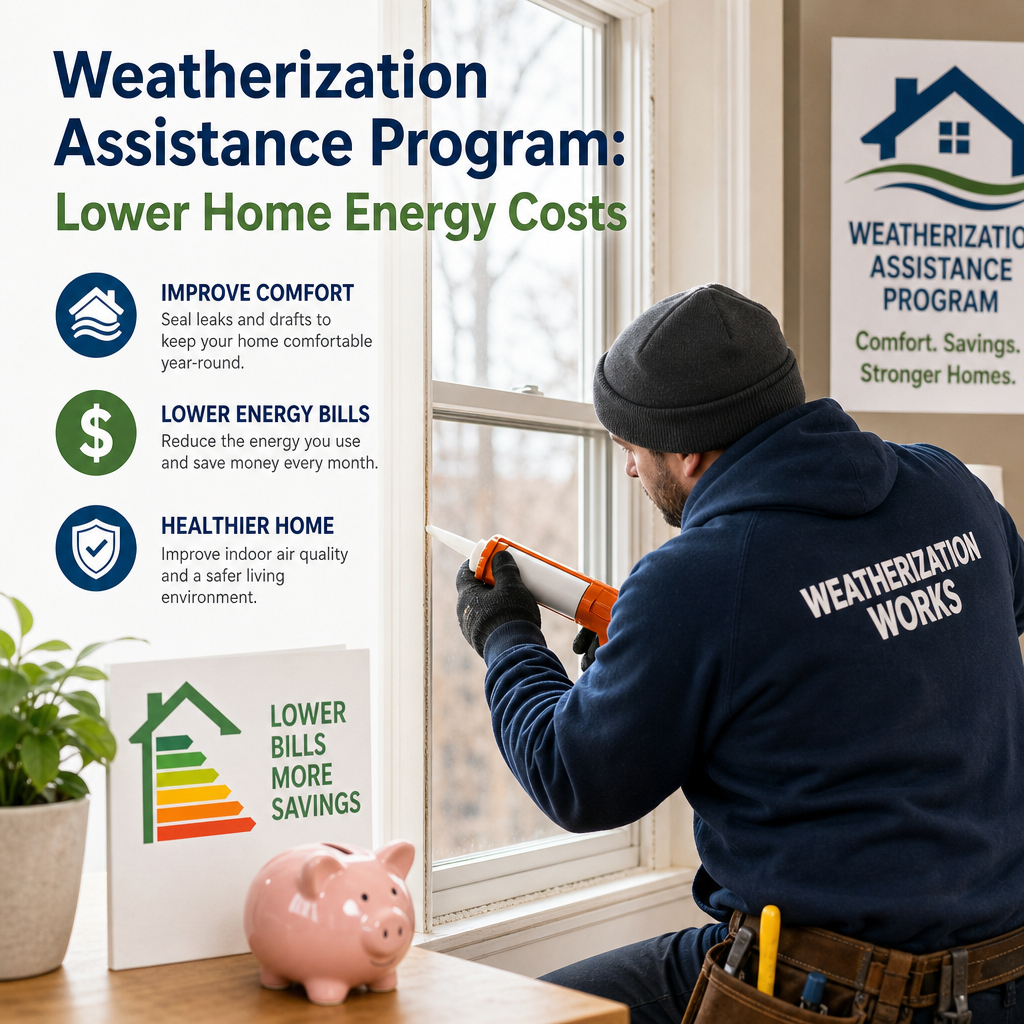
A home with cracks and gaps may lose heated air in winter and let in hot outdoor air during summer. Weatherization crews often use caulk, weatherstripping, and other materials to seal those problem areas. That can reduce how often your system cycles on and off.
Improving insulation
Insulation helps keep indoor temperatures stable. In many homes, especially older ones, inadequate insulation is one of the biggest reasons energy bills stay high. Weatherization assistance can help add insulation where it will have the most impact.
Helping equipment run more efficiently
Some homes benefit from repairs to furnaces, boilers, water heaters, or ductwork. Even small fixes can improve efficiency and reduce unnecessary energy use.
Supporting indoor comfort
Lower energy costs are important, but weatherization also improves comfort. Rooms may feel less drafty, temperature swings may become less extreme, and humidity issues can improve when air sealing and ventilation are done correctly.
Who Qualifies for Weatherization Assistance?
Eligibility rules vary by state, but weatherization assistance generally targets low-income households. Priority is often given to:
Households with older adults
Families with children
People with disabilities
Households with high energy burdens
Homes with especially poor energy performance
In many cases, applicants must meet income guidelines based on household size. Some states may also coordinate weatherization with other energy assistance programs, such as the Low Income Home Energy Assistance Program (LIHEAP).
It is important to check with your local weatherization office because rules, funding, and waiting lists can differ from place to place.
What Homes Typically Receive Through Weatherization Assistance
Weatherization services are based on a home energy audit or assessment. Rather than applying a one-size-fits-all approach, trained professionals inspect the property and recommend the most useful upgrades.
Common weatherization measures
Here are some of the most common improvements:
Air sealing
Sealing cracks, gaps, and openings around the building shell.
Insulation upgrades
Adding insulation to attics, crawl spaces, walls, or other areas where heat loss occurs.
Heating system repairs
Fixing furnace or boiler issues that affect safety or efficiency.
Duct sealing
Reducing air loss in forced-air systems.
Ventilation improvements
Helping manage moisture and indoor air quality while maintaining efficiency.
Lighting upgrades
Replacing inefficient bulbs with LED lighting.
Minor energy-related repairs
Fixing items that are needed to complete energy upgrades safely.
Safety-focused work matters too
Weatherization is not just about saving money. Professionals also check for health and safety issues, such as combustion safety, carbon monoxide risks, and moisture-related concerns. This is one reason the program is more reliable than a quick DIY sealing job.
What Weatherization Assistance Usually Does Not Cover
Weatherization assistance focuses on energy efficiency and related safety needs, not full-scale home remodeling. It usually does not pay for:
Cosmetic upgrades
Major structural renovations
Non-energy-related repairs
Luxury appliances
New additions or expansion projects
If a home needs significant repairs before weatherization can happen, the agency may explain what must be addressed first. In some cases, other programs may help with those repairs.
How to Apply for Weatherization Assistance
Applying is usually straightforward, but the exact process depends on your local agency. Most households start by contacting the organization that administers the program in their area.
Steps to apply
Find your local weatherization provider
This is often done through a state energy office or local community action agency.
Check eligibility requirements
Review income guidelines and any documentation needed.
Submit an application
You may need proof of income, household size, address, and utility information.
Schedule a home assessment
If eligible, a trained specialist will inspect the home and identify cost-effective upgrades.
Approve the work plan
The agency explains which measures will be installed or repaired.
Complete the weatherization work
Crews perform the approved improvements, usually at no cost to eligible households.
Follow up if needed
Some households may need additional service, inspection, or education on how to get the best results.
What to have ready
To speed up the process, gather documents such as:
Recent proof of income
Government-issued identification
Utility bills
Lease agreement, if renting
Contact information for all adult household members
Can Renters Use Weatherization Assistance?
Yes, renters may qualify for weatherization assistance, but landlord approval is often required for work that affects the property. This is especially true when the program needs access to insulation, windows, exterior walls, or major systems.
If you rent, it helps to:
Ask your landlord whether they will cooperate
Contact your local weatherization agency early
Confirm which upgrades are allowed in rental properties
Keep copies of any written approvals or agreements
Renters sometimes assume they are excluded, but that is not always the case. In many communities, renters benefit from the program as long as the building and household meet the rules.
Weatherization Assistance vs. Other Energy Help Programs
Weatherization assistance is often confused with utility bill payment help, but they are different services.
Weatherization Assistance Program
This program helps improve the home itself so it uses less energy over time.
LIHEAP
LIHEAP helps eligible households pay heating and cooling bills or manage energy emergencies.
Energy company rebate programs
Some utility providers offer rebates or incentives for efficient appliances, thermostats, or insulation work.
Why this matters
If you need immediate bill help, LIHEAP may be the better fit. If your home wastes energy and drives up monthly costs, weatherization assistance may offer longer-term savings. In some cases, families use both.
Signs Your Home May Need Weatherization
Not every home needs the same improvements, but several warning signs suggest that weatherization assistance could help:
Drafts near windows, outlets, or baseboards
Rooms that are hard to heat or cool
Ice buildup or uneven attic temperatures
High utility bills that seem out of proportion
Condensation or moisture problems
Old, brittle caulk or damaged weatherstripping
Cold floors or walls in winter
Noisy, overworked heating and cooling equipment
If several of these sound familiar, a home energy assessment could uncover practical fixes.
A Realistic Example of How Weatherization Helps
Consider a small home with an older furnace, thin attic insulation, and several air leaks around the front door and windows. The household keeps the thermostat set modestly, yet the heating bill remains high every winter.
After a weatherization assessment, the team seals leaks, adds attic insulation, and makes a minor repair to the heating system. The home may still need normal utility service, but it no longer loses as much conditioned air. The furnace does not have to work as hard, and the rooms feel more comfortable.
This is the kind of result weatherization assistance is designed to produce: practical improvements that reduce waste and improve livability.
Tips to Maximize the Benefits of Weatherization Assistance
Once your home is weatherized, a few habits can help you get more value from the improvements.
Keep up with basic maintenance
Replace HVAC filters regularly
Check for new gaps or damage around doors and windows
Keep vents and registers clear
Report leaks or moisture issues quickly
Use energy wisely
Set the thermostat to a moderate, consistent level
Use ceiling fans to support comfort
Close curtains during extreme heat or cold
Turn off lights and devices when not in use
Ask questions during the process
The people who perform weatherization work can often explain how to use your new improvements effectively. For example, they may tell you when to leave vents open, how to maintain new equipment, or what signs should trigger a follow-up call.
Frequently Asked Questions
1. Is weatherization assistance really free?
In most cases, eligible households receive weatherization services at no cost. The program is designed to help low-income families reduce energy waste without paying upfront for approved improvements. Some households may still be responsible for normal utility charges or unrelated repair costs, depending on local rules.
2. How long does weatherization assistance take?
The timeline varies by location, funding, and the condition of the home. Some households move through the process quickly, while others may wait longer due to demand or scheduling. After approval, the home assessment and work itself may take from a single visit to several appointments.
3. Can weatherization help with high summer cooling bills?
Yes. Weatherization is not only for winter heating costs. Air sealing, insulation, shading, duct repairs, and ventilation improvements can all help a home stay cooler and reduce strain on air conditioning systems during warm months.
4. Do I need to own my home to qualify?
No. Renters may also qualify in many areas, although landlord permission is often required. The exact rules depend on the state or local agency running the program. If you rent, ask about the approval process before applying.
5. What if my home needs major repairs first?
Weatherization assistance usually focuses on energy-related improvements, but some homes need safety or structural fixes before weatherization can begin. If that happens, the agency may explain the next steps or refer you to other programs that can help with repairs.
Weatherization assistance gives eligible households a practical way to lower home energy costs while improving comfort, safety, and efficiency. Instead of chasing short-term fixes, the program addresses the real causes of energy waste: air leaks, poor insulation, and inefficient systems that force heating and cooling equipment to work harder than necessary.
If your utility bills feel too high or your home never seems comfortable, weatherization assistance is worth exploring. The program can help you make lasting improvements without taking on the full cost yourself, which is especially valuable for families balancing tight budgets. Renters, homeowners, and older households may all benefit, depending on local eligibility rules.
The best next step is to contact your state or local weatherization agency, review the income requirements, and ask how to begin an application. Even if you are not sure whether you qualify, a quick call can point you in the right direction. Over time, small efficiency improvements can add up to meaningful savings and a better living environment for your household.
Emily A, holds a Master's degree in Public Administration (MPA) and has over 7 years of experience researching federal and state assistance programs. She writes educational content focused on government benefits, public policy, and community resources, using information from official agencies to help readers understand available programs and eligibility requirements.