How Drought Disrupts Food, Energy, and Water Supplies
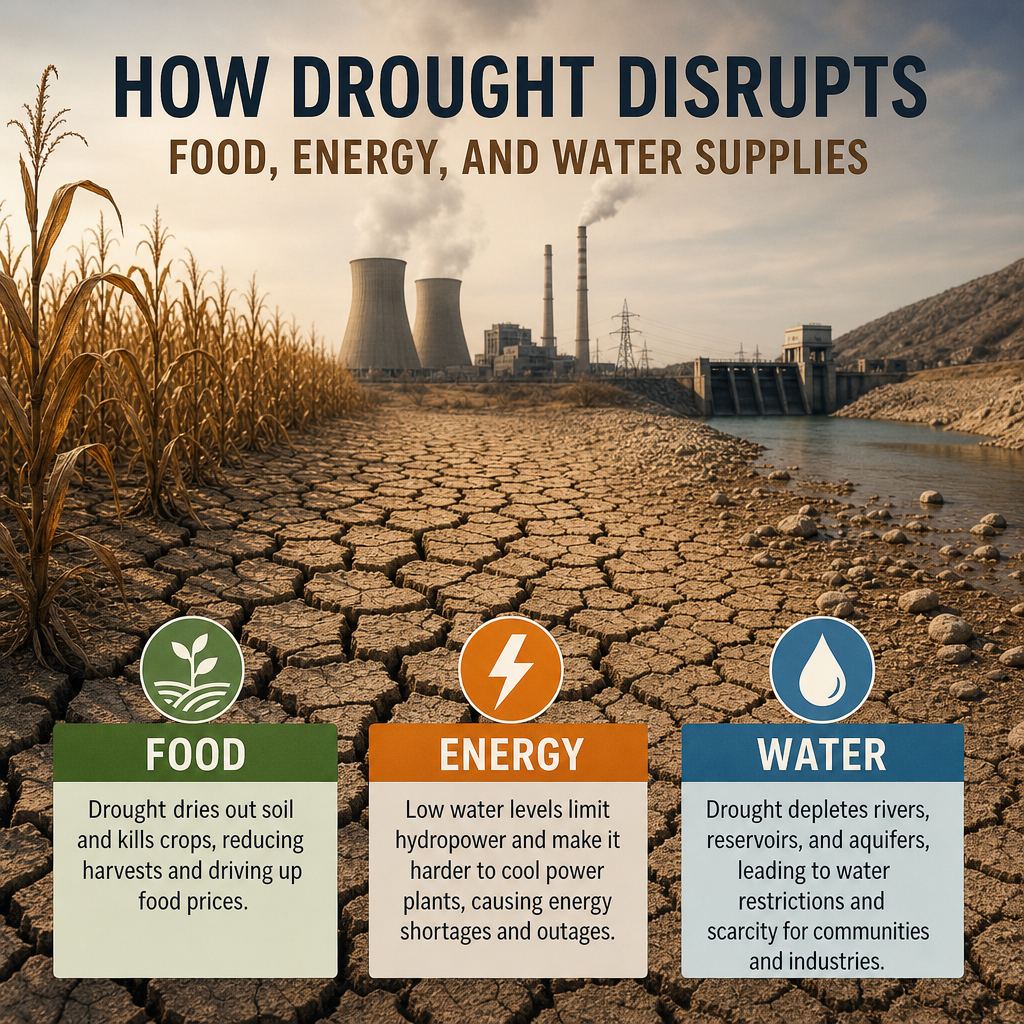
Drought can disrupt food, energy, and water supplies in ways that ripple through daily life, from lower crop yields and rising food prices to strained power generation and shrinking reservoirs. Understanding these connections helps communities prepare before a dry spell becomes a full-blown crisis.
By: Peter B on July 24, 2026
Drought is more than a stretch of hot, dry weather. It is a slow-moving crisis that can disrupt farms, power grids, rivers, reservoirs, and household water systems all at once. When rainfall stays low for too long, the effects spread far beyond the landscape. That is why understanding how drought can disrupt food, energy, and water supplies is so important for communities, businesses, and policymakers.
Unlike sudden disasters, drought often builds quietly. Crops wilt, lake levels fall, hydropower output drops, and water restrictions begin to appear. By the time the impact becomes obvious, the pressure may already be affecting grocery prices, electricity reliability, and drinking water access.
This article explains how drought affects each part of the food-energy-water system, why these resources are deeply connected, and what communities can do to reduce risk.
How Drought Can Disrupt Food, Energy, and Water Supplies
Drought affects more than one system at a time because food, energy, and water are tightly linked. Farmers need water to grow crops and raise livestock. Power plants need water for cooling and generation. Cities rely on reservoirs, rivers, and groundwater for drinking water and sanitation. When one part of the system is stressed, the others often feel it too.
The basic chain reaction
A drought can trigger a chain of events like this:
Rainfall and snowpack decline.
Rivers, reservoirs, and soil moisture drop.
Farms use more irrigation or lose crops.
Energy production becomes more expensive or less reliable.
Water utilities face shortages, limits, or higher treatment costs.
Food prices and utility costs rise for households.
This chain reaction is why drought planning must look at the entire system, not just a single sector.
How Drought Affects Food Supplies
Food production depends on stable water access. When drought hits, agriculture is often one of the first sectors to feel the strain.
Crop losses and reduced yields
Many crops need steady moisture at key growth stages. If drought arrives during planting, flowering, or fruit development, yields can fall sharply. Farmers may also have to leave fields unplanted if conditions are too dry.
Common impacts include:
Smaller harvests
Lower crop quality
Delayed planting
Increased irrigation costs
Higher risk of wildfire damage to farmland
For example, a corn grower who depends on rain-fed fields may see a major drop in production during a dry summer. Even if irrigation is available, water restrictions or rising pumping costs can make it harder to protect the crop.
Stress on livestock and grazing lands
Drought does not just affect crops. It also reduces pasture growth and dries out water sources for cattle, sheep, and other livestock. Ranchers may need to buy feed earlier than usual, move animals, or reduce herd size.
That can lead to:
Higher feed costs
Lower livestock weight gain
Added transport expenses
Financial pressure on small farms and ranches
Supply chain disruptions and price increases
When drought reduces harvests in major growing regions, the effects can spread through food supply chains. Processors, distributors, grocery stores, and restaurants all feel the pressure. In some cases, shortages are temporary. In others, they lead to long-term price changes.
A drought in one region can also affect commodities used across the country, such as:
Wheat
Corn
Soybeans
Fruits and vegetables
Forage and livestock feed
This is one reason drought can influence grocery bills even for people who live far from the affected area.
Soil degradation and long-term farm impacts
Repeated drought can weaken soil structure and reduce organic matter, making land less resilient in future dry periods. Dry soils can become harder to work with, more prone to erosion, and less able to hold nutrients.
Over time, this can reduce farm productivity and increase the need for conservation practices such as:
Mulching
Cover cropping
No-till farming
Improved irrigation scheduling
Drought-tolerant crop varieties
How Drought Affects Energy Supplies
Energy systems also depend heavily on water. Drought can reduce electricity generation, raise production costs, and make the grid more vulnerable during peak demand.
Hydropower declines when water levels drop
Hydropower relies on moving water to generate electricity. When drought lowers river flow or reservoir levels, hydropower output often falls. In some places, this can reduce available electricity during periods of high demand.
Hydropower shortfalls may lead utilities to:
Purchase more expensive replacement power
Use other generation sources more heavily
Raise electricity rates
Rely on emergency power planning
Thermal power plants may face cooling challenges
Many coal, natural gas, nuclear, and biomass power plants require large amounts of water for cooling. During drought, water levels can drop or water temperatures can rise, making cooling less efficient.
Utilities may then have to:
Reduce power output
Temporarily shut down some operations
Shift generation to other plants
Compete with cities and farms for limited water
This can create a difficult balancing act between keeping the grid stable and protecting scarce water resources.
Energy demand can rise during drought
Drought often brings hotter temperatures and less natural cooling from soil moisture and vegetation. As homes and businesses run air conditioning more often, electricity demand can rise exactly when supply is under stress.
That creates a double challenge:
Less water for energy generation
More electricity needed to handle heat
This is one reason drought and heat waves often create overlapping risks.
Fuel production and transport can also be affected
Drought can affect fuels in less obvious ways too. Low water levels may limit barge transport on rivers. Biofuel crops can suffer from water shortages. Refineries and industrial facilities may face operational limits when water supplies are tight.
In other words, drought can influence not just electricity, but the broader energy supply chain.
How Drought Affects Water Supplies
Water is the most direct resource affected by drought, but the impacts are often more complex than people expect.
Reservoirs, rivers, and lakes shrink
When rainfall and snowpack decline, surface water sources may not refill as usual. Reservoirs fall, streams slow, and lake levels drop. That can limit drinking water availability and reduce water for irrigation, industry, and recreation.
Low surface water levels can also cause:
Reduced hydropower generation
Warmer water temperatures
Poorer aquatic habitat
Higher concentrations of pollutants
Groundwater can be overused
During drought, people often pump more groundwater to make up for surface water shortages. While that can help in the short term, aquifers do not recharge quickly. Overpumping can lower water tables and make wells more expensive to operate.
In severe cases, private wells may run dry, especially in rural areas that depend heavily on groundwater.
Water quality can worsen
Drought affects not only the amount of water available, but also its quality. Lower water levels can concentrate pollutants, algae, and sediments. Warmer water can encourage harmful algal blooms and make treatment more difficult.
Public water systems may need to do more work to keep water safe, which can increase operating costs. Private well owners may also need to monitor water quality more carefully during prolonged dry periods.
Communities may face restrictions
When supplies fall, local governments often impose water restrictions. These may limit lawn watering, car washing, pool filling, or industrial use. While these steps help conserve water, they can also affect daily life and local businesses.
Why Food, Energy, and Water Are Interconnected
The real challenge of drought is not just that it affects one resource. It stresses a connected system where each part depends on the others.
Water supports both food and energy
Agriculture needs water for irrigation, animals, and processing. Energy systems need water for cooling, fuel production, and hydropower. If water supplies shrink, both sectors face pressure at the same time.
Energy supports both food and water
Pumps, treatment plants, refrigeration, irrigation systems, and farm equipment all require energy. If electricity becomes more expensive or less reliable during drought, food and water services become harder to provide.
Food production depends on energy and water together
A farm may have enough water, but without fuel, electricity, and transport, harvests can still be delayed or lost. Likewise, a food processing plant may have raw crops available but struggle if power costs spike or water limits slow operations.
This interdependence is why drought resilience requires coordinated planning across utilities, agriculture, and emergency management.
Real-World Examples of Drought Stress
Drought impacts look different depending on the region, climate, and infrastructure. Here are a few common examples.
Agricultural regions
In farming areas, drought often leads to reduced yields, livestock feed shortages, and more competition for irrigation water. Smaller farms may be hit harder because they have fewer financial reserves to absorb losses.
Hydropower-dependent regions
Places that rely heavily on dams and reservoirs can experience electricity shortages or price increases when water levels fall. This is especially difficult during summer, when demand is often already high.
Rural communities with private wells
Homes outside municipal systems may be especially vulnerable if wells run low or dry up. Families may need to deepen wells, haul water, or pay for emergency delivery.
Urban areas with high demand
Even large cities can feel the impact of drought when reservoir supplies decline. Utilities may introduce conservation rules, and residents may see higher water bills or restrictions on outdoor watering.
What Communities and Households Can Do
Drought planning works best before a crisis begins. Whether you are a homeowner, farmer, business owner, or local official, a few practical steps can reduce risk.
For households
Fix leaks quickly
Use water-efficient appliances and fixtures
Reduce outdoor watering during dry periods
Store emergency water if recommended by local officials
Monitor utility alerts and conservation notices
For farms and ranches
Improve irrigation efficiency
Choose drought-tolerant crops where appropriate
Use soil conservation methods to retain moisture
Diversify water sources when possible
Plan for feed and forage shortages
For utilities and local governments
Maintain drought contingency plans
Invest in leak detection and infrastructure repair
Coordinate water and energy planning
Communicate clearly with the public
Protect groundwater through monitoring and permitting
For businesses
Audit water and energy use
Prepare for supply chain delays
Back up critical operations
Review emergency and continuity plans
Work with suppliers in drought-prone regions
Building Long-Term Drought Resilience
Short-term conservation helps, but lasting resilience requires smarter land, water, and energy management.
Useful long-term strategies include:
Expanding water reuse where safe and appropriate
Upgrading aging water infrastructure
Protecting watersheds and wetlands
Encouraging drought-smart agriculture
Improving forecasting and early warning systems
Diversifying energy sources
Planning across sectors instead of separately
These measures can reduce the severity of future drought impacts and help communities recover faster.
Frequently Asked Questions
What is the biggest way drought disrupts food, energy, and water supplies?
The biggest disruption is the way drought reduces available water across multiple systems at once. Farms need water for crops and livestock, power plants need water for cooling or hydropower, and communities need water for drinking and sanitation. When supply drops, all three sectors can be affected together.
Why does drought make food prices rise?
Drought can reduce crop yields, lower livestock production, and increase irrigation and feed costs. Those added expenses often move through the supply chain, leading to higher prices for consumers. Transportation and processing costs may also rise when energy becomes more expensive during drought.
Can drought affect electricity even if a region does not use hydropower?
Yes. Even regions that do not rely on hydropower can still be affected because many thermal power plants use water for cooling. If water supplies are limited or water temperatures are too high, plants may have to reduce output or temporarily shut down. Drought can also increase electricity demand during hot weather.
Why are rural communities often more vulnerable to drought?
Rural communities may depend on private wells, local reservoirs, or agriculture for their livelihoods. That can make them more exposed to water shortages and economic losses. Some rural areas also have fewer backup water sources and less infrastructure redundancy than larger cities.
What is the best way to prepare for drought?
The best preparation combines conservation, planning, and monitoring. Households can reduce water waste and stay informed about local conditions. Farms and businesses can improve efficiency and build contingency plans. Communities can invest in infrastructure, watershed protection, and drought response planning before shortages become severe.
Drought is not just a weather problem. It is a systems problem that can disrupt food production, strain energy supplies, and limit access to clean water at the same time. When rainfall stays low and reservoirs decline, farms lose productivity, power systems face cooling and generation challenges, and communities may struggle to keep water services running reliably.
The good news is that drought impacts are not entirely unavoidable. Better planning, smarter water use, stronger infrastructure, and coordinated action across sectors can reduce damage and improve resilience. Households can conserve water and prepare for restrictions. Farmers can adopt more efficient irrigation and soil practices. Utilities and governments can invest in forecasting, maintenance, and drought contingency plans.
Understanding how these systems connect is the first step toward protecting them. If you live in a drought-prone area, stay informed, conserve resources, and support long-term solutions that make your community more resilient. The more prepared we are before dry conditions arrive, the better we can protect the food, energy, and water supplies that support everyday life.
Peter B holds a degree in Journalism and has 5 years
of experience covering U.S. economic policy, labor markets, and
financial news. He writes data-driven news content on topics
like inflation, interest rates, and employment trends.