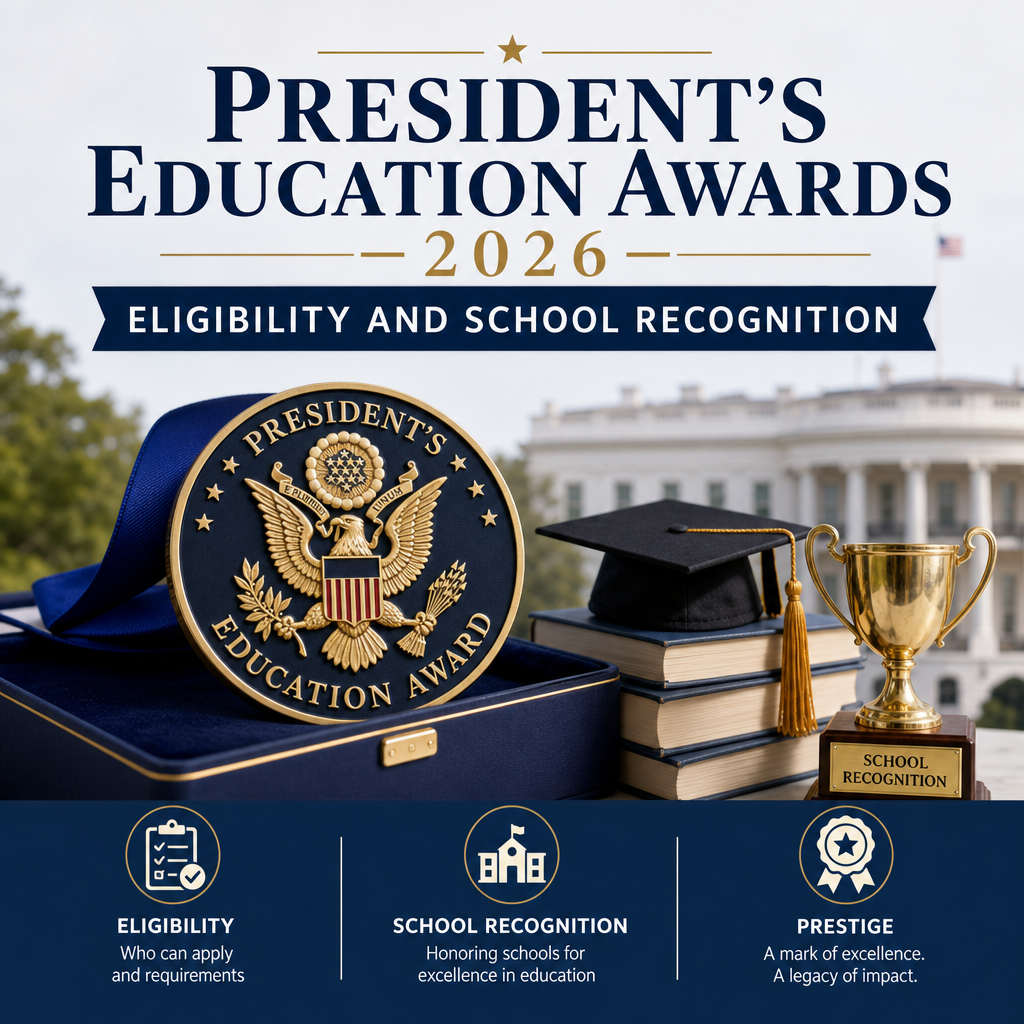
President’s Education Awards 2026: Eligibility and School Recognition
The President’s Education Awards recognize students who stand out for academic excellence, improvement, and steady commitment to learning. For schools planning for 2026, knowing the latest eligibility rules and recognition steps can help ensure every deserving student gets the spotlight.
By: Jennifer on July 25, 2026
The President’s Education Awards 2026 are one of the most recognized ways schools can honor students for academic excellence and growth. For educators, counselors, and school leaders, understanding the award criteria matters because the program helps spotlight achievement in a meaningful, nationally recognized way. For families, it offers a clear signal that a student’s hard work has been noticed and valued.
If you’re planning ahead for the President’s Education Awards 2026, it helps to understand how eligibility works, what schools need to do, and how recognition is typically presented. While the award program is not always run through a single centralized office in the same way every year, the core idea remains consistent: recognize students who demonstrate strong academic performance, improvement, and dedication to learning.
What Are the President’s Education Awards?
The President’s Education Awards are school-level recognition awards intended to celebrate student achievement. In many schools, the program includes categories for both academic excellence and academic improvement. The awards are often presented by teachers, principals, or school counselors at the end of the school year.
These awards matter because they:
Encourage students to set higher goals
Recognize consistent effort and progress
Support a positive school culture
Give families a visible milestone to celebrate
For 2026, schools should focus on verifying the current criteria through official guidance from the U.S. Department of Education or their local district, since award procedures and documentation may differ by grade level and state.
The President’s Education Awards 2026 generally reward students who meet defined academic benchmarks. Eligibility often depends on grade level, school policy, and the category of recognition.
Common award categories
Most schools use two main categories:
1. Academic Excellence
This recognition typically goes to students who achieve top grades across core subjects. Schools may look for:
Strong overall grade point averages
Excellent performance in reading, math, science, and language arts
Consistent high achievement over a grading period or school year
2. Academic Improvement
This category honors students who have shown meaningful growth. It is especially valuable because it recognizes effort and progress, not just top scores. Schools may consider:
Significant improvement from earlier performance
Better attendance and classroom participation
Stronger work habits and responsibility
Grade-level considerations
Eligibility can vary by grade span. For example:
Elementary schools may use report cards, teacher input, and behavior expectations
Middle and high schools may rely more on GPA and course performance
Some schools set separate standards for different grade levels to keep the recognition fair
Because policies can differ, schools should confirm local requirements before finalizing student lists for the President’s Education Awards 2026.
How Schools Typically Determine Eligibility
Schools often use a combination of academic records and educator review. The process is usually straightforward, but it should be consistent and transparent.
Step-by-step eligibility review
Review official school criteria
Schools should start with the award guidelines they plan to use for 2026.
Check academic records
Grades, report cards, and transcripts are reviewed to identify students who meet the standards.
Verify attendance and conduct if required
Some schools include attendance or behavior expectations as part of the recognition process.
Confirm grade-level and subject requirements
A student may qualify in one category but not another depending on the school’s standards.
Create a final recipient list
Administrators or designated staff should confirm names before certificates are printed.
Important note for schools
Keep documentation organized. Even if the award is ceremonial, recordkeeping helps ensure the process is fair and repeatable from year to year.
School Recognition: Why It Matters
School recognition is about more than handing out certificates. When done well, it reinforces positive habits and gives students a reason to stay engaged.
Benefits of recognizing student achievement
Builds student confidence
Encourages academic motivation
Strengthens the home-school connection
Shows that progress is valued, not just perfection
Promotes a culture of achievement
For many students, receiving a President’s Education Award becomes a memory they carry with them. It can also motivate younger students to work toward the same goal.
A practical example
Imagine a fifth grader who started the year struggling in math but improved steadily through tutoring, practice, and persistence. Even if that student does not earn an excellence award, the President’s Education Awards 2026 improvement category may provide a meaningful way to recognize the effort behind the progress.
That kind of recognition sends a powerful message: hard work counts.
What Schools Need to Prepare for 2026
If your school plans to participate, preparation should begin well before the end of the year. A smooth recognition program depends on good planning.
Recommended preparation checklist
Review current official award guidance
Set internal eligibility standards
Assign a staff member to manage nominations or records
Create a timeline for reviewing grades and attendance
Order certificates or prepare recognition materials
Communicate criteria to teachers and families early
Communication tips for administrators
Clear communication prevents confusion. Schools should explain:
Which students are eligible
What the award categories mean
Whether attendance or behavior affects eligibility
When awards will be presented
How families will be notified
When expectations are clear, the process feels fair and positive.
Tips for Teachers and Counselors
Teachers and counselors often play a key role in identifying students for the President’s Education Awards 2026. Their observations can help ensure the recognition reflects both academic data and real student growth.
Helpful practices for staff
Track progress throughout the year, not just at the end
Look for students who improve steadily
Watch for effort, resilience, and attendance patterns
Encourage students to stay focused on measurable goals
Use consistent criteria across classrooms when possible
Recognizing different forms of success
Not every student shines in the same way. Some are quiet high achievers. Others show dramatic improvement after a difficult start. A strong recognition program makes room for both.
How Families Can Support Students
Families can help students qualify for the President’s Education Awards 2026 by supporting consistent habits at home.
Ways parents and caregivers can help
Establish a regular homework routine
Encourage reading and study time
Stay in contact with teachers
Monitor grades and missing assignments
Celebrate effort and progress, not just final marks
Encouragement matters
Students often do better when they know adults notice their effort. A simple message like “Your progress matters” can have a lasting impact.
Common Mistakes Schools Should Avoid
Even a well-intentioned program can run into problems if the process is unclear.
Mistakes to avoid
Using inconsistent eligibility rules from one classroom to another
Waiting too long to review records
Failing to explain the award criteria
Overlooking students who improved significantly
Treating the award as a formality instead of a meaningful recognition
Schools that avoid these issues create a more credible and encouraging recognition process.
FAQs About President’s Education Awards 2026
Are the President’s Education Awards the same in every school?
Not always. Many schools follow similar recognition categories, but local implementation can vary. Eligibility rules, grade-level expectations, and presentation methods may differ by district or state. Schools should always check current official or local guidance for the most accurate information.
What qualifies a student for the academic excellence award?
In general, students qualify through strong grades and sustained high academic performance. The exact GPA or grade thresholds may vary by school. Some schools also require strong performance across core subjects and consistent behavior or attendance.
Can a student receive recognition for improvement instead of top grades?
Yes. Many schools value the academic improvement category because it recognizes growth and perseverance. This is especially important for students who made significant progress over the school year, even if they do not have the highest grades.
Do behavior and attendance affect eligibility?
They can, depending on the school’s criteria. Some schools include attendance, conduct, or citizenship expectations as part of their recognition process. Others focus mainly on academics. Administrators should clearly explain whether these factors are included.
How should schools prepare for the 2026 awards?
Schools should review current guidelines, define criteria early, monitor grades throughout the year, and communicate expectations to staff and families. It also helps to assign someone to manage the award list and presentation logistics well in advance.
The President’s Education Awards 2026 offer schools a valuable opportunity to celebrate student achievement in a way that feels both personal and meaningful. Whether a student earns recognition for academic excellence or for impressive improvement, the award highlights the kind of effort that helps learners grow. For schools, the key is to establish clear criteria, review records consistently, and communicate early with staff and families. For teachers and counselors, thoughtful recognition can strengthen motivation and help students see the connection between daily habits and long-term success.
As you plan for the 2026 award cycle, focus on fairness, clarity, and encouragement. Small details matter: transparent eligibility rules, careful recordkeeping, and a sincere presentation can turn a certificate into a memorable milestone. Most importantly, use the awards as part of a broader culture of learning that values both achievement and progress. When schools recognize students well, they do more than hand out honors—they help build confidence, resilience, and a lasting love of learning.
Jennifer, M.Ed., holds a degree in Higher Education Administration, with
a focus on U.S. college financial aid, admissions policy, and student
support systems. She researches and writes about scholarships, federal
aid programs, and the college planning process to help students and
families make informed, well-supported decisions.