School Counselors: Academic, Career, and Student Support Services
School counselors play a critical role in helping students succeed in school and prepare for life after graduation. From course selection and college planning to emotional support and crisis response, school counselors provide services that touch nearly every part of a student’s educational experience. Their work supports academic progress, career readiness, and personal growth in ways that often make a lasting difference.
Many families know school counselors as the people students visit when they need help with schedules or college applications. But their responsibilities go far beyond that. Effective school counselors help create safe, supportive school environments where students can learn, plan, and thrive. In today’s schools, that matters more than ever.
What School Counselors Do
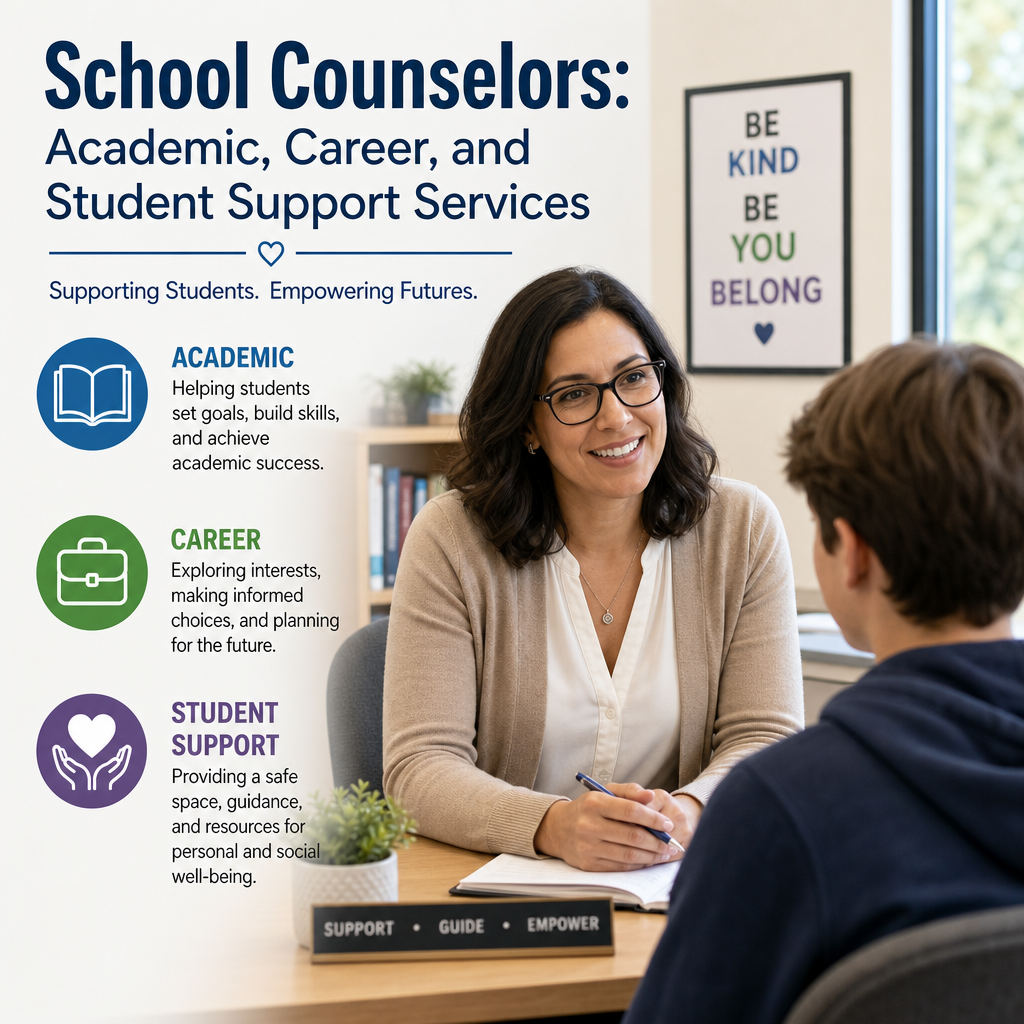
School counselors serve as trained professionals who help students address academic, social, emotional, and career-related needs. They work with individual students, small groups, teachers, families, and administrators to remove barriers to success.
Their services are usually organized around three major areas:
- Academic support
- Career development
- Student social-emotional support
In practice, this can include everything from helping a student recover from a rough quarter to guiding a senior through the college application process. School counselors also support students with attendance, behavior, and goal-setting, which can improve overall school engagement.
Academic guidance
Academic counseling helps students build habits and plans that support achievement. Counselors may assist with:
- Course planning and scheduling
- Study skills and organization
- Attendance improvement
- Credit recovery planning
- Graduation requirements
- Test preparation strategies
For example, a counselor might meet with a ninth grader who is struggling in math and help them create a plan that includes tutoring, adjusted study routines, and a clearer understanding of graduation requirements. This kind of support helps students stay on track early instead of waiting until problems become more serious.
Career development
Career counseling helps students connect school to future goals. It often includes:
- Career exploration
- Interest inventories
- Job shadowing guidance
- Resume and interview preparation
- College and technical school planning
- Financial aid information
A student who enjoys hands-on work, for instance, may not immediately see a path from high school to a skilled trade or technical program. A school counselor can help that student explore apprenticeships, certifications, and career pathways that match their strengths.
Social-emotional support
School counselors also support student well-being. They may help students manage stress, navigate peer conflict, or cope with family changes. While they are not substitutes for licensed mental health therapists in all cases, they can provide short-term counseling, crisis support, and referrals when needed.
This support may include:
- Brief individual counseling
- Small-group sessions
- Conflict resolution
- Bullying response support
- Referrals to outside mental health services
- Safety planning in emergencies
Because emotional stress often affects attendance, motivation, and behavior, this type of support is closely connected to academic success.
Why School Counselors Matter
Students do better when they have access to trusted adults who can help them solve problems and plan ahead. School counselors are often the bridge between student needs and school resources.
They matter because they help students:
- Stay on track academically
- Build confidence and resilience
- Explore future opportunities
- Navigate difficult personal situations
- Access resources they might not know about
Counselors also help schools identify patterns. If many students in a grade level are struggling with attendance or course failure, counselors may work with staff to address the issue earlier. This makes them valuable not only to individual students, but to the whole school community.
Academic Support Services in Detail
Academic support is one of the most visible parts of school counselors work. Students often need help translating long-term goals into daily habits and manageable steps.
Course planning and graduation tracking
Counselors help students choose classes that align with graduation requirements, college admissions expectations, or career goals. This is especially important in middle school and high school, when class choices can open or close future options.
They may help students understand:
- Core subject requirements
- Electives and enrichment options
- Advanced placement or honors courses
- Career and technical education pathways
- Dual enrollment opportunities
A counselor can also track credits and identify missing requirements before they become urgent.
Study habits and time management
Some students are capable but disorganized. A counselor may help them develop routines for:
- Completing homework consistently
- Managing long-term projects
- Preparing for exams
- Using a planner or digital calendar
- Breaking large tasks into smaller steps
These skills may seem simple, but they often have a major impact on academic performance.
Attendance and engagement
Chronic absences can quickly derail learning. Counselors often work with students and families to identify why absences are happening. Causes may include transportation issues, anxiety, family responsibilities, or disengagement.
Once the issue is clear, the counselor may help coordinate solutions such as:
- Check-in meetings
- Attendance incentives
- Family outreach
- Schedule adjustments
- Connections to community resources
Career Guidance and College Readiness
One of the most valuable services school counselors provide is helping students think about life after high school. School counselors guide students toward realistic, informed choices rather than one-size-fits-all paths.
Career exploration
Career exploration helps students discover interests and strengths. Counselors may use inventories, questionnaires, classroom lessons, or one-on-one meetings to introduce students to careers they may not have considered.
Examples include:
- Healthcare
- Skilled trades
- Technology
- Business
- Education
- Public service
- Arts and communications
The goal is not to force a decision too early, but to help students understand the range of opportunities available.
College and postsecondary planning
For students interested in college, counselors can help with:
- Building a college list
- Understanding admission requirements
- Writing application essays
- Requesting recommendations
- Organizing deadlines
- Comparing two-year and four-year options
They may also help students evaluate whether community college, university, technical school, or apprenticeship programs best fit their goals.
Financial aid and scholarship support
Many families feel overwhelmed by the cost of higher education. Counselors often help students and parents understand the basics of FAFSA, scholarship applications, and financial planning. They may not complete the process for families, but they can explain deadlines and help students avoid common mistakes.
Work-based learning and job readiness
Not every student plans to attend college immediately, and that is where career readiness becomes especially important. Counselors may help students prepare for:
- Part-time jobs
- Internships
- Apprenticeships
- Job interviews
- Professional communication
- Workplace expectations
These services help students see the connection between school and real-world employment.
Student Support Services and Well-Being
A student cannot learn well if they are overwhelmed, isolated, or in crisis. That is why student support services are such an important part of the counselor’s role.
Emotional and social support
Students often face stress from academics, friendships, identity questions, family transitions, and social media pressures. School counselors can provide a safe space to talk and problem-solve.
They may support students with:
- Anxiety related to tests or school performance
- Friendship issues
- Bullying concerns
- Family separation or divorce
- Grief and loss
- Adjustment to a new school
Short-term counseling and coping strategies can help students regain stability and focus.
Crisis response and referrals
School counselors also respond when a student is in immediate distress. They may assess risk, contact caregivers, work with administrators, and connect students to emergency or community services when needed.
This is where collaboration matters. Counselors often work alongside:
- School psychologists
- Social workers
- Teachers
- Nurses
- Administrators
- Outside mental health providers
A strong referral network ensures students receive the right level of help.
Equity and inclusion
School counselors help schools serve all students fairly. That means paying attention to barriers related to income, disability, language, race, housing instability, or other factors.
For example, a counselor might advocate for:
- Translation services for families
- Academic accommodations
- Access to after-school support
- Flexible planning for students with caregiving responsibilities
- Support for students experiencing homelessness or foster care transitions
This advocacy helps create a more equitable school experience.
How School Counselors Work With Families and Staff
School counseling works best when it is collaborative. School counselors do not operate in isolation. They partner with families and school staff to support student success.
Working with families
Counselors may communicate with parents and guardians about:
- Academic concerns
- Course selection
- Attendance issues
- Behavior patterns
- College and career planning
- Community support options
Families often appreciate clear, practical guidance. A counselor who explains next steps in simple language can reduce stress and improve follow-through.
Working with teachers and administrators
Teachers may notice a student who is slipping behind or withdrawing socially. Counselors can help by gathering information, leading interventions, and coordinating support.
This may include:
- Student support meetings
- Behavior intervention plans
- Academic monitoring
- Attendance review
- Classroom strategies for engagement
When counselors and teachers work together, students are more likely to receive timely support.
Qualities of Effective School Counselors
The best school counselors combine knowledge, empathy, and strong communication. They need to build trust while also keeping students focused on solutions.
Important qualities include:
- Strong listening skills
- Cultural responsiveness
- Confidentiality and professionalism
- Organization and follow-through
- Problem-solving ability
- Knowledge of academic and career pathways
- Comfort working with diverse student populations
They also need to be approachable. Students are more likely to seek help from counselors they trust.
How Students Can Benefit More From Counseling Services
Students and families can get the most out of school counseling by using the services early and often, not just during a crisis.
Here are a few practical ways to make the most of the relationship:
- Schedule meetings early in the school year.
Don’t wait until grades are failing or deadlines are close. - Bring specific questions.
For example: “What classes should I take next year?” or “How do I prepare for a career in healthcare?” - Be honest about challenges.
Counselors can help more when they understand the full picture. - Follow up on action steps.
If the counselor recommends tutoring, an appointment, or a family meeting, take the next step. - Use counseling as part of a larger support system.
Teachers, tutors, family members, and counselors can all play a role.
Common Misunderstandings About School Counselors
Some people assume counselors only handle schedules or discipline. That view misses much of their value.
They are not just schedule fixers
Scheduling is only one part of the job. School counselors also support attendance, college planning, mental health referrals, and student advocacy.
They do not replace therapists
Counselors can provide brief support and referrals, but they are not always the right provider for long-term clinical treatment. Knowing the difference helps families access the right services.
They work with all students, not only struggling ones
Every student can benefit from guidance on goals, planning, and transitions. Counselors support high-achieving students, uncertain students, and everyone in between.
Frequently Asked Questions
What is the main role of a school counselor?
The main role of a school counselor is to support student success in academics, career planning, and personal development. They help students set goals, solve problems, and access resources that support learning and well-being.
How are school counselors different from school psychologists?
School counselors focus on academic, career, and social-emotional support. School psychologists usually provide more specialized assessment, behavioral analysis, and mental health services. Both may work together as part of a student support team.
Can school counselors help with college applications?
Yes. School counselors often help students choose colleges, understand deadlines, request recommendations, and complete application steps. They may also help families understand financial aid and scholarship options.
Do school counselors provide mental health counseling?
School counselors can offer short-term support, coping strategies, and crisis intervention. However, they are not always a substitute for long-term therapy. If a student needs ongoing mental health care, counselors can help connect them with outside services.
When should a student meet with a school counselor?
Students should meet with a counselor whenever they need help with class planning, academic struggles, stress, friendships, career questions, or transition planning. It is best to reach out early rather than waiting for a problem to grow.
Official Resources
- American School Counselor Association
- U.S. Department of Education
- National Center for Education Statistics
- National Association of College Admission Counseling
- U.S. Department of Labor CareerOneStop
Conclusion
School counselors are a vital part of student success because they support the whole child, not just report cards or schedules. Their work spans academic planning, career exploration, and student support services that help learners overcome obstacles and move forward with confidence. Whether a student needs help choosing classes, managing stress, understanding graduation requirements, or preparing for a future career, a school counselor can provide practical guidance and a steady point of support.
The most effective counseling happens when students, families, teachers, and counselors work together. Early communication, clear goals, and consistent follow-up can make a meaningful difference in school outcomes and long-term readiness. If you are a parent, student, or educator, getting to know your school counselor is a smart step toward stronger support and better planning.
Understanding the full scope of school counselors helps families use these services more effectively and appreciate the important role they play in every school community. When students have access to informed, compassionate guidance, they are better prepared to succeed both in school and beyond.