Condition of Education 2026: Key Trends in U.S. Schools
The Condition of Education 2026 offers a snapshot of where U.S. schools stand and where they may be headed next. For parents, educators, policymakers, and community leaders, this annual picture matters because it helps explain the real forces shaping classrooms: enrollment patterns, academic recovery, staffing, student well-being, and the ongoing role of technology. While every district has its own story, the broader trends in the Condition of Education 2026 point to a school system that is still adapting to post-pandemic learning gaps, changing demographics, and new expectations for student support.
In other words, the story of U.S. education in 2026 is not just about test scores. It is about access, equity, teacher capacity, attendance, mental health, and whether students have the conditions they need to succeed. Understanding these shifts can help schools make smarter choices and help families know what to expect.
What the Condition of Education 2026 Tells Us About U.S. Schools
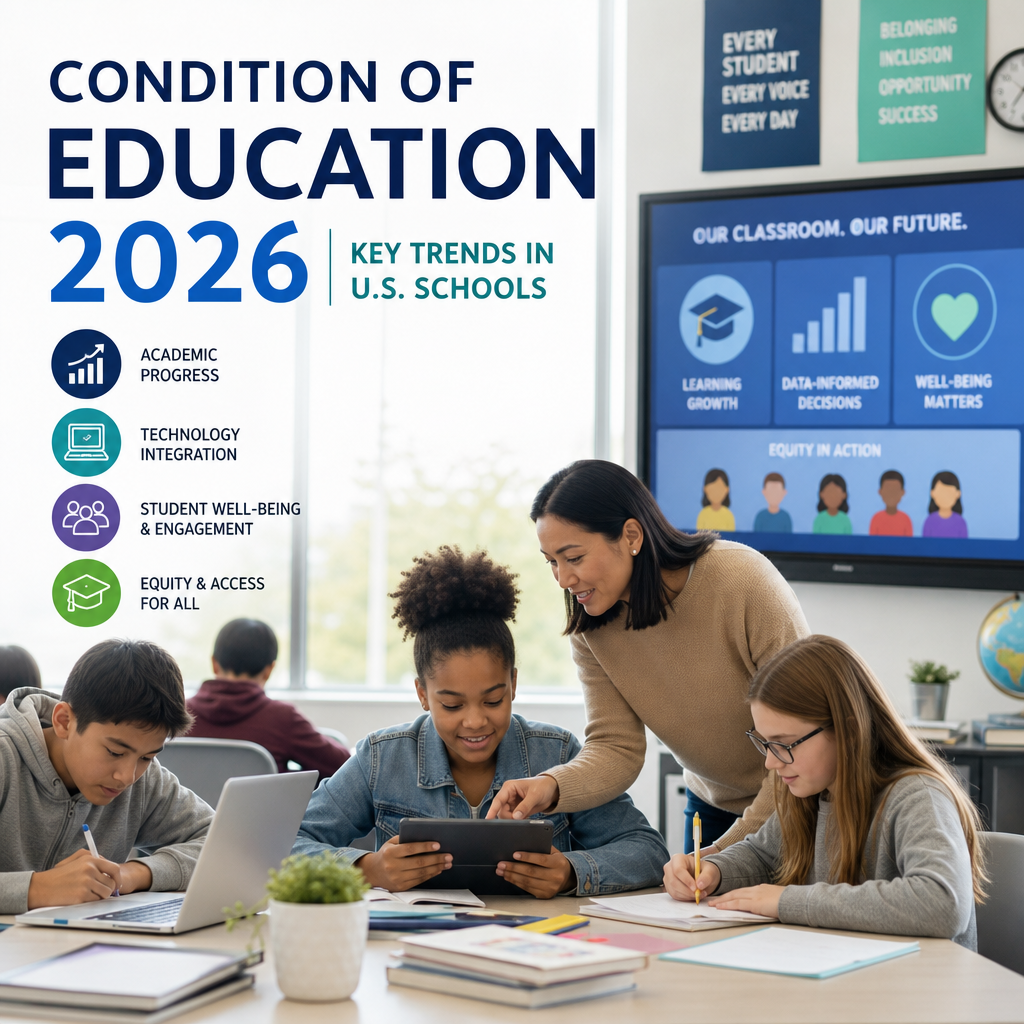
The Condition of Education 2026 is best understood as a broad look at how American schools are functioning across multiple dimensions. Rather than focusing on one outcome, it shows how enrollment, achievement, staffing, and student supports interact.
A few themes stand out:
- Schools are still working through uneven academic recovery.
- Staffing challenges continue to affect many districts.
- Student attendance and engagement remain major concerns.
- Mental health and well-being are more central than ever.
- Technology is now deeply connected to daily instruction.
These themes matter because schools do not operate in isolation. Academic outcomes often reflect attendance, family stability, available support services, and teacher capacity. That is why the Condition of Education 2026 matters as more than a yearly report—it is a guide to the health of the public education system.
Enrollment and Demographic Shifts Continue to Reshape Schools
One of the most important trends in the Condition of Education 2026 is changing student demographics. Districts across the country are seeing shifts in the number of children entering schools, the languages they speak at home, and the communities they come from.
Fewer students in some areas, more pressure in others
Some districts are dealing with declining enrollment, especially in areas with lower birth rates or families moving away. Other communities are seeing growth, often driven by immigration or regional population changes. These changes can affect:
- school funding
- staffing needs
- transportation planning
- class sizes
- building use and consolidation decisions
For example, a district with declining enrollment may need to rethink how it uses older buildings, while a fast-growing suburban district may struggle to open enough classroom space quickly enough.
More multilingual learners in many schools
Another consistent trend is the rise in students who speak languages other than English at home. This creates both opportunity and challenge. Schools that invest in bilingual staff, translation services, and strong English learner programs are often better able to build family trust and support academic success.
This is one reason the Condition of Education 2026 highlights the need for flexible, culturally responsive instruction rather than one-size-fits-all solutions.
Academic Recovery Remains Uneven Across Grade Levels
Academic progress has improved in some places, but recovery has not been equal across subjects, grades, or student groups. The Condition of Education 2026 suggests that schools are still wrestling with learning gaps that began during the pandemic and were made worse by years of disrupted attendance and inconsistent instructional time.
Reading and math are still top concerns
Many districts continue to focus heavily on literacy and numeracy because those skills affect performance in nearly every other subject. Students who struggle with reading comprehension often face challenges in science, social studies, and even math word problems. Likewise, weak foundational math skills can make advanced coursework much harder.
Schools are responding with strategies such as:
- targeted tutoring
- high-dosage intervention blocks
- evidence-based reading curricula
- diagnostic assessments
- summer learning programs
These approaches can help, but they work best when schools identify needs early and use data consistently.
High school students face a different recovery path
Older students often need support that goes beyond basic skill remediation. They may be trying to recover credits, prepare for college, enter career training, or balance work and family responsibilities. In the Condition of Education 2026, high school recovery is not only about test performance. It is also about graduation pathways, postsecondary readiness, and engagement.
A student who missed key coursework in ninth grade may need credit recovery, advising, and flexible scheduling to stay on track. Without those supports, small setbacks can become permanent barriers.
Teacher Workforce Challenges Continue to Affect Instruction
No discussion of the Condition of Education 2026 is complete without addressing staffing. Teacher shortages and turnover continue to affect many schools, especially in special education, math, science, and bilingual education.
Why staffing matters so much
When schools are short on teachers, the effects show up quickly:
- larger class sizes
- more substitute coverage
- less individualized instruction
- higher workload for remaining staff
- reduced planning time and morale
Even schools that are fully staffed on paper may struggle with retention if teachers feel overextended or unsupported. That can lead to a cycle where new teachers leave early, creating even more instability for students.
Support and retention are now just as important as recruitment
District leaders are increasingly recognizing that hiring alone is not enough. To strengthen the workforce, schools need:
- mentoring for new teachers
- manageable workloads
- strong school leadership
- professional development tied to classroom needs
- career pathways that encourage teachers to stay
The Condition of Education 2026 underscores a simple truth: stable schools need stable adult teams. When teachers have the tools and time to do their jobs well, students benefit.
Attendance and Engagement Remain Critical Warning Signs
Chronic absenteeism remains one of the clearest indicators that students may be struggling. The Condition of Education 2026 shows that even when academic scores improve, attendance problems can limit the gains.
Why missing school matters
Students who miss too much school lose more than seat time. They miss:
- direct instruction
- classroom discussions
- peer interaction
- teacher feedback
- routine and structure
Absences can also make school feel harder to return to, especially if a student is already behind or anxious about missing work.
Schools are using more proactive attendance strategies
Many schools have shifted away from punishment-heavy attendance systems and toward family-centered support. Effective strategies often include:
- early warning systems
- attendance teams
- family outreach
- transportation support
- check-ins with counselors or social workers
This approach reflects a growing understanding that attendance is often a symptom of larger issues, such as housing instability, health concerns, bullying, or transportation barriers.
In the Condition of Education 2026, attendance is not just an operational issue. It is a student success issue.
Student Mental Health and Well-Being Stay in the Spotlight
The Condition of Education 2026 also reflects an important shift in how schools view student well-being. Academic success increasingly depends on whether students feel safe, connected, and emotionally supported.
More schools are building support systems
Many districts now recognize that mental health affects learning, behavior, and attendance. As a result, schools are adding or expanding:
- school counselors
- psychologists and social workers
- peer support programs
- trauma-informed practices
- restorative approaches to discipline
These supports can help students manage stress, build resilience, and stay engaged in class.
The challenge is matching need with capacity
Even as awareness grows, many schools still do not have enough staff or funding to meet demand. A single counselor may serve hundreds of students, which makes it difficult to provide the level of support families expect.
The Condition of Education 2026 highlights this gap: schools know mental health matters, but many are still building the infrastructure to respond effectively.
Technology Is More Embedded, but Access Still Matters
Technology has become part of everyday learning in most U.S. schools. The Condition of Education 2026 shows that digital tools are no longer optional extras—they are woven into instruction, communication, and assessment.
How technology is changing classroom practice
Teachers now use digital platforms for:
- assignments and feedback
- adaptive learning programs
- communication with families
- online testing and data tracking
- hybrid or blended instruction
Used well, technology can help personalize instruction and save teachers time. It can also make learning more accessible for students who need speech-to-text tools, translation support, or flexible pacing.
The digital divide is still real
Even with better school technology, not all students have equal access at home. Reliable internet, a quiet workspace, and up-to-date devices are still unevenly distributed. That gap can affect homework completion, attendance in virtual programs, and family communication.
The Condition of Education 2026 makes clear that access is more than having a device. It also includes connectivity, training, and support for families who may not be comfortable navigating multiple digital systems.
Equity Remains Central to the Education Conversation
Another major theme in the Condition of Education 2026 is equity. Schools continue to serve students with different starting points, and outcomes often reflect access to resources as much as effort or ability.
Equity means more than equal treatment
Equal treatment sounds fair, but it does not always produce fair results. Students may need different kinds of support depending on disability status, language background, income, or geography. That is why effective schools focus on meeting students where they are.
Common equity-focused strategies include:
- differentiated instruction
- accessible learning materials
- bilingual communication with families
- targeted academic intervention
- inclusive special education practices
Data helps, but only when used responsibly
The best schools use data to identify patterns without reducing students to numbers. A strong equity approach asks:
- Who is being left behind?
- Which groups are improving?
- Where are supports missing?
- Are interventions working?
The Condition of Education 2026 suggests that equity is not a side issue. It is central to whether schools can improve outcomes for all students.
What Families and Educators Can Learn From These Trends
The value of the Condition of Education 2026 is that it helps different audiences make better decisions. Families can use it to understand why schools may be changing schedules, adding interventions, or prioritizing attendance outreach. Educators can use it to reflect on classroom needs. Policymakers can use it to guide funding and planning.
Practical takeaways for families
Parents and caregivers can look for schools that:
- communicate clearly and consistently
- take attendance seriously
- offer strong reading and math support
- provide student mental health resources
- use technology in ways that support learning, not overwhelm it
Practical takeaways for school leaders
District and school leaders can respond by:
- reviewing attendance and achievement data together
- strengthening teacher support and retention
- expanding family engagement in multiple languages
- investing in tutoring and intervention systems
- aligning mental health services with student needs
The strongest schools in 2026 will likely be those that treat improvement as a systems issue, not a single-program fix.
Frequently Asked Questions
What is the Condition of Education 2026?
The Condition of Education 2026 is a broad overview of how U.S. schools are performing across important areas such as enrollment, staffing, achievement, attendance, and student well-being. It helps explain major trends affecting public education and highlights where schools may need more support.
Why is the Condition of Education 2026 important?
It matters because it gives educators, families, and policymakers a clearer picture of the challenges and opportunities facing schools. Instead of focusing on one number or outcome, it shows how multiple factors work together to shape student success.
What are the biggest trends in U.S. schools in 2026?
Some of the biggest trends include uneven academic recovery, staffing shortages in key subjects, attendance concerns, increased attention to mental health, changing student demographics, and growing dependence on educational technology.
How does the Condition of Education 2026 affect parents?
Parents can use these trends to better understand school decisions, from tutoring programs to attendance initiatives. It also helps families know which supports to ask about, such as language services, counseling, special education resources, and digital access.
What can schools do to respond to these trends?
Schools can strengthen early intervention, support teachers, improve family outreach, invest in student mental health, and use data more strategically. The most effective responses are usually coordinated rather than isolated.
Official Resources
- National Center for Education Statistics (NCES)
- U.S. Department of Education
- National Center for Education Statistics: Condition of Education
- Institute of Education Sciences
- U.S. Department of Education: Office for Civil Rights
Conclusion
The Condition of Education 2026 shows a U.S. school system in transition. Schools are still working to close academic gaps, strengthen attendance, stabilize staffing, and meet growing student needs for mental health and individualized support. At the same time, shifting demographics and the rise of educational technology are changing how districts plan, teach, and communicate.
The most important lesson is that school improvement is not driven by one factor alone. Students do better when schools have strong teachers, consistent attendance, accessible learning tools, and the right support systems in place. Families, educators, and leaders all have a role to play in making that happen.
If you are following education trends this year, use this broader view to ask better questions: Are students getting the support they need? Are schools investing in people as much as programs? Are equity and access built into the plan? The answers to those questions will shape not only the Condition of Education 2026, but also the future of American education.