Secured vs Unsecured Loans: Collateral, Rates, and Risks
Choosing between secured vs unsecured loans often comes down to how much risk you’re willing to take and whether you have collateral to offer. Secured loans may come with lower rates, while unsecured loans can be faster and easier to get, but usually at a higher cost.
By: Mary Smith on July 25, 2026
Borrowing money can be a smart way to cover a major expense, consolidate debt, or fund a life milestone. But not all loans work the same way. When comparing secured vs. unsecured loans, the biggest difference comes down to collateral, interest rates, and risk.
If you’re trying to decide which type of loan makes sense for your situation, understanding how each one works can help you avoid costly mistakes. In this guide, we’ll break down the basics of secured and unsecured loans, explain how lenders evaluate applications, and show you how to compare options with confidence.
What Are Secured and Unsecured Loans?
At the most basic level, loans fall into two main categories:
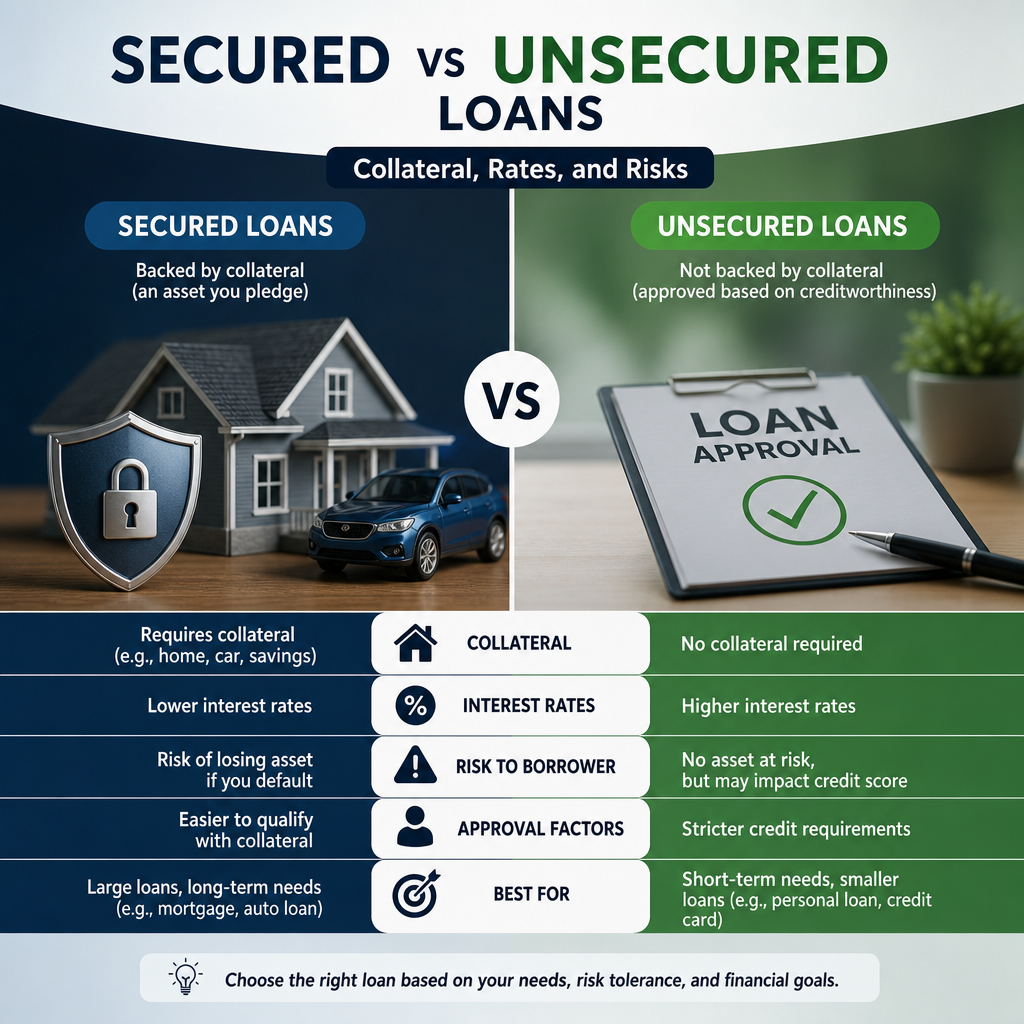
Secured loans are backed by collateral, such as a house, car, savings account, or other valuable asset.
Unsecured loans do not require collateral. Instead, lenders approve them based largely on your creditworthiness, income, and existing debt.
In other words, a secured loan gives the lender something to claim if you fail to repay, while an unsecured loan relies more heavily on your promise to repay and your financial history.
How Collateral Changes the Loan Structure
Collateral is the main feature that separates secured from unsecured borrowing. It lowers the lender’s risk, which often leads to more favorable loan terms for the borrower.
Examples of collateral include:
A home for a mortgage
A vehicle for an auto loan
A savings account for a secured personal loan
Equipment or inventory for some business loans
If you default on the loan, the lender may be able to seize the collateral, depending on the loan agreement and applicable laws.
How Secured Loans Work
Secured loans are common because they allow borrowers to access larger amounts of money and, in many cases, lower interest rates. Lenders feel more comfortable extending credit when an asset backs the loan.
Common Types of Secured Loans
Some of the most familiar secured loans include:
Mortgages: Used to buy a home, with the home serving as collateral
Auto loans: Used to finance a vehicle, with the vehicle securing the loan
Home equity loans and home equity lines of credit (HELOCs): Borrowers use their home equity as collateral
Secured personal loans: Backed by cash savings, certificates of deposit, or other assets
Secured business loans: May use equipment, receivables, or other business assets as collateral
Why Borrowers Choose Secured Loans
Secured loans can be appealing for several reasons:
Lower rates than many unsecured loans
Higher borrowing limits
Longer repayment terms
Better approval odds for borrowers with weaker credit
For example, someone with limited credit history may qualify for a secured credit-builder loan or a secured personal loan by pledging funds in a savings account. That structure gives the lender confidence while helping the borrower build credit through on-time payments.
How Unsecured Loans Work
Unsecured loans do not require collateral, which makes them more flexible—but often more expensive. Because the lender has no asset to claim if you stop paying, approval depends more heavily on your financial profile.
Common Types of Unsecured Loans
Examples include:
Personal loans
Credit cards
Student loans in many cases
Some lines of credit
Certain medical or retail financing products
What Lenders Evaluate Instead of Collateral
For an unsecured loan, lenders typically review:
Credit score and credit report
Debt-to-income ratio
Employment and income stability
Payment history
Existing obligations
If your credit is strong and your income is steady, you may qualify for attractive unsecured loan terms. If your credit is weaker, you may still qualify, but usually at a higher interest rate or with smaller loan amounts.
Secured vs. Unsecured Loans: Key Differences
The most important differences between secured and unsecured loans affect cost, approval, and risk.
1. Collateral Requirement
Secured loans: Require an asset to back the loan
Unsecured loans: No collateral required
2. Interest Rates
In general:
Secured loans tend to offer lower interest rates
Unsecured loans usually come with higher rates because the lender takes on more risk
That said, your actual rate depends on credit score, loan amount, repayment term, lender policies, and market conditions.
3. Loan Amounts and Terms
Secured loans often allow higher borrowing limits and longer repayment periods
Unsecured loans may have lower borrowing caps and shorter terms
This is one reason mortgages and auto loans are typically secured: the asset helps support the larger balance.
4. Approval Requirements
Secured loans: Approval may be easier if you have collateral, even with average credit
Unsecured loans: Approval often depends more on strong credit and stable income
5. Risk to the Borrower
Secured loans: You could lose the collateral if you default
Unsecured loans: You won’t lose a pledged asset, but default can still lead to collections, lawsuits, wage garnishment in some cases, and serious credit damage
Pros and Cons of Secured Loans
Secured borrowing can be powerful, but it isn’t risk-free.
Advantages of Secured Loans
Often lower interest rates
Higher approval odds for some borrowers
Larger borrowing amounts
May help build or improve credit when managed responsibly
Disadvantages of Secured Loans
Risk of losing your collateral
May require a valuable asset you already own
Can create added stress if your financial situation changes
Some loans involve closing costs, appraisal fees, or other charges
When a Secured Loan Makes Sense
A secured loan may be a good choice when:
You need to borrow a large amount
You want a lower interest rate
You have collateral available
You are confident you can make payments on time
For example, a homeowner looking to fund a major renovation may prefer a home equity loan if the rate is significantly lower than a personal loan. The key is making sure the monthly payment fits comfortably into the budget.
Pros and Cons of Unsecured Loans
Unsecured loans offer convenience and flexibility, but that ease often comes at a price.
Advantages of Unsecured Loans
No collateral required
Faster and simpler application process in many cases
No direct risk of losing a personal asset
Good option for borrowers who do not own valuable assets
Disadvantages of Unsecured Loans
Higher interest rates are common
Lower loan limits may apply
Strong credit may be required for the best terms
Missed payments can still cause serious financial consequences
When an Unsecured Loan Makes Sense
An unsecured loan may be the better option if:
You need money quickly
You do not want to risk an asset
You are borrowing a moderate amount
Your credit profile is strong enough to secure a competitive rate
A common example is debt consolidation. If you qualify for a lower-rate personal loan, you might use it to pay off multiple credit cards and simplify your monthly payments. But if the new loan rate is not meaningfully better, the move may not save you money.
How Interest Rates Are Determined
When comparing secured vs. unsecured loans, rate differences often influence the final decision. Lenders use several factors to set rates.
Factors That Can Affect Your Rate
Credit score and payment history
Loan type
Collateral value
Loan term
Income and debt levels
Overall economic conditions
Lender-specific underwriting standards
Why Secured Loans Usually Cost Less
Because collateral reduces the lender’s risk, secured loans often carry lower annual percentage rates (APRs). If you default, the lender has a backup option. That added protection can translate into better pricing for the borrower.
Still, a secured loan is not automatically cheap. A borrower with poor credit, a risky income profile, or a weak asset value may still face a relatively high rate.
Why Unsecured Loans Usually Cost More
Without collateral, lenders rely more on your credit profile. To compensate for the higher risk, they often charge more in interest. If your credit is excellent, you may still qualify for a very competitive unsecured rate. But borrowers with average or damaged credit typically pay more.
The Real Risks of Each Loan Type
Borrowing always involves risk. The right choice depends on which risks you can tolerate and which ones you can avoid.
Risks of Secured Loans
The biggest risk is losing the collateral. That can be especially serious when the collateral is your home or vehicle.
Other risks include:
Negative equity if the asset loses value
Foreclosure or repossession in severe cases
Added fees tied to the property or asset
Borrowing more than you can realistically repay
If your income is unstable, putting a critical asset on the line may create too much exposure.
Risks of Unsecured Loans
Unsecured loans don’t threaten a pledged asset, but default still has consequences:
Credit score damage
Collection activity
Late fees and penalty interest
Potential legal action in some cases
Difficulty qualifying for future borrowing
These loans can become expensive quickly if the rate is high and repayment stretches over several years.
How to Choose Between Secured and Unsecured Loans
The best loan type depends on your goals, your credit, and your comfort with risk.
Ask These Questions Before Borrowing
Do I need a large loan amount?
Secured loans may offer more room to borrow.
Do I have collateral I’m willing to risk?
If not, unsecured may be safer.
Can I qualify for a competitive unsecured rate?
Strong credit can make unsecured borrowing more attractive.
How stable is my income?
If your income fluctuates, avoid loans that could put essential assets at risk.
What is the total cost of the loan?
Compare APR, fees, repayment term, and monthly payment.
Practical Example
Suppose you need $20,000 to cover home improvements. You compare two options:
A secured home equity loan with a lower rate but your house as collateral
An unsecured personal loan with a higher rate but no collateral requirement
If the secured option saves you a meaningful amount and you have a reliable repayment plan, it may be worth considering. If your budget is tight or your income is uncertain, the unsecured loan may feel safer even at a higher cost.
Tips for Borrowing Responsibly
No matter which type of loan you choose, smart borrowing habits matter.
Borrow Only What You Need
Avoid taking the maximum amount just because you qualify. A smaller loan balance usually means lower total interest and less financial stress.
Compare Multiple Lenders
Rates and fees can vary widely. Review offers from banks, credit unions, and reputable online lenders.
Check the Fine Print
Look closely at:
APR
Origination fees
Prepayment penalties
Late fees
Default terms
Collateral rights for secured loans
Make a Realistic Repayment Plan
Before accepting a loan, confirm that the monthly payment fits your budget even if other expenses rise.
Protect Your Credit
Make every payment on time. Responsible repayment can help build a stronger credit profile and improve your future borrowing options.
Frequently Asked Questions
What is the main difference between secured and unsecured loans?
The main difference is collateral. A secured loan uses an asset to back the debt, while an unsecured loan does not. Because of that, secured loans usually offer lower rates and higher borrowing limits, while unsecured loans are often easier to access without risking property.
Are unsecured loans harder to get?
They can be, especially if your credit score is low or your income is inconsistent. Since the lender does not have collateral, approval depends more on your credit history, debt load, and ability to repay. Borrowers with strong credit usually have the best chances of getting favorable terms.
Can I lose my house or car with a secured loan?
Yes, if the loan is tied to that asset and you default, the lender may have the right to take it through foreclosure or repossession, depending on the loan type and local laws. That is why secured loans require careful budgeting and a clear repayment plan.
Do unsecured loans always have higher interest rates?
Not always, but they often do. Lenders usually charge more for unsecured loans because they take on more risk. If you have excellent credit, you may still qualify for a relatively low unsecured rate, especially from a credit union or competitive online lender.
Which is better for debt consolidation: secured or unsecured?
It depends on your goals and risk tolerance. An unsecured personal loan may be preferable if you do not want to risk collateral. A secured loan may offer a lower rate and save more money over time, but it also places an asset on the line. Compare the total cost and repayment terms before deciding.
Understanding the difference between secured vs. unsecured loans can help you make a smarter, more confident borrowing decision. Secured loans often come with lower rates and bigger borrowing limits, but they also put an asset at risk. Unsecured loans offer more flexibility and no collateral requirement, though they usually cost more and may require stronger credit.
The best choice depends on your financial goals, repayment ability, and comfort with risk. If you need a larger loan and can comfortably manage the payments, a secured option may offer real savings. If you value simplicity and want to avoid risking property, an unsecured loan may be the better fit.
Before signing any agreement, compare APRs, fees, terms, and lender reputations. A few extra minutes of research can save you money and stress over the life of the loan. When used wisely, the right loan can support your goals without creating unnecessary financial strain.
Mary S, CFP®, is a Certified Financial Planner with over 12 years of experience in personal finance, retirement planning, and wealth management. She writes educational content that helps readers understand financial concepts and make informed decisions based on reliable information.