Aviation STEM Education for Aerospace Career Exploration
Aviation STEM education helps students connect classroom lessons to real-world aerospace careers, turning math, science, and technology into exciting paths they can actually pursue. From pilots and aircraft mechanics to engineers and drone technicians, it opens the door to a future in flight.
By: Jennifer on July 25, 2026
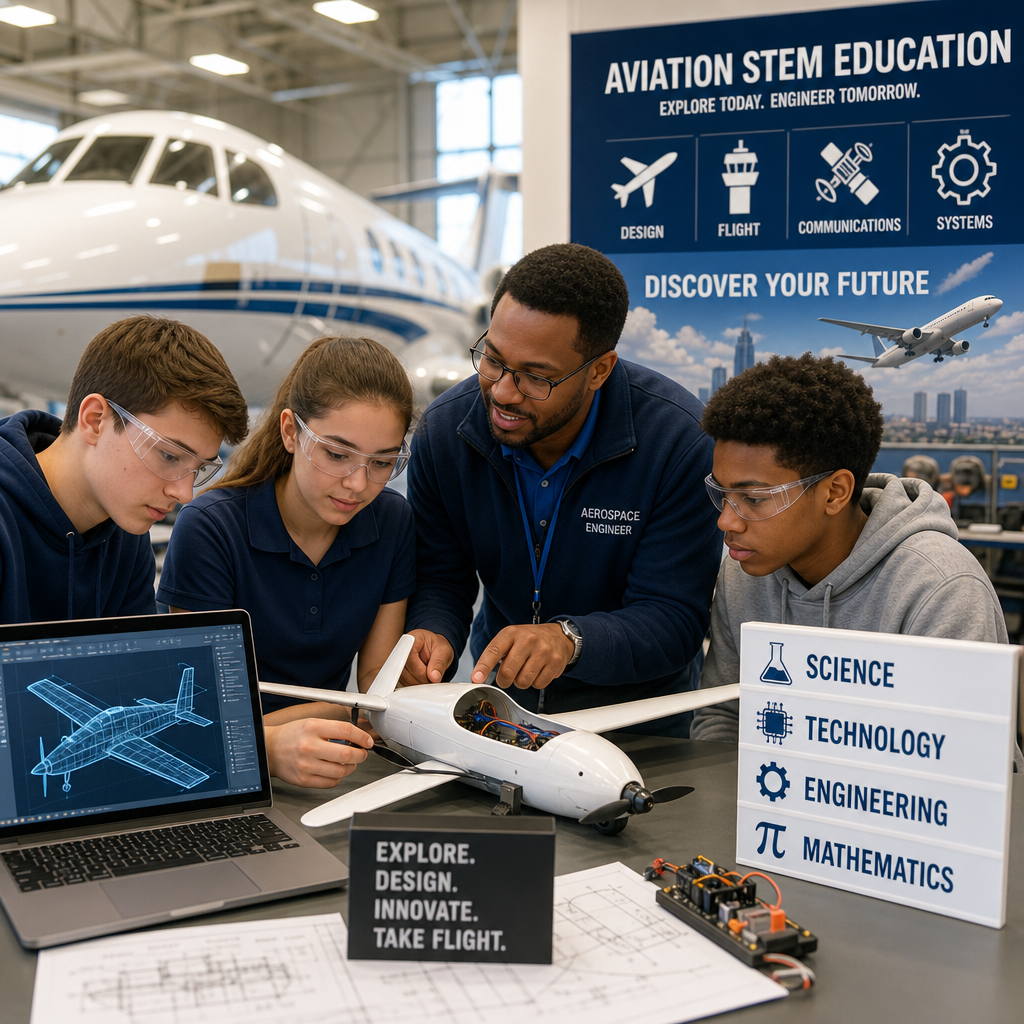
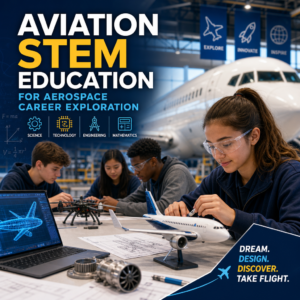
Aviation STEM education gives students a real-world pathway into one of the most innovative industries in the world. By connecting science, technology, engineering, and math to airplanes, drones, air traffic systems, and space exploration, educators can show learners that aerospace careers are not only exciting—they are also achievable. Whether a student dreams of becoming a pilot, aircraft mechanic, aerospace engineer, or flight systems technician, early exposure can make a lasting difference.
Today’s aviation industry needs problem-solvers, critical thinkers, and hands-on learners. That is exactly why aviation STEM education matters. It helps students see how classroom concepts apply to the skies above them and the technology shaping the future of flight.
Why Aviation STEM Education Matters
Aviation is more than flying planes. It includes aircraft design, airport operations, navigation, safety systems, maintenance, logistics, and emerging technologies like electric aircraft and unmanned aerial systems. When students explore aviation STEM education, they gain a broader understanding of how many careers support air travel and aerospace innovation.
It connects learning to real careers
One of the biggest challenges in STEM education is helping students answer the question: “Why does this matter?” Aviation provides a powerful answer. Math becomes flight planning. Physics becomes lift and drag. Engineering becomes aircraft design. Technology becomes cockpit systems and aviation software.
This connection helps students:
Understand how STEM subjects work in real life
Build motivation to stay engaged in school
Explore careers they may not have considered
Develop confidence through applied learning
It supports career awareness early
Many students first learn about careers like pilot or astronaut, but the aerospace field includes many more roles. Aviation STEM education introduces students to a wide range of options, including:
Aerospace engineer
Aircraft mechanic
Avionics technician
Air traffic controller
Drone operator
Flight dispatcher
Airport manager
Meteorologist
Cabin safety specialist
Early exposure matters because students often choose courses, internships, and training paths long before graduation.
How Aviation STEM Education Builds Career Pathways
A strong aviation STEM education program does more than spark interest. It creates a pathway from curiosity to preparation. Schools, museums, nonprofits, and industry partners can work together to guide students from introductory activities to career-focused learning experiences.
Middle school: Sparking interest through exploration
At the middle school level, the goal is to create curiosity. Students benefit from hands-on activities that make aviation approachable and fun. Examples include:
Building simple gliders
Learning the basics of aerodynamics
Testing paper airplane designs
Exploring how weather affects flight
Using flight simulators or drone demos
These experiences help students see aviation as something they can understand, not just something they observe from a distance.
High school: Connecting skills to career readiness
In high school, aviation STEM education can become more focused on career pathways. Students can take courses in:
Engineering and design
Computer science
Physics
Robotics
Technical mathematics
Aviation maintenance or aeronautics, where available
Schools can also offer career exploration through:
Guest speakers from the aviation industry
Job shadowing
Internship programs
Career and technical education (CTE) pathways
Dual enrollment with community colleges or technical schools
This stage is important because students begin making decisions about postsecondary education, certifications, or military and civilian training options.
Postsecondary: Training for specialized roles
For students ready to continue, aviation career pathways often lead to:
Two-year technical degrees
Four-year engineering or aviation management programs
FAA certifications
Apprenticeships
Professional flight training
Aviation STEM education helps students understand that not every aerospace career requires the same level of education, but all of them require discipline, technical knowledge, and a commitment to safety.
Core STEM Concepts That Apply to Aviation
Aviation is a natural fit for interdisciplinary STEM instruction. Teachers can use aircraft and aerospace examples to reinforce key academic concepts in a way that feels practical and memorable.
Science in flight
Science explains why flight works. Students can learn about:
Lift, thrust, drag, and weight
Air pressure and airflow
Weather patterns and turbulence
Materials science in aircraft construction
Human factors and physiology at altitude
A simple experiment with wings, airflow, or model aircraft can make these concepts easier to grasp than a textbook alone.
Technology in modern aviation
Technology shapes nearly every part of aviation. Students can explore:
Navigation systems
Flight control software
Satellite communication
Aircraft sensors
Simulation tools
Drone programming and controls
These technologies show students how digital skills and aviation increasingly overlap.
Engineering in aircraft design
Engineering is central to aviation STEM education. Students can investigate:
Structural design and weight distribution
Fuel efficiency
Safety features
Aerodynamic testing
Materials selection
System integration
Design challenges are especially effective because they encourage creativity, testing, revision, and teamwork.
Math in flight operations
Math shows up in nearly every aviation task. Students can use it for:
Distance, speed, and time calculations
Fuel planning
Altitude and navigation
Weight and balance
Graphing weather trends
Measuring angles and trajectories
When students solve aviation-related math problems, the subject becomes more practical and less abstract.
Hands-On Activities That Make Aviation STEM Education Work
Aviation STEM education works best when students get to build, test, analyze, and improve. Hands-on learning keeps students engaged and helps them understand how aerospace professionals solve problems.
Build-and-test projects
Project-based learning is especially effective in aviation settings. Teachers can ask students to design and test:
Paper airplanes with different wing shapes
Model rockets
Gliders made from everyday materials
Wind tunnel prototypes
Simple landing gear systems
These projects teach design thinking and the value of iteration. Students quickly learn that failure is part of the engineering process.
Flight simulation and digital learning
Flight simulators give students a safe, exciting way to explore aviation systems. Even basic simulators can help students learn:
Aircraft controls
Navigation basics
Runway approaches
Weather impacts
Communication protocols
Digital tools also support students who learn best through interactive experiences. Many schools and youth programs now use aviation software, virtual labs, and online modules to expand access.
Drone education
Drones have become a strong entry point into aviation STEM education because they combine aviation principles with robotics, programming, and problem-solving. Students can learn:
How drones are controlled
How sensors support stability and navigation
Basic coding and automation
Safe and responsible operation
Real-world uses in photography, inspection, agriculture, and emergency response
Drone-based lessons are especially useful for introducing students to the broader unmanned aircraft industry.
How Educators Can Introduce Aerospace Careers
Students need more than activities—they need guidance. Educators and program leaders can make aerospace careers feel accessible by showing clear steps and real examples.
Bring in industry professionals
Guest speakers can have a huge impact. Students remember hearing from a pilot, mechanic, engineer, or dispatcher because those professionals make the career feel real. When possible, include speakers from diverse backgrounds so students can see people who look like them in the industry.
Use career mapping
Career mapping helps students connect interests with education and training requirements. For example:
A student who enjoys math and design might explore aerospace engineering
A student interested in hands-on work might look into aircraft maintenance
A student drawn to communication and decision-making might consider air traffic control or dispatch
A career map can outline:
High school coursework
Certifications or college programs
Entry-level experience
Long-term advancement opportunities
Connect learning to local aviation assets
Many communities have resources that support aviation STEM education, such as:
Airports
Flight schools
Aviation museums
Community colleges
Technical training centers
Aerospace manufacturers
Maintenance facilities
Local partnerships help students see that aerospace careers may be closer than they think.
Making Aviation STEM Education Inclusive and Accessible
To reach more students, aviation STEM education must be inclusive. Many young people assume aviation is only for “math kids” or students with family connections in the industry. Educators can challenge those assumptions by designing programs that welcome different learning styles and backgrounds.
Reduce barriers to entry
Programs become more accessible when they:
Offer low-cost or no-cost activities
Provide transportation when possible
Use materials students can access easily
Include beginner-friendly lessons
Encourage teamwork over competition alone
Highlight diverse career roles
Not every student will want to fly a plane, and that is okay. Aviation needs people who can:
Design systems
Maintain equipment
Analyze data
Manage operations
Communicate clearly
Ensure safety and compliance
Showing many different roles helps more students imagine a place for themselves in aerospace.
Support girls and underrepresented students
Aviation and aerospace have long struggled with representation gaps. Schools and programs can help by:
Featuring diverse role models
Creating mentorship opportunities
Using inclusive language
Avoiding stereotypes about who “belongs” in STEM
Encouraging leadership and hands-on participation
When students feel seen and supported, they are more likely to persist.
Practical Tips for Schools and Program Leaders
If you are building or improving an aviation STEM education program, start small and stay consistent. A strong program does not need expensive equipment from day one.
Start with a simple structure
A good beginner model may include:
One aviation-themed lesson per month
A hands-on activity each quarter
One guest speaker per semester
A field trip or virtual tour annually
Align lessons with standards
Aviation activities work best when they support academic goals. Teachers can align them with standards in:
Science
Math
Engineering and technology
Career readiness
Career and technical education
This makes aviation STEM education easier to justify and easier to sustain.
Measure student growth
You do not need complex data systems to see impact. Look for signs such as:
Increased student engagement
Better attendance in STEM activities
Stronger teamwork and problem-solving
More student questions about careers
Greater interest in advanced courses or training programs
These indicators show that students are making meaningful connections.
Real-World Benefits of Early Aerospace Exposure
When students encounter aviation STEM education early, the benefits go beyond one career field. They often strengthen skills that transfer across many industries.
Students learn to:
Think critically
Work as a team
Communicate clearly
Adapt to changing information
Solve problems under pressure
Take pride in technical work
These are valuable abilities whether a student becomes a pilot, engineer, mechanic, or chooses another path entirely.
Frequently Asked Questions
What is aviation STEM education?
Aviation STEM education uses science, technology, engineering, and math to teach students about flight, aircraft, airports, drones, and aerospace careers. It connects classroom learning to real-world aviation applications and helps students explore career options in the industry.
What careers can students learn about through aviation STEM education?
Students can explore many careers, including pilot, aerospace engineer, aircraft mechanic, air traffic controller, avionics technician, flight dispatcher, airport manager, and drone operator. The field includes both technical and non-technical roles.
At what age should students be introduced to aviation careers?
Students can be introduced to aviation concepts as early as elementary school through simple activities and career awareness. Middle school is a great time for hands-on exploration, and high school is ideal for more focused career pathways and training opportunities.
Do students need strong math skills to pursue aviation careers?
Math is important in many aviation careers, but students do not need to be perfect at math to begin learning. Aviation STEM education can help students build confidence by showing how math applies to real tasks like navigation, flight planning, and aircraft design.
How can schools start an aviation STEM program on a small budget?
Schools can begin with low-cost activities like paper airplane design, model gliders, flight simulation software, guest speakers, and virtual field trips. Partnerships with local airports, museums, colleges, and aviation professionals can also expand opportunities without major expenses.
Aviation STEM education gives students more than an introduction to airplanes and flight. It opens a door to a wide range of aerospace careers, strengthens core academic skills, and helps learners connect what they study in school to real opportunities in the world around them. From simple classroom activities to career-focused pathways, aviation can inspire students at every grade level.
The most effective programs are hands-on, inclusive, and grounded in real industry needs. They help students build confidence, explore new interests, and understand that aerospace careers are not limited to pilots and engineers alone. The field also needs technicians, dispatchers, designers, analysts, and many other professionals who keep aviation safe and innovative.
For educators, parents, and program leaders, the next step is simple: start with one engaging experience and build from there. A model airplane project, a guest speaker, a local field trip, or a drone lesson can spark curiosity that lasts for years. When students can see a future in aviation, they are more likely to pursue it—and that benefits both their individual growth and the future of the industry.
Jennifer, M.Ed., holds a degree in Higher Education Administration, with
a focus on U.S. college financial aid, admissions policy, and student
support systems. She researches and writes about scholarships, federal
aid programs, and the college planning process to help students and
families make informed, well-supported decisions.