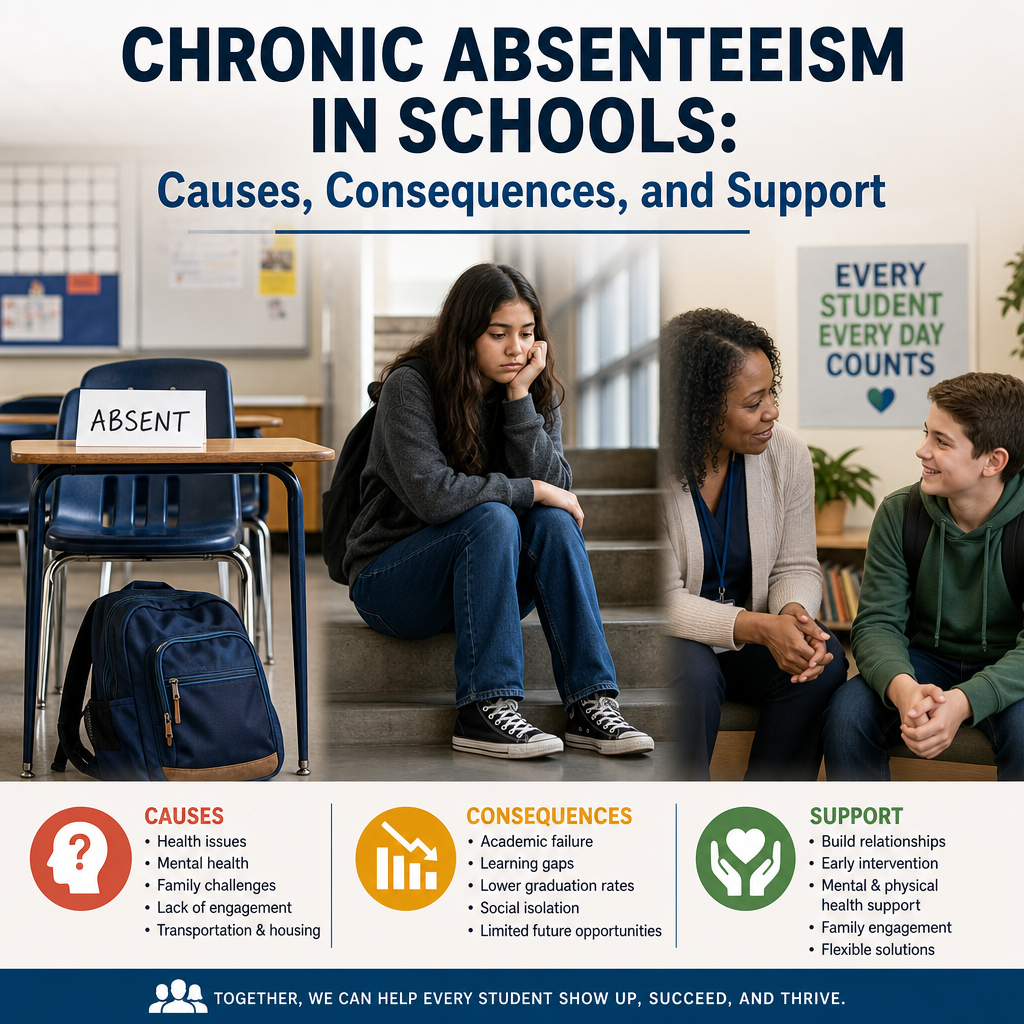
Chronic Absenteeism in Schools: Causes, Consequences, and Support
Chronic absenteeism can quietly derail a student’s progress long before grades start to slip. This article explores the causes behind missed school days, the consequences for learning and well-being, and practical ways schools can offer the right support.
By: Jennifer on July 25, 2026
Chronic absenteeism in schools has become one of the most important warning signs in K–12 education. When students miss too much class time, they lose access to instruction, class discussions, peer support, and the routines that help learning stick. The issue affects students of all ages and can show up for many reasons, from health problems and transportation barriers to anxiety, family responsibilities, and a lack of school connection.
For educators, families, and communities, understanding chronic absenteeism in schools is the first step toward meaningful intervention. Attendance is not just a number on a report card. It often reflects whether a child feels safe, supported, and able to participate in school consistently. By identifying root causes early and responding with practical support, schools can improve outcomes and help students stay on track.
What Is Chronic Absenteeism in Schools?
Chronic absenteeism generally means a student misses a significant amount of school over the year, whether the absences are excused or unexcused. Many districts and education agencies use a threshold of 10% of enrolled school days, which is about 18 days in a 180-day school year.
This definition matters because it captures a wider picture than truancy alone. A student can be chronically absent for reasons that appear understandable on the surface, such as recurring illness or family stress, but the academic impact can still be serious.
Why attendance data matters
Attendance data helps schools identify patterns before students fall behind. It can reveal:
A student who frequently misses Mondays or Fridays
A class or grade level with widespread attendance issues
A pattern tied to bus routes, weather, or family schedules
A student who is missing school for health, emotional, or housing-related reasons
When schools track attendance carefully, they can move from reacting to absences to preventing them.
Common Causes of Chronic Absenteeism in Schools
Chronic absenteeism in schools rarely has a single cause. More often, it reflects a combination of barriers that build over time. Effective support begins with understanding what is keeping a student away.
Health and mental health challenges
Frequent illness, untreated medical conditions, disabilities, and mental health concerns can all make regular attendance difficult. Students with asthma, diabetes, chronic pain, depression, or anxiety may miss school repeatedly without proper support.
Mental health deserves special attention. A student who feels overwhelmed, scared, or socially isolated may avoid school even if no one else notices the problem immediately.
Family and home-related barriers
Students may miss school because of responsibilities or instability at home, such as:
Caring for younger siblings
Helping a parent work or manage the household
Housing insecurity or frequent moves
Lack of adult supervision in the morning
Family crises, separation, or grief
In these situations, absenteeism often signals that the family needs support, not punishment.
Transportation and logistics
A student may want to attend school but still miss class because the practical details do not work. Transportation issues can include:
No reliable bus service
Long commutes
Car trouble
Weather-related travel challenges
Conflicting work schedules for caregivers
Small logistical problems can become chronic when no backup plan exists.
School climate and student belonging
Students are more likely to attend when they feel welcomed, respected, and connected. Poor school climate can contribute to chronic absenteeism in schools through bullying, harsh discipline, weak relationships with adults, or a classroom environment that feels irrelevant or unsafe.
For some students, especially those entering middle school, high school, or a new school building, the transition itself can create attendance problems if support is limited.
Academic frustration and disengagement
Students who struggle academically may begin avoiding school because they feel embarrassed or discouraged. If a child is consistently behind in reading, math, or language development, school can start to feel like a place where failure is expected.
When students do not see a path to success, absenteeism often becomes a coping strategy.
The Consequences of Chronic Absenteeism
The effects of chronic absenteeism in schools can be immediate and long-lasting. Missed school time does more than reduce seat time; it interrupts the learning process itself.
Academic consequences
Students who miss school regularly often lose:
Direct instruction from teachers
Guided practice and feedback
Participation in group work and class discussions
Exposure to new vocabulary and concepts
Opportunities to build foundational skills
Over time, these gaps can widen. A student who misses several days each month may struggle to keep up, even if they are intelligent and motivated. In early grades, this can affect reading development, numeracy, and classroom readiness. In later grades, it can hurt credit completion, graduation progress, and college or career preparation.
Social and emotional consequences
School is a major source of structure and social development. Chronic absenteeism can isolate students from peers and make it harder to build confidence, communication skills, and a sense of belonging.
Students may also feel:
More anxious about returning after missing work
Embarrassed by falling behind
Less connected to teachers and classmates
Less motivated to try again
These feelings can create a cycle: the more a student misses, the harder it feels to return.
Long-term educational consequences
Persistent absenteeism can affect key milestones such as promotion, standardized assessment readiness, high school credits, and graduation. In the long run, attendance patterns can influence postsecondary options, job readiness, and access to stable opportunities.
That is why chronic absenteeism in schools is not simply an attendance problem. It is often an early indicator of broader educational risk.
How Schools Can Respond Effectively
The best responses to chronic absenteeism in schools are proactive, supportive, and data-informed. Schools that focus only on penalties often miss the root cause.
Build a positive attendance culture
Students and families respond better when attendance is framed as a shared goal. A positive culture can include:
Regular communication about why attendance matters
Recognition for improved attendance, not only perfect attendance
Clear routines that make arrival easy and predictable
Warm relationships between staff and students
Messages that encourage students to return after an absence without shame
The goal is not to pressure families unfairly. It is to create a school environment where attendance feels achievable and worthwhile.
Use attendance data early
Early warning systems can help schools identify students who are beginning to miss too much time. Attendance teams can review patterns weekly or monthly and look for emerging concerns.
Useful questions include:
Is the student missing full days or specific periods?
Are absences concentrated on certain days?
Did the pattern start after a transition, illness, or family event?
Is the student also showing signs of academic or behavior concerns?
What supports have already been tried?
A thoughtful data review can guide more effective intervention.
Strengthen family communication
Families are essential partners in addressing attendance. Communication should be respectful, practical, and specific. Instead of simply noting that a student missed school, staff can ask about barriers and offer help.
Helpful communication approaches include:
Phone calls or texts that check in early
Conversations focused on problem-solving
Clear explanations of attendance expectations
Translation support for multilingual families
Flexible meeting times when possible
Families are more likely to engage when they feel heard rather than blamed.
Coordinate with support services
Some attendance problems require wraparound support. Schools may partner with counselors, social workers, nurses, attendance liaisons, community agencies, or behavioral health providers. Depending on the situation, support might include:
Medical referrals
Counseling or mental health services
Transportation assistance
Academic tutoring
Homelessness support resources
Family engagement services
When schools connect students to the right help, attendance often improves because the real obstacle is being addressed.
Student Support Strategies That Make a Difference
Supporting students with attendance challenges requires empathy and consistency. A one-size-fits-all approach rarely works.
Make school feel manageable
For a student returning after repeated absences, the school day can feel overwhelming. Teachers and staff can help by reducing the first-day-back stress.
Practical steps may include:
Greeting the student warmly
Explaining what they missed in manageable chunks
Prioritizing essential assignments
Pairing the student with a peer buddy
Checking in at the end of the day
These small gestures can reduce avoidance and help the student re-engage.
Set realistic goals
Attendance improvement often happens gradually. A student who has been missing a lot of school may not go from chronic absenteeism to perfect attendance overnight. A realistic plan might focus on:
Attending every Monday and Wednesday for a month
Improving morning arrival by 15 minutes
Reducing absences tied to one specific barrier
Setting short-term goals with student input
Incremental progress is still progress.
Encourage student voice
Students often know more about their attendance barriers than adults realize. Asking open-ended questions can uncover useful information:
What makes it hard to get to school?
Is there a part of the day that feels especially difficult?
What would help you feel more comfortable returning?
Who at school makes you feel supported?
When students help shape the plan, they are more likely to follow it.
Provide academic catch-up support
A major reason students avoid school is fear of falling behind. Schools can reduce this pressure by offering:
Simple make-up plans
Access to missed materials
Tutoring or small-group help
Flexible deadlines when appropriate
Time to rebuild confidence before major tests or presentations
Academic recovery should feel doable, not punishing.
How Families Can Support Attendance at Home
Families play a powerful role in preventing chronic absenteeism in schools. Even small daily habits can improve attendance.
Create consistent routines
A predictable morning and bedtime routine can make school attendance easier. This includes:
Packing backpacks the night before
Setting out clothes in advance
Maintaining a regular bedtime
Preparing breakfast options
Leaving extra time for unexpected delays
Routines help students start the day with less stress.
Talk openly about school
Children and teens are more likely to attend when school is presented as important, supportive, and connected to their goals. Families can ask about friendships, classes, and challenges instead of only focusing on grades.
If a child is resisting school, it helps to listen carefully before reacting. The reason may be more complex than defiance.
Reach out early
If a student starts missing school, families should contact the school quickly. Early communication can prevent a temporary issue from becoming a chronic one. Schools can often help with transportation, make-up work, counseling, or attendance planning if they know what is happening.
Preventing Chronic Absenteeism: What Works Best
The strongest prevention strategies are built on relationships, early intervention, and practical problem-solving. Schools that reduce chronic absenteeism in schools often do several things well:
Monitor attendance consistently
Reach out before patterns become severe
Treat absences as a signal, not just a rule violation
Coordinate academic and social-emotional support
Partner with families in a respectful way
Make school feel safe, welcoming, and relevant
Prevention works best when it is woven into the daily culture of the school rather than treated as a separate initiative.
Frequently Asked Questions
What is considered chronic absenteeism in schools?
Chronic absenteeism usually means a student misses about 10% or more of school days in a year. Many schools count both excused and unexcused absences because both can affect learning. The exact definition may vary by district or state.
Is chronic absenteeism the same as truancy?
No. Truancy usually refers to unexcused absences that violate attendance rules. Chronic absenteeism includes all absences, whether excused or unexcused. A student can be chronically absent without being truant if health issues or family challenges keep them out of school.
Why is chronic absenteeism a problem if the absences are excused?
Even excused absences can cause students to miss instruction, assignments, and classroom interaction. Over time, repeated missed days can lead to academic gaps, weaker engagement, and lower confidence. The learning loss is still real.
What should a school do first when a student starts missing a lot of school?
The first step is to look for patterns and contact the family early. Schools should ask about barriers, review attendance data, and connect the student to support services if needed. A helpful, problem-solving conversation is usually more effective than a punitive response.
Can chronic absenteeism be improved?
Yes. Attendance improves when schools and families work together to remove barriers and support the student. Success often comes from addressing the root cause, strengthening relationships, and setting realistic short-term goals. Small gains can lead to bigger improvements over time.
Chronic absenteeism in schools is a serious issue, but it is also one that schools, families, and communities can address effectively when they work together. The key is to look beyond the absences themselves and ask what is making attendance difficult. Health concerns, transportation problems, anxiety, family instability, school climate, and academic frustration can all play a role.
When adults respond early, communicate respectfully, and offer practical support, students have a better chance of reconnecting with school before small problems become long-term setbacks. Attendance improves most when students feel safe, seen, and capable of success. That means building strong relationships, tracking attendance carefully, and making school feel worth showing up for every day.
If you are supporting a student with attendance challenges, start with one clear step: identify the barrier, open the conversation, and connect the student to help. Consistent attendance is not just about compliance. It is one of the strongest foundations for learning, confidence, and future opportunity.
Jennifer, M.Ed., holds a degree in Higher Education Administration, with
a focus on U.S. college financial aid, admissions policy, and student
support systems. She researches and writes about scholarships, federal
aid programs, and the college planning process to help students and
families make informed, well-supported decisions.