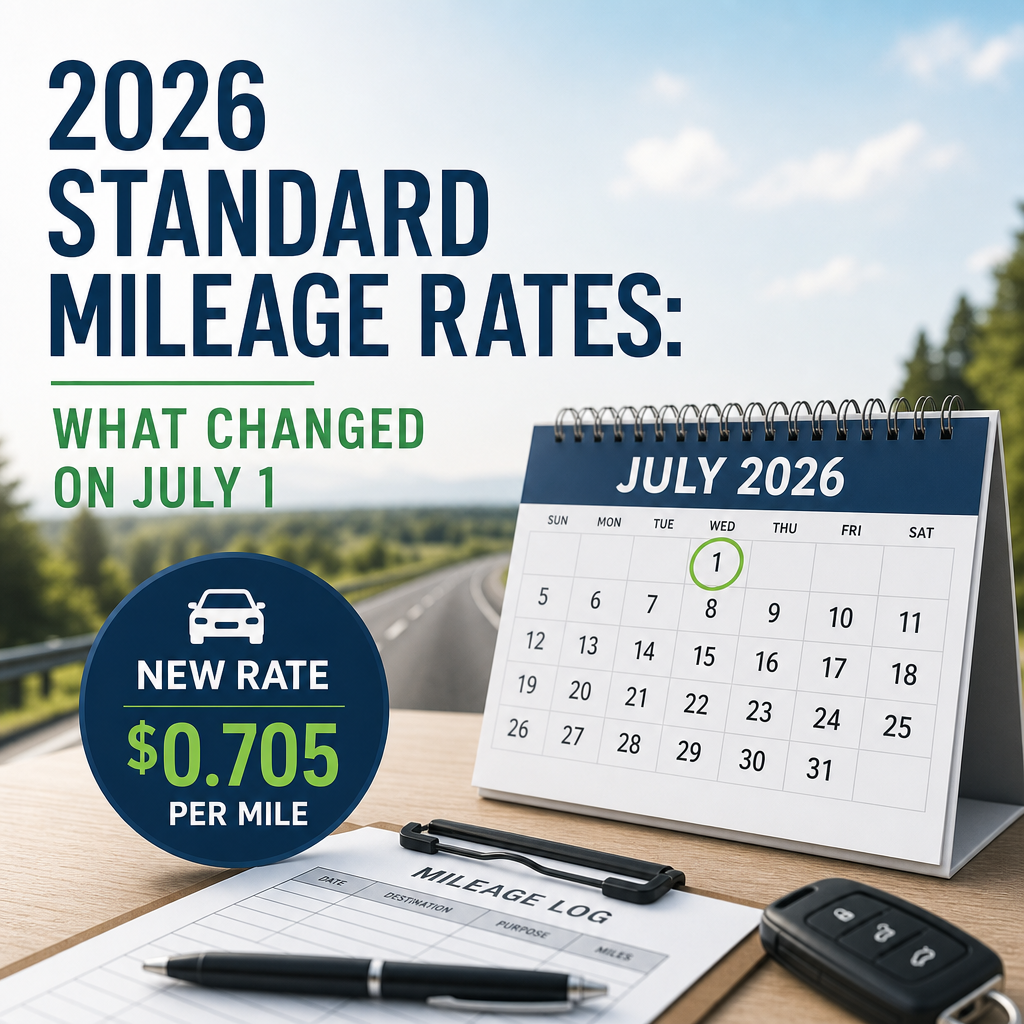
2026 Standard Mileage Rates: What Changed on July 1
The 2026 standard mileage rates changed on July 1, and that midyear update can affect everything from tax deductions to employee reimbursements. If you drive for work, knowing which rate applies to each trip is essential for accurate records and avoiding costly mistakes.
By: Mary Smith on July 25, 2026
The 2026 standard mileage rates matter for employees, freelancers, small business owners, and anyone who drives for work. If you track business miles, the rate update on July 1 can directly affect how much you can deduct, reimburse, or document for tax purposes. Knowing what changed helps you avoid under-claiming expenses, overpaying employees, or using the wrong rate for a trip.
Mileage rates may sound like a small detail, but they play a big role in tax planning and expense reimbursement. The July 1 update also creates a natural split in the year, which means careful recordkeeping is essential if you drive regularly for business, medical, charitable, or moving purposes.
What Are the 2026 Standard Mileage Rates?
The 2026 standard mileage rates are the IRS-approved per-mile amounts used to calculate deductions or reimbursements for certain types of driving. Instead of tracking every gas receipt, repair bill, and tire purchase separately, eligible taxpayers can use a set rate for each qualifying mile driven.
These rates are commonly used for:
Business driving
Medical travel
Moving expenses for active-duty military members
Charitable service travel
The standard mileage method is designed to simplify recordkeeping. It does not work the same way for every taxpayer or every vehicle, so it’s important to confirm eligibility before using it.
What Changed on July 1, 2026?
For 2026, the IRS adjusted the standard mileage rates effective July 1, 2026. That midyear change means the rate is not necessarily the same for the full calendar year. Taxpayers and employers need to use the correct rate based on the date the miles were driven.
Why a Midyear Change Matters
A rate change on July 1 affects:
Expense reports for drivers who travel throughout the year
Self-employed taxpayers tracking quarterly income and deductions
Employers reimbursing staff under an accountable plan
Businesses using mileage logs for client visits, deliveries, or service calls
If you drive on both sides of the July 1 cutoff, your records should clearly separate mileage before and after the change. Mixing the dates can lead to inaccurate deductions or reimbursement calculations.
Practical Example
Imagine you drove 1,200 business miles in June and 900 business miles in July. You cannot combine those miles and apply one rate if the IRS changed the rate on July 1. Instead, you must apply the applicable rate for each period separately.
That’s why mileage logs should include:
Date of trip
Beginning and ending odometer readings
Destination
Business purpose
Miles driven
How the 2026 Standard Mileage Rates Are Used
The 2026 standard mileage rates apply differently depending on the purpose of the travel. The IRS typically sets separate rates for business, medical, moving, and charitable use. Business driving usually receives the highest rate because it reflects the broader cost of operating a vehicle.
Business Mileage
Business mileage includes trips taken for work that are not ordinary commuting. Common examples include:
Driving to meet a client
Traveling between business locations
Visiting a job site
Running work-related errands
Regular commuting between your home and your main workplace generally does not qualify.
Medical and Moving Mileage
Medical mileage can apply when travel is primarily for medical care. Qualifying trips may include driving to:
A doctor’s office
A hospital
A physical therapy appointment
A pharmacy appointment tied to treatment
Moving mileage is much narrower than it used to be. In general, it applies only to certain active-duty military moves under IRS rules.
Charitable Mileage
If you drive to perform volunteer services for a qualified charitable organization, you may be able to claim mileage related to that service. The charitable rate is usually lower than the business rate, but it can still add up over the year.
Who Should Pay Attention to the July 1 Rate Change?
The July 1 update affects more people than many realize. You should pay close attention if you fall into any of these groups.
Self-Employed Workers and Freelancers
If you’re self-employed, mileage can be one of your most valuable business deductions. Drivers, consultants, real estate professionals, mobile service providers, and gig workers often depend on accurate mileage tracking to reduce taxable income.
A midyear rate change means your bookkeeping must match the date of each trip. If you use an app or spreadsheet, make sure it records exact travel dates.
Small Business Owners
Businesses that reimburse employees or owners for vehicle use need clear policies. A standard mileage update can affect budgeting, payroll expense treatment, and year-end reporting.
Common business uses include:
Sales calls
Deliveries
Client meetings
Field service visits
Off-site training
Employees Reimbursed for Work Travel
Some employers reimburse mileage under an accountable plan. In that case, they should use the correct IRS rate or their own policy, as long as it is structured properly and documented consistently.
Charities and Volunteers
Nonprofits and volunteer drivers should also understand the rate change. Even if no reimbursement is involved, the charitable mileage deduction depends on current IRS guidance.
How to Calculate Mileage After the July 1 Change
Calculating mileage with a midyear adjustment is simple once you break it into two parts.
Step 1: Separate Miles by Date
Group trips into two buckets:
Miles driven before July 1
Miles driven on or after July 1
This separation is the key to applying the proper rate.
Step 2: Apply the Correct Rate
Use the applicable 2026 standard mileage rate for each period. Then multiply the miles in each category by that rate.
Step 3: Add the Totals
Combine the two results to find your total deduction or reimbursement amount.
Example Calculation
Suppose your mileage log shows:
2,000 business miles from January through June
1,500 business miles from July through December
You would calculate each half of the year separately using the correct IRS rate for those dates, then add the totals.
Step 4: Keep Supporting Documentation
The IRS expects contemporaneous records. That means you should record miles as you drive, not months later from memory. Good documentation makes audits easier and protects your deduction.
Best Practices for Mileage Tracking in 2026
Mileage tracking does not have to be complicated, but it does need to be consistent. The better your records, the easier it is to use the 2026 standard mileage rates correctly.
Use a Mileage Log
A strong mileage log should include:
Date of travel
Starting location
Destination
Business or other qualifying purpose
Odometer readings or trip miles
Vehicle used, if you have more than one
Choose a Tracking Method That Fits Your Workflow
You can track mileage using:
A smartphone app
A spreadsheet
A paper logbook
Fleet software for business vehicles
For many people, an app is the easiest option because it timestamps trips automatically. Still, you should review entries for accuracy.
Separate Business and Personal Use
If you use the same car for work and personal travel, the distinction matters. Keep personal trips out of your deductible mileage total. That includes grocery runs, school drop-offs, and vacation driving unless the trip clearly qualifies under IRS rules.
Review Records Monthly
Waiting until tax time can lead to forgotten trips and missing details. A monthly review helps you:
Catch errors early
Verify destinations
Separate July 1 and later mileage
Back up records before they are lost
Common Mistakes to Avoid
Even experienced taxpayers make avoidable mileage mistakes. Here are the ones that cause the most trouble.
Using the Wrong Rate for the Wrong Date
A rate change effective July 1 means your mileage total may need to be split. Applying a single rate to the whole year can create inaccurate numbers.
Mixing Personal and Business Miles
If you commute to your regular office, those miles usually do not count. Likewise, personal side trips during a business day should not be included in deductible mileage.
Failing to Keep Records
A deduction without documentation is hard to defend. The IRS looks for proof of date, purpose, and mileage.
Assuming All Vehicle Expenses Use the Standard Rate
The standard mileage method is not the same as the actual expense method. If you deduct actual expenses, you generally track gas, maintenance, insurance, depreciation, and other costs instead of using the mileage rate. You usually must choose one method and follow the rules that apply.
Standard Mileage Rate vs. Actual Expense Method
The 2026 standard mileage rates are only one way to handle vehicle-related costs. The other common method is the actual expense method.
Standard Mileage Method
This method uses a fixed rate per mile. It is simpler and often easier for smaller businesses or drivers with straightforward records.
Benefits include:
Easier bookkeeping
Faster tax preparation
Fewer receipts to organize
Actual Expense Method
This method uses the business portion of real vehicle costs. You may deduct a percentage of expenses such as:
Gas
Oil changes
Repairs
Insurance
Registration
Lease payments, in some cases
Depreciation, if allowed
This method may work better for people with high vehicle costs or low business mileage. However, it requires more detailed tracking.
Which Method Is Better?
The better method depends on:
How much you drive for business
Vehicle operating costs
Whether you want simplicity or precision
IRS rules for your situation
Many taxpayers compare both methods before filing to see which produces the better result.
How Employers Should Handle Mileage Reimbursement
Employers should update internal policies when the 2026 standard mileage rates change. Clear procedures help ensure consistency and fairness.
What to Update
Review and revise:
Expense reimbursement policies
Payroll or AP systems
Employee travel forms
Mileage reimbursement templates
Accounting instructions for the July 1 rate
What to Communicate to Employees
Employees should know:
Which rate applies to travel before and after July 1
What documentation is required
Whether pre-approval is needed
How to submit mileage claims
Example of a Simple Policy Approach
A company might say:
Use the IRS rate effective on the date of travel
Submit mileage within 30 days of the trip
Include destination and business purpose
Attach supporting logs if requested
That kind of clarity reduces disputes and keeps reimbursements accurate.
When to Seek Professional Guidance
Mileage rules are usually straightforward, but there are situations where professional advice helps. Consider speaking with a tax professional if you:
Use multiple vehicles for business
Switch between standard mileage and actual expenses
Have a home office and frequent client travel
Reimburse employees across state lines
Need help with recordkeeping for mixed-use vehicles
A CPA, enrolled agent, or qualified tax advisor can help you apply the rules correctly and avoid costly mistakes.
Frequently Asked Questions
What are the 2026 standard mileage rates used for?
The 2026 standard mileage rates are used to calculate deductions or reimbursements for qualifying vehicle use, such as business travel, medical travel, charitable service, and certain military moving expenses. They simplify recordkeeping by replacing the need to itemize every vehicle expense.
Why did the mileage rate change on July 1, 2026?
A midyear mileage rate change reflects updated IRS guidance and cost assumptions. When this happens, taxpayers must use the rate that applies based on the date the miles were driven. That means trips before and after July 1 may need to be calculated separately.
Do I need separate records for mileage before and after July 1?
Yes. If the IRS changes the mileage rate on July 1, you should separate your mileage logs into two periods. This helps ensure that each trip is calculated using the correct rate and keeps your documentation accurate.
Can I use the standard mileage rate and actual expenses in the same year?
In some cases, you may be able to use different methods for different vehicles, but you generally cannot switch freely for the same vehicle without following IRS rules. It’s best to review the rules carefully or ask a tax professional before mixing methods.
What kind of documentation should I keep for mileage claims?
Keep a log that shows the date, destination, purpose, and miles driven for each trip. Odometer readings, app records, and receipts that support business travel can also help. Good contemporaneous records are important if you ever need to verify your deduction or reimbursement.
Understanding the 2026 standard mileage rates is an important part of smart tax planning, accurate reimbursement, and clean bookkeeping. The July 1 change makes it especially important to track mileage carefully, separate trips by date, and apply the correct rate to each period. Whether you are self-employed, running a small business, reimbursing employees, or driving for charitable work, the right mileage method can help you claim what you’re entitled to without creating unnecessary problems later.
The key is consistency. Keep a mileage log, review your records regularly, and make sure your calculations match the date of travel. If you use an app or spreadsheet, check that it clearly separates mileage before and after the July 1 change. For employers, updating policies and communicating the new rate helps prevent confusion across the team.
Mileage deductions and reimbursements may seem routine, but small errors can add up fast. Taking a few minutes now to get organized can save time, money, and stress later in the year. Stay current with IRS guidance, keep good records, and treat mileage tracking as a year-round habit rather than a last-minute tax task.
Mary S, CFP®, is a Certified Financial Planner with over 12 years of experience in personal finance, retirement planning, and wealth management. She writes educational content that helps readers understand financial concepts and make informed decisions based on reliable information.