Homeschooling Requirements in the United States: State Rules Explained
Homeschooling gives families more control over how children learn, but it also comes with one important responsibility: following the law. Homeschooling requirements in the United States are not set by one national rulebook. Instead, each state creates its own rules for notice, recordkeeping, testing, and instruction. That means what works in one state may be completely different in another.
For parents just starting out, the patchwork of laws can feel overwhelming. Do you need to file paperwork? Keep attendance logs? Test your child every year? The answer depends on where you live. Understanding the basics of homeschooling requirements in the United States can help you avoid mistakes, protect your family’s rights, and build a stronger learning plan from the start.
Why Homeschooling Rules Vary by State
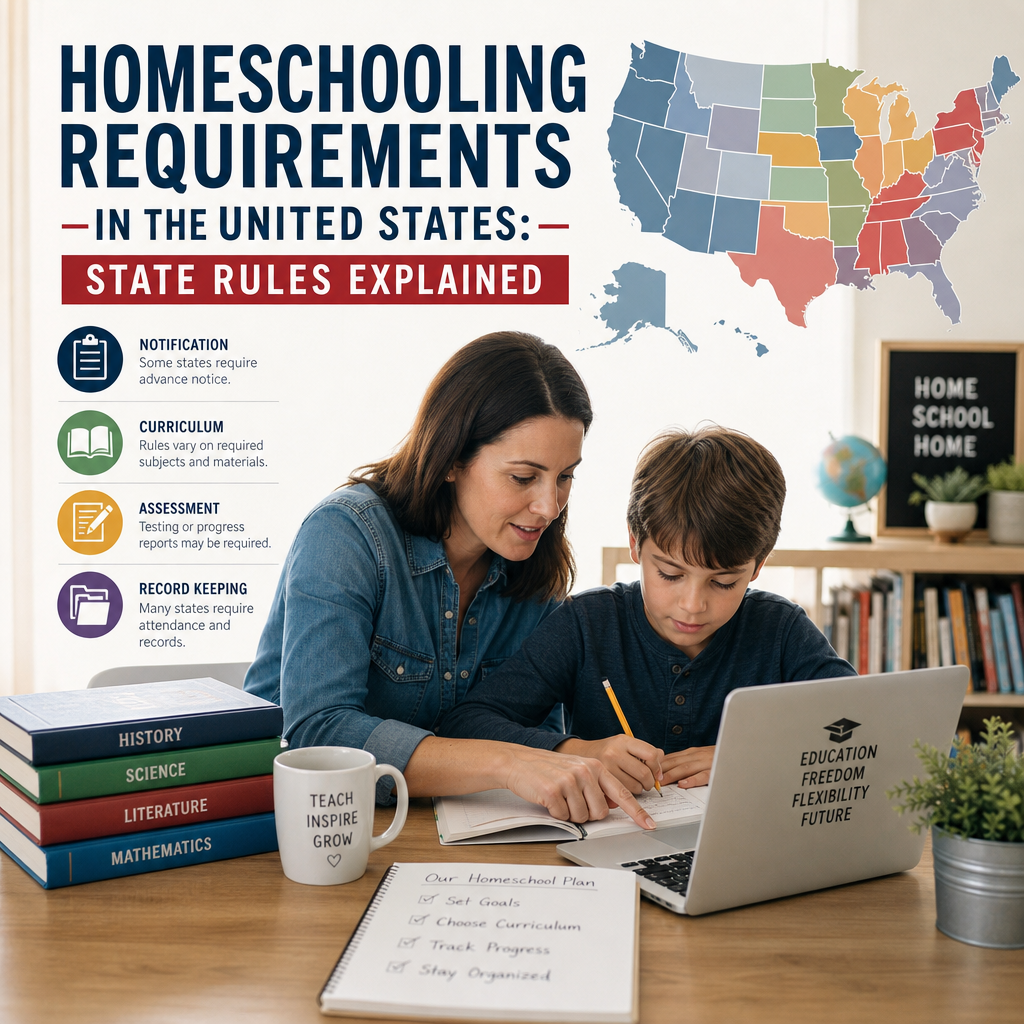
Education policy in the U.S. is largely controlled at the state level. While federal law sets broad protections for children and families, states decide how homeschooling fits into their own education systems. That is why the homeschooling requirements in the United States can differ so widely.
Some states treat homeschooling as a private educational option with minimal oversight. Others require families to submit annual notices, provide teacher qualifications, or document student progress. A few states have stricter reporting systems, while others offer very little regulation.
This variation reflects different state priorities, such as:
- Protecting parent autonomy
- Ensuring children receive a basic education
- Tracking student progress
- Defining whether homeschool is treated like private school or a separate category
Because of this, the first step in homeschooling is always the same: check your state’s current law.
The Main Types of Homeschooling Requirements in the United States
Although every state writes its own rules, most homeschooling requirements in the United States fall into a few common categories. Knowing these categories makes it easier to compare states and understand what may apply to your family.
1. Notice or Intent to Homeschool
Many states require parents to notify the state, school district, or local education office that they plan to homeschool. This is often called a notice of intent or declaration of intent.
Depending on the state, you may need to:
- File before withdrawing your child from public school
- Submit notice by a specific date each year
- Include basic information such as the child’s name, age, and address
In some states, this filing is a simple formality. In others, missing the deadline can create legal trouble.
2. Attendance and Instruction Time
Some states require a minimum number of instructional days or hours per year. This is one of the most common homeschooling requirements in the United States.
For example, a state may require:
- 180 days of instruction
- A set number of hours by grade level
- Documentation showing regular educational activity
Families often meet this requirement through a daily schedule, learning log, or portfolio.
3. Subjects or Curriculum Expectations
Several states define what subjects must be taught, especially in elementary and middle grades. Common required subjects include:
- Reading
- Writing
- Math
- Science
- Social studies
- Health or physical education
Some states also allow parents broad flexibility as long as the instruction is “sequential” or “equivalent” to public school education. Others are more specific about curriculum content.
4. Teacher Qualifications
A smaller number of states place requirements on the parent or guardian acting as the home instructor. These may include:
- A high school diploma or GED
- A college degree
- State-approved teaching credentials
- Parent supervision by a qualified instructor
Most states do not require parents to be certified teachers, but it is still important to check local rules.
5. Recordkeeping and Portfolios
Many families keep records even when the state does not require them. In some states, however, recordkeeping is mandatory. Common documents include:
- Attendance records
- Samples of student work
- Reading lists
- Test scores
- Immunization records
- Curriculum summaries
These records can help if the state asks for proof of compliance or if you later transfer your child back into school.
6. Assessments and Testing
Some states require annual standardized testing, while others allow alternatives such as portfolio reviews, evaluator reports, or no formal assessment at all.
Testing requirements may depend on:
- The student’s grade level
- The child’s performance history
- Whether the state uses a monitoring system
If testing is required, it usually must be done by a state-approved provider or in a specific format.
Common Homeschooling Rule Categories by State
To better understand homeschooling requirements in the United States, it helps to think about states in broad categories rather than trying to memorize all 50 laws at once.
Low-Regulation States
These states require little or no notice, few reporting obligations, and minimal oversight. Families generally have broad freedom over curriculum, schedule, and teaching methods.
Typical features may include:
- No annual notice
- No required testing
- No teacher qualification rules
- Flexible curriculum choices
Moderate-Regulation States
These states often require notice, basic records, and sometimes testing or subject requirements.
Typical features may include:
- Annual intent-to-homeschool filing
- Attendance or instructional day requirements
- Certain required subjects
- Occasional assessments or portfolios
High-Regulation States
These states tend to require more detailed paperwork, regular assessments, and tighter compliance rules.
Typical features may include:
- Mandatory annual notice
- Detailed academic records
- Required subjects and instruction hours
- Testing, evaluation, or progress reports
The key point is that even “strict” states usually still allow homeschooling. They just ask families to follow a more structured process.
Examples of How State Rules Can Differ
Here are a few examples of how the homeschooling requirements in the United States can look very different from state to state:
Example 1: A Minimal-Filing State
In one state, a parent may simply begin homeschooling without submitting any formal paperwork. The family chooses its own curriculum, keeps informal records, and tests only if it wants to measure progress.
Example 2: A Notice-and-Testing State
In another state, parents must file an annual notice of intent, teach a required number of days, and have their child tested each year beginning at a certain grade.
Example 3: A Portfolio Review State
A third state may allow parents to skip standardized tests if they submit a portfolio reviewed by a qualified evaluator. That gives families more flexibility while still providing proof of progress.
These differences matter because the same homeschooling approach may be legal in one place and noncompliant in another.
How to Find the Rules in Your State
If you are new to homeschooling, do not rely on social media posts or outdated blog summaries. State laws change, and local districts may interpret rules differently. Use reliable sources and confirm the current requirements before you begin.
Best Places to Check
- Your state department of education
- Your state legislature or official code website
- A state homeschool association with legal references
- Your local school district, if it handles notifications
- Trusted national organizations that track homeschool law
Questions to Ask
When reviewing your state’s homeschooling requirements in the United States, look for answers to these questions:
- Do I need to notify the state or district?
- Is there a deadline for filing paperwork?
- Are there required subjects or instructional hours?
- Do I need to keep attendance or progress records?
- Are annual tests or evaluations required?
- What happens if I move to another state?
Having clear answers early can save time and stress later.
Practical Tips for Staying Compliant
Even when your state’s rules are simple, a little organization goes a long way. These habits can help you stay on track and make homeschooling smoother.
Keep a Basic Homeschool File
Create one folder, digital or paper, with:
- Filing confirmations
- Attendance logs
- Curriculum plans
- Samples of student work
- Test results or evaluations
- Correspondence with school officials
Set a Review Date Each Year
Because homeschooling requirements in the United States can change, review your state’s rules at least once a year—especially before the new school year begins.
Build a Simple Calendar
Mark important dates such as:
- Notice deadlines
- Testing windows
- Portfolio review dates
- Renewal or annual filing dates
Document Your Learning Routine
Even in low-regulation states, a learning log can be helpful. A simple weekly record of subjects, projects, books, and activities can support both compliance and planning.
Stay Flexible if You Move
If your family relocates, the new state may have very different requirements. Check the new laws before you enroll, withdraw, or begin instruction.
What Happens If You Don’t Follow State Rules?
Failing to meet state homeschooling rules can lead to problems ranging from administrative confusion to truancy concerns. Consequences depend on the state and the specific issue involved.
Possible outcomes may include:
- Requests for missing records
- Instructions to file paperwork
- Delays in recognizing your homeschool status
- Truancy proceedings in more serious cases
Most families avoid problems by learning the rules early and keeping clear documentation. If a legal issue arises, it may be wise to consult a qualified education attorney or a trusted state homeschool organization.
Balancing Freedom and Accountability
One of the biggest advantages of homeschooling is flexibility. Families can tailor instruction to a child’s pace, interests, and learning style. At the same time, the homeschooling requirements in the United States show that states still expect some level of accountability.
That balance is not necessarily a burden. For many families, it creates a useful framework:
- Parents retain control over education
- Children receive instruction suited to their needs
- The state has enough oversight to protect educational standards
The best homeschooling approach respects both sides of that balance.
Frequently Asked Questions
1. Are homeschooling requirements the same in every state?
No. Homeschooling laws vary significantly by state. Some states have very few requirements, while others require annual notice, instructional hours, recordkeeping, or testing. Always check your own state’s current rules before starting.
2. Do all states require parents to have teaching credentials?
No. Most states do not require parents to be certified teachers. A few states may require certain educational backgrounds or qualifications, but this is not the norm. Many states allow parents to teach their own children without formal credentials.
3. What records should I keep for homeschooling?
It is smart to keep attendance records, curriculum information, samples of schoolwork, test results, and any official paperwork you submit. Even if your state does not require all of these documents, they can help show that your child is receiving instruction.
4. Do homeschool students have to take standardized tests?
Not always. Some states require annual testing, while others allow portfolio reviews or alternative assessments. A few states do not require formal testing at all. The exact rule depends on your state and sometimes your child’s grade level.
5. What should I do if I move to another state while homeschooling?
Check the new state’s homeschooling requirements as soon as possible. You may need to file a new notice, start keeping different records, or follow a new timeline. Do not assume your current homeschool setup will automatically comply after a move.
Official Resources
- U.S. Department of Education
- National Center for Education Statistics
- Home School Legal Defense Association
- National Home Education Research Institute
- U.S. Census Bureau
Conclusion
Understanding homeschooling requirements in the United States is one of the most important first steps for any family considering home education. Because each state sets its own rules, there is no single national process to follow. Some states ask only for basic notice, while others require detailed records, testing, or specific subjects. That range can seem confusing at first, but it becomes manageable when you break it down into clear categories.
The best approach is simple: find your state’s official guidance, confirm the filing deadlines, and build a recordkeeping system from the beginning. Even if your state has minimal oversight, keeping organized documentation gives you peace of mind and helps you adapt if your family moves or the law changes. Homeschooling works best when freedom and structure work together.
If you are just getting started, take time now to learn your state’s rules and create a plan that fits both your child’s needs and your legal responsibilities. A strong foundation today can make the rest of the homeschool journey far easier.