Title I School Funding: How Federal Support Reaches Local Schools
Title I school funding plays a major role in supporting schools that serve large numbers of students from low-income families. For many districts, this federal support helps close resource gaps and gives schools extra tools to improve student learning. If you have ever wondered how Title I school funding actually reaches local schools, the answer involves a mix of federal law, state administration, district planning, and school-level decision-making.
Understanding how this funding works matters for parents, educators, and community members alike. Title I is one of the most important federal education programs in the United States, but its impact depends on how well schools identify needs, distribute money, and use it in ways that support student success.
What Is Title I School Funding?
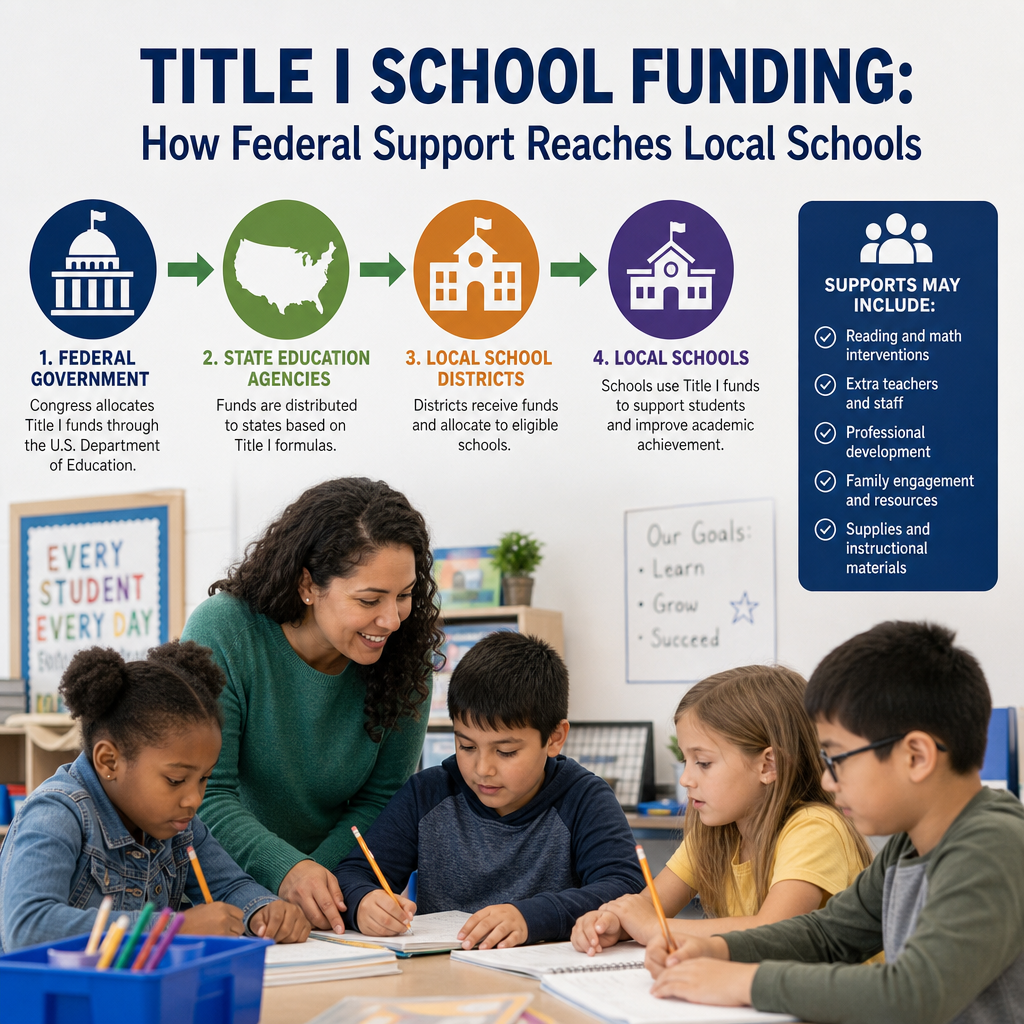
Title I school funding is federal money provided under the Elementary and Secondary Education Act, as amended by the Every Student Succeeds Act. Its purpose is to help schools educate students who face economic disadvantages and may need additional academic support.
The program does not replace local or state education funding. Instead, it adds targeted support to help schools serve students more equitably. In practice, Title I funds may support:
- Reading and math intervention programs
- Instructional coaches
- Extended learning time
- Family engagement activities
- Additional teachers or paraprofessionals
- Academic materials and technology
- Professional development for educators
Title I can support both schoolwide programs and targeted assistance models, depending on the share of students in poverty at a school.
How Title I School Funding Reaches Local Schools
The path from federal dollars to a classroom can seem complicated, but the process follows a clear structure. Title I school funding moves through several levels before it reaches students.
1. Congress Appropriates Federal Funds
The process begins when Congress sets aside money for Title I as part of the federal budget. This funding is then distributed through the U.S. Department of Education.
2. The Federal Government Allocates Money to States
The U.S. Department of Education sends Title I funds to states using formulas based on population and poverty measures. These formulas are designed to direct more support to areas with greater need.
3. States Distribute Funds to Local Education Agencies
Each state education agency receives its allocation and passes funds to school districts, also known as local education agencies. States use federal guidelines to determine how much each district receives.
4. Districts Identify Eligible Schools
School districts review poverty data and student enrollment to determine which schools qualify for Title I support. Schools with the highest concentrations of low-income students are typically prioritized.
5. Schools Develop Spending Plans
Once a school is identified as Title I-eligible, administrators, teachers, and district leaders decide how to use the funds. These decisions must support student achievement and comply with federal rules.
How Schools Qualify for Title I Support
Not every school receives Title I funding. Eligibility depends on student poverty levels, often measured through free and reduced-price lunch data, direct certification, or other approved poverty indicators.
There are two common types of Title I programs:
Schoolwide Programs
Schools with high poverty rates may use Title I funds for a schoolwide program. This allows the entire school to benefit from the money, not just certain students. Schoolwide programs give schools flexibility to improve overall instruction and services.
Targeted Assistance Programs
Schools with lower poverty rates may use Title I funds for targeted assistance. In these schools, support is focused on students most at risk of falling behind academically.
This distinction matters because it shapes how Title I school funding gets used. A schoolwide model may fund broad improvements, while a targeted assistance model is more selective.
What Title I School Funding Can Be Used For
Title I funds must support academic achievement, especially for students who need extra help. Schools have some flexibility, but they must stay within federal and district rules.
Common uses include:
Academic Intervention
Schools often use Title I money to provide extra reading or math support. This may include small-group instruction, tutoring, or pull-out programs.
Staff Support
Districts may hire:
- Reading specialists
- Math interventionists
- Instructional aides
- Family engagement coordinators
- Data or attendance support staff
Learning Materials and Technology
Title I funds can help purchase:
- Books and classroom libraries
- Software and digital learning tools
- Assessment systems
- Classroom supplies tied to academic goals
Teacher Training
Professional development is another common use. Teachers may receive training in literacy strategies, classroom management, data use, or supports for multilingual learners.
Family Engagement
Federal law encourages family engagement because student success improves when schools and families work together. Schools may use Title I funds for parent workshops, translated materials, and outreach efforts.
How Districts Decide Where the Money Goes
Even though Title I school funding is federal, local district decisions shape its real-world impact. District leaders usually look at multiple data points before allocating funds.
These may include:
- Poverty levels
- Enrollment
- Academic performance
- School size
- Student mobility
- English learner needs
- Special education needs
- Attendance patterns
A district may give more money to schools with more intense needs or create staffing models that support multiple schools. The goal is to use Title I funds where they can make the biggest difference.
Example: A District Budget Decision
Imagine a district with three elementary schools. One school has a high concentration of low-income students and low reading proficiency. Another school has fewer students in poverty but has many English learners. A third school has moderate need across several areas.
The district might:
- Give the first school a schoolwide Title I allocation for reading intervention
- Fund bilingual family outreach and literacy support at the second school
- Provide a part-time intervention teacher at the third school
This kind of planning helps ensure that Title I school funding addresses local realities rather than applying a one-size-fits-all solution.
Why Title I School Funding Matters
Title I is more than a line in a federal budget. It helps schools offer opportunities that might otherwise be limited by local tax bases or staffing shortages.
It Helps Address Opportunity Gaps
Students in higher-poverty communities often face challenges outside school that can affect learning. Title I helps schools add academic support and reduce barriers.
It Supports Early Intervention
When schools identify learning gaps early, they can respond before students fall too far behind. Title I-funded interventions often focus on reading and math in the early grades.
It Strengthens Family and Community Connections
Schools can use Title I funding to improve communication with families and make school engagement more accessible. This is especially important in communities with language barriers or limited access to school events.
It Gives Schools Flexibility
Unlike some funding streams with narrow restrictions, Title I school funding can support a range of evidence-based strategies. That flexibility helps schools tailor support to their students.
Challenges in Using Title I Funds Effectively
Title I can be powerful, but it is not a magic fix. Schools must use the funds thoughtfully and comply with federal requirements.
Limited Funding Relative to Need
Many schools serve students with complex needs, and Title I funds may not cover everything a school hopes to do. Leaders often must choose between competing priorities.
Administrative Requirements
Schools and districts must document how Title I funds are used, track outcomes, and follow spending rules. This can create a heavy administrative burden.
Staffing Shortages
Even when money is available, schools may struggle to hire qualified staff for intervention roles or support positions.
Measuring Impact
Schools must evaluate whether Title I programs are helping students. That means looking beyond spending and asking whether reading scores, attendance, engagement, and other indicators are improving.
How Parents and Community Members Can Understand Local Title I Use
Families do not need to be budget experts to understand how Title I school funding is used. A few practical steps can help parents stay informed and involved.
Ask the Right Questions
Parents can ask school leaders:
- Is this a schoolwide or targeted assistance Title I program?
- How are Title I funds supporting student learning?
- What data were used to make spending decisions?
- How will the school measure success?
- How can families participate in planning?
Review School Improvement Plans
Many schools publish plans that explain how federal funds will support learning goals. These documents often include priorities like literacy, attendance, or family engagement.
Attend Title I Meetings
Schools often hold annual parent meetings to explain Title I services and gather feedback. These meetings are a good opportunity to ask questions and learn how decisions are made.
Stay Focused on Outcomes
The most important question is not just how much money a school receives, but what students gain from it. Look for signs that Title I support is improving access, engagement, and academic progress.
Best Practices for Making Title I Funding Work Well
Schools that use Title I effectively usually follow a few common practices.
Use Data to Guide Decisions
Good planning starts with honest data. Schools should examine achievement gaps, attendance, behavior, and family needs before selecting strategies.
Focus on Evidence-Based Practices
Funds should support approaches with a reasonable track record, such as early literacy intervention, high-quality tutoring, and family outreach programs.
Build Staff Collaboration
Title I works best when principals, teachers, interventionists, and family liaisons coordinate their efforts.
Monitor and Adjust
A program should not stay the same just because it was approved. Schools should review results regularly and adjust if students are not improving.
Communicate Clearly
Families are more likely to trust the process when schools explain how funding decisions are made and how success will be measured.
Frequently Asked Questions
What is the main purpose of Title I school funding?
The main purpose of Title I school funding is to support the academic success of students from low-income families. The money helps schools provide extra instruction, staffing, materials, and family engagement efforts that can improve student outcomes.
Do all schools receive Title I funds?
No. Schools qualify based on poverty levels and district allocation rules. Schools with higher concentrations of low-income students are more likely to receive Title I support, either through schoolwide or targeted assistance programs.
Can Title I money be used for anything a school wants?
No. Schools must use Title I funds for educational purposes that support student achievement and meet federal requirements. They cannot use the money for unrelated costs or general expenses that do not connect to academic improvement.
How can parents find out how their school uses Title I funds?
Parents can ask school administrators, review the school improvement plan, attend Title I meetings, and request information about the school’s funding strategy. Many schools also share Title I details through annual notices or district websites.
Is Title I funding the same as local school funding?
No. Title I is federal funding, while local school funding comes from property taxes, state aid, and other local sources. Title I is meant to supplement, not replace, state and local education dollars.
Official Resources
- U.S. Department of Education: Title I, Part A
- Institute of Education Sciences – National Center for Education Statistics
- Every Student Succeeds Act (ESSA) overview
- U.S. Government Accountability Office – Education reports
- Parent and Family Digital Learning Guide – U.S. Department of Education
Conclusion
Title I school funding remains one of the most important federal tools for supporting students who need extra academic help. While the money begins at the federal level, its real value depends on how states, districts, and schools use it. When schools make thoughtful decisions, focus on evidence-based strategies, and involve families in the process, Title I can help create more equitable learning opportunities.
For parents and community members, understanding how Title I school funding reaches local schools makes it easier to ask better questions and hold schools accountable for results. The most effective programs are not just well funded; they are well planned, well communicated, and closely tied to student needs. If you want to stay informed, start by reviewing your school’s Title I plan, attending family meetings, and asking how the funding is improving outcomes for children in your community.