How Global Shipping Chokepoints Disrupt Trade and Supply Chains
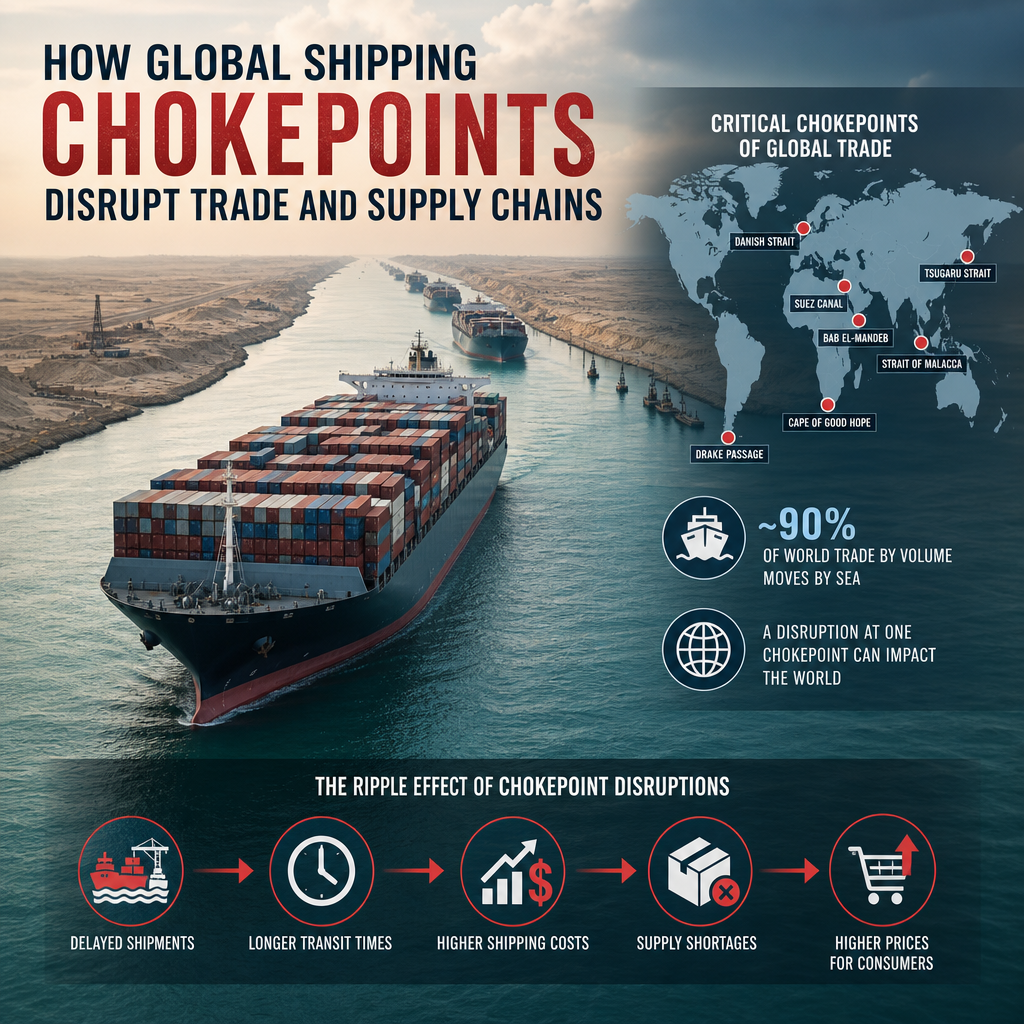
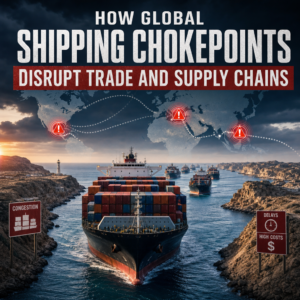
Shipping chokepoints are small points on the map with outsized power over global trade. When they clog or close, delays, higher costs, and supply shortages can ripple across industries far beyond the original disruption.
By: Peter B on July 24, 2026
Global trade depends on a surprisingly small number of narrow routes, straits, canals, and ports. When one of those points slows down or closes, the ripple effects can spread across industries, countries, and entire supply chains. That is why understanding how global shipping chokepoints can disrupt trade matters for businesses, policymakers, and consumers alike.
A shipping chokepoint is any geographically constrained passage that large volumes of cargo must cross. These include canals like Suez and Panama, straits such as Hormuz and Malacca, and major port hubs with limited capacity. Because so much trade flows through these gateways, a single disruption can delay goods, raise shipping costs, and create shortages far from the original incident.
In today’s interconnected economy, even short-lived congestion can trigger real business problems. Retailers may miss holiday inventory windows, manufacturers may lack critical components, and importers may be forced to reroute cargo at significant expense. The result is not just inconvenience—it is a direct threat to trade stability.
What Are Shipping Chokepoints?
Shipping chokepoints are narrow or strategically important passages where maritime traffic concentrates. They are essential because they connect major oceans, trade regions, and industrial markets.
Common examples include:
The Suez Canal, a key route linking Europe and Asia
The Panama Canal, which connects the Atlantic and Pacific Oceans
The Strait of Hormuz, a critical energy corridor
The Strait of Malacca, one of the world’s busiest maritime passages
Major port terminals with limited berths, labor constraints, or rail access
These routes matter because global trade is built on efficiency. Ships move where infrastructure allows them to move fastest and cheapest. But that concentration also creates vulnerability. If traffic backs up at a chokepoint, the effects can spread quickly through the entire logistics network.
How Global Shipping Chokepoints Can Disrupt Trade
When one of these narrow routes becomes blocked or congested, trade disruption often happens in layers. A ship delayed at sea can miss a port slot, which can delay container handling, inland transport, warehouse receiving, and final retail delivery.
Delays in Cargo Movement
The most immediate impact is slower transit time. Ships may wait offshore, reroute around the blockage, or sit in port queues. For cargo moving on just-in-time schedules, even a modest delay can be costly.
Examples of delay effects include:
Missed factory production deadlines
Late seasonal inventory arrivals
Delayed construction materials
Slower replenishment of pharmaceuticals or perishable goods
Higher Shipping and Insurance Costs
Disruptions often drive up costs in several ways. Carriers may burn more fuel by taking longer routes. Port congestion can increase storage and demurrage charges. Insurance premiums may rise for shipments passing through high-risk zones.
Businesses can also face:
Emergency air freight expenses
Contract penalties for late delivery
Higher freight rates during periods of congestion
Additional costs tied to customs or warehousing delays
Supply Chain Disruptions
Modern supply chains rely on synchronized inputs. If one shipment is delayed at a chokepoint, factories may have to slow production or pause entirely. A single missing component can stall an entire assembly line.
This is especially important for:
Electronics manufacturing
Automotive production
Food and beverage distribution
Medical supply chains
Industrial equipment and machinery
Price Volatility for Consumers and Businesses
When transport becomes more expensive or less reliable, those costs often move downstream. Importers may pass them on to wholesalers, retailers, and eventually consumers. In some cases, shortages can lead to temporary price spikes for certain goods.
Even when prices do not rise immediately, businesses may still absorb lower margins, reduced inventory flexibility, and weaker customer service levels.
Why Shipping Chokepoints Are So Vulnerable
Not every part of the ocean is equally important. Chokepoints are vulnerable because they combine high traffic volume with limited alternatives.
Geographic Constraints
Many chokepoints exist because geography forces ships into a narrow lane. A canal, strait, or passage may be the only practical shortcut between major markets. If that lane is blocked, rerouting can add days or even weeks to a voyage.
Traffic Concentration
A large share of global trade uses a relatively small number of maritime corridors. That concentration improves efficiency in normal times, but it also creates systemic risk.
Limited Infrastructure Flexibility
Unlike highways, shipping routes cannot be widened quickly. Ports need deeper channels, more cranes, better labor coordination, and improved rail and road connections. Expanding that capacity takes time, investment, and political coordination.
Geopolitical Risk
Some chokepoints sit near areas of political tension, military conflict, piracy, or regulatory uncertainty. Trade can be affected not only by physical blockages but also by threats, sanctions, inspections, or changing maritime rules.
Real-World Ways Trade Gets Disrupted
Shipping chokepoints do not have to shut down completely to create problems. Partial disruption is often enough to cause meaningful damage.
Vessel Backlogs
When too many ships arrive at once or a route slows down, vessels can queue for days. This creates scheduling chaos across the network. One delayed ship can affect multiple downstream ports and delivery windows.
Rerouting Around the Chokepoint
If ships must take a longer path, transit times increase. That may require more fuel, more crew time, and more planning. It can also reduce the number of trips a vessel can make in a month, which lowers total capacity.
Port Congestion
A chokepoint problem often shows up on land as well. If cargo arrives all at once, ports may run out of yard space, equipment, or labor. Trucks and rail services then face their own bottlenecks.
Inventory Shortages
Businesses with lean inventories may be hit hardest. When just a few days of delay affect replenishment schedules, companies may have to ration stock, backorder customer requests, or suspend promotions.
Industries Most Affected by Shipping Chokepoints
Some sectors are more exposed than others because they depend on precise timing, low inventory, or long-distance shipping.
Manufacturing
Factories often depend on components sourced from multiple countries. A delayed shipment can halt production lines and raise unit costs.
Retail and E-Commerce
Retailers need predictable delivery to stock shelves and fulfill online orders. Chokepoint disruptions can lead to empty shelves, slower shipping times, and lost sales.
Energy
Oil, LNG, and refined product shipments are especially sensitive to maritime routes. Even the expectation of disruption can move markets.
Agriculture and Food
Many food products move quickly and require stable logistics. Delays can affect freshness, spoilage rates, and export contracts.
Healthcare and Pharmaceuticals
Medical supply chains are time-sensitive and often regulated. Delays can complicate access to critical medicines, equipment, and temperature-controlled products.
How Businesses Can Reduce Their Exposure
While no company can eliminate global trade risk entirely, many can reduce vulnerability by planning ahead. A resilient supply chain is usually the result of multiple layers of preparation.
Diversify Supply Routes and Suppliers
Relying on one route or one supplier increases exposure. Companies can lower risk by sourcing from multiple regions or using alternative ports and carriers where feasible.
Build Buffer Inventory Strategically
Holding more inventory is not always ideal, but critical items may justify a safety stock. The goal is not excess—it is resilience for high-impact materials.
Improve Freight Visibility
Real-time tracking helps businesses spot delays early and adjust plans before problems spread. Shipment visibility tools, port alerts, and carrier updates can support better decision-making.
Use Scenario Planning
Businesses should ask practical questions such as:
What happens if a key route closes for one week?
Which customers or products are most exposed?
Can inventory be redirected quickly?
Are there alternate suppliers or ports available?
What is the financial impact of a delay?
Strengthen Contract and Logistics Flexibility
Flexible contracts, broader carrier relationships, and diversified transport options can help businesses respond faster when disruptions occur.
What Governments and Trade Authorities Can Do
Governments play a major role in reducing chokepoint risk because many solutions require infrastructure, diplomacy, and maritime coordination.
Invest in Infrastructure
Upgrading canals, dredging ports, modernizing terminals, and improving inland transport connections can reduce congestion and improve resilience.
Support Navigation Safety
Better vessel traffic management, pilot services, weather monitoring, and emergency response planning can reduce the likelihood of accidents and blockages.
Encourage Trade Route Diversity
When feasible, countries can support alternative rail, road, and maritime corridors that reduce dependence on a single passage.
Coordinate Internationally
Because shipping is global, coordination matters. Customs procedures, port standards, and security measures work best when trade partners align their expectations and share information.
Why Chokepoint Risk Is a Strategic Issue
Shipping chokepoints are not just logistical headaches. They are strategic pressure points in the global economy. A disruption can affect energy markets, inflation, manufacturing output, and consumer confidence.
That is why businesses and governments increasingly view supply chain resilience as a core part of economic planning. The goal is not to eliminate chokepoints—many are unavoidable. The goal is to make trade less fragile when one of them fails.
Understanding how global shipping chokepoints can disrupt trade helps leaders make better decisions about sourcing, inventory, routing, and investment. It also makes clear that logistics resilience is not a luxury. It is a competitive advantage.
Frequently Asked Questions
1. What is a shipping chokepoint?
A shipping chokepoint is a narrow passage or highly concentrated route that many cargo ships must use. Examples include canals, straits, and major port gateways. Because traffic is funneled through a limited area, disruptions there can affect a large share of global trade.
2. Why do shipping chokepoints cause such large disruptions?
They matter because so much cargo depends on them. When a chokepoint slows down, ships may wait, reroute, or miss scheduled port calls. That delay can cascade into missed production deadlines, port congestion, and supply shortages.
3. Which industries are most vulnerable to chokepoint disruptions?
Manufacturing, retail, energy, agriculture, and healthcare are often heavily exposed. These sectors rely on predictable transport schedules, specialized inputs, or time-sensitive cargo that can be difficult to replace quickly.
4. Can businesses prepare for shipping chokepoint disruptions?
Yes. Companies can diversify suppliers and routes, keep strategic safety stock, use shipment visibility tools, and run disruption scenarios. Flexibility in contracts and logistics planning also helps reduce risk.
5. Are shipping chokepoints always caused by accidents or blockages?
No. Disruptions can also come from congestion, labor shortages, geopolitical tensions, security threats, weather, or regulatory issues. In many cases, the risk comes from a combination of factors rather than a single event.
Global trade may seem seamless on the surface, but it depends on a small number of critical maritime passages. When those chokepoints become congested, blocked, or politically unstable, the effects can spread quickly through shipping networks, manufacturing lines, retail shelves, and energy markets. That is why understanding how global shipping chokepoints can disrupt trade is so important for anyone involved in logistics, procurement, or supply chain strategy.
The good news is that businesses are not powerless. By diversifying suppliers, improving visibility, building targeted inventory buffers, and planning for disruption before it happens, companies can reduce exposure and respond more confidently when a shipping route becomes unstable. Governments, too, can strengthen resilience through infrastructure investment, safety coordination, and international cooperation.
In a world where speed and reliability drive competitive advantage, supply chain resilience is no longer optional. The more clearly organizations understand chokepoint risk, the better they can protect operations, serve customers, and adapt to a changing trade environment.
Peter B holds a degree in Journalism and has 5 years
of experience covering U.S. economic policy, labor markets, and
financial news. He writes data-driven news content on topics
like inflation, interest rates, and employment trends.