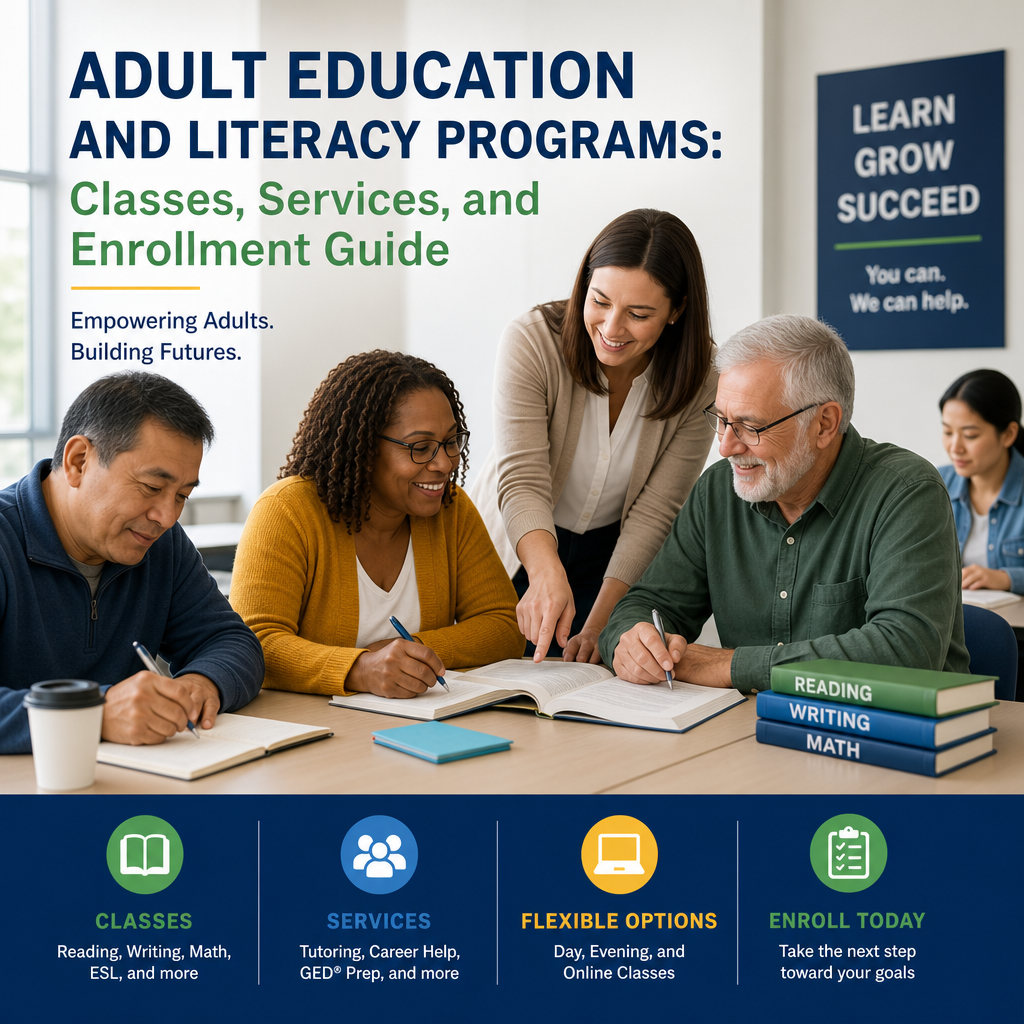
Adult Education and Literacy Programs: Classes, Services, and Enrollment Guide
Adult education programs give adults a flexible, practical way to build reading, math, English, and computer skills while working toward a high school equivalency or better job opportunities. With supportive services and classes designed for busy schedules, these programs can help learners take the next step with confidence.
By: Jennifer on July 25, 2026
Adult education and literacy programs give adults a practical path to build skills, finish school, improve English, and prepare for better work or further training. Whether someone wants to earn a high school equivalency credential, strengthen reading and math, learn computer basics, or gain confidence using English in everyday life, these programs can make a real difference. For many learners, adult education and literacy programs are not just classes—they are a fresh start.
These programs are designed for adults with busy lives. Many offer flexible schedules, supportive services, and instruction that meets learners where they are. If you are exploring options for yourself or helping someone else get started, it helps to understand what these programs offer, how they work, and how to enroll.
What Adult Education and Literacy Programs Offer
Adult education and literacy programs provide instruction and support for adults who want to improve foundational skills. They often serve people at different stages of learning, from those building basic literacy to those preparing for college, job training, or a new career.
Common types of classes
Many programs offer a mix of classes, including:
Adult basic education (ABE) for reading, writing, and math skill-building
High school equivalency preparation for tests such as GED or HiSET
English as a Second Language (ESL/ESOL) classes for adults learning English
Digital literacy classes for email, online forms, job applications, and basic computer use
Workforce preparation to support job readiness, interviewing, and workplace communication
Transition classes that help learners move into college, training, or employment
Some programs also include family literacy, civics education, or instruction tied to a specific career field.
Who these programs are for
Adult education and literacy programs are typically open to adults who:
Did not finish high school
Need to improve reading, writing, math, or English skills
Want a high school equivalency credential
Need help using technology for work or daily life
Are preparing for job training, college, or better employment
In many communities, services are free or low-cost because they are supported by public funding.
Why Adult Education and Literacy Programs Matter
Improving literacy and educational credentials can open doors that may have felt closed for years. A stronger foundation in reading, writing, math, and communication can help adults handle everyday tasks more confidently and pursue long-term goals.
Benefits for learners
Adult learners often seek these programs for practical reasons, such as:
Reading forms, medical instructions, and workplace notices more easily
Helping children with schoolwork
Applying for jobs and completing online applications
Earning a diploma equivalent
Preparing for community college, technical school, or apprenticeship training
Becoming more comfortable speaking, reading, or writing English
Benefits beyond the classroom
The effects often reach beyond the learner. Families may benefit when a parent or caregiver gains stronger literacy skills. Employers may benefit from workers who can communicate clearly and follow written instructions. Communities benefit when more adults have access to education, job training, and civic participation.
How Classes Are Structured
Adult education and literacy programs vary by location, but many share a similar structure. Some classes are held in person at schools, libraries, community colleges, nonprofit centers, or workforce offices. Others are online or offered in a blended format.
Flexible scheduling
Because adults often balance work, childcare, and other responsibilities, programs frequently offer:
Morning, afternoon, evening, or weekend classes
Part-time or self-paced options
Short-term classes or continuous enrollment
Hybrid learning with both in-person and online instruction
This flexibility makes it easier for learners to stay enrolled and make progress.
Skill-based learning
Most classes focus on practical, measurable skills. Instructors may assess a learner’s starting level and group students accordingly. Lessons often include:
Reading comprehension
Writing and grammar
Math foundations and problem-solving
Speaking and listening
Computer and internet basics
Test preparation strategies
A learner may start with one goal and add another later. For example, someone might begin in English language classes, then move into GED prep once their language skills improve.
Support Services That Help Adults Succeed
The best adult education and literacy programs do more than teach classes. They also connect learners with support services that help remove barriers to attendance and progress.
Common support services
Depending on the program, services may include:
Academic advising or goal setting
Tutoring and small-group instruction
Childcare referrals
Transportation assistance or bus passes
Career counseling
Job placement support
College and financial aid guidance
Disability accommodations
Referrals to social services or community resources
These supports matter because many adult learners juggle multiple responsibilities. A program that understands those realities can make enrollment and persistence much easier.
A learner-centered approach
Effective programs focus on the learner’s goals, not just test scores. For example, an instructor may help a student practice reading workplace safety materials, filling out forms, or writing an email to an employer. That kind of practical connection keeps learning relevant and motivating.
How to Enroll in Adult Education and Literacy Programs
Enrollment steps can vary by provider, but the process is usually straightforward. Many programs aim to make it easy for adults to get started.
Step 1: Find a program near you
Start by searching for adult education and literacy programs through:
Local school districts
Community colleges
Workforce development centers
Public libraries
Nonprofit organizations
State adult education websites
Look for programs that match your goal, such as GED preparation, ESL instruction, or job readiness training.
Step 2: Review eligibility requirements
Most programs are open to adults, but age, residency, or documentation requirements may apply. Some programs serve learners 16 or older who are no longer enrolled in traditional K–12 school, while others focus on adults 18 and older. Check the specific eligibility rules before applying.
Step 3: Complete intake or placement testing
Many programs ask new students to complete:
An application
A short interview or intake form
Reading, math, or English placement testing
Placement helps instructors understand a learner’s current level and place them in the right class. It is not meant to judge ability; it is meant to support progress.
Step 4: Set goals and choose a schedule
After placement, staff often help learners create a plan. That plan may include:
A primary goal, such as earning a GED or improving English
A target schedule
Support services needed
Next steps for work or education
Choosing a schedule that fits real life is important. A manageable routine is more sustainable than an overly ambitious one.
Step 5: Start attending regularly
Consistent attendance is one of the strongest predictors of progress. Even if you miss a class, returning quickly and staying connected can help you stay on track.
How to Choose the Right Program
Not every adult education and literacy program is the same. A good fit can make learning more effective and less stressful.
Questions to ask before enrolling
Consider asking:
Is the program free or low-cost?
What class times are available?
Do you offer in-person, online, or hybrid classes?
What support services are available?
How are students placed into classes?
Do you help with GED or HiSET preparation?
Can you help with college or job training transitions?
Signs of a strong program
A quality program usually has:
Clear enrollment steps
Experienced instructors
Respectful, welcoming staff
Small-group or individualized instruction
Practical learning materials
Goal-focused planning
Strong referrals and support services
If possible, visit the site, attend an orientation, or speak with a counselor before enrolling.
What to Expect as a New Student
Starting something new can feel intimidating, especially if school was difficult in the past. Adult education and literacy programs are built for that reality. Many learners return after years away from the classroom, and programs understand that adults bring different experiences, strengths, and challenges.
A supportive learning environment
Classes usually aim to be:
Respectful of adult responsibilities
Focused on progress, not embarrassment
Encouraging and practical
Flexible enough to support different learning needs
You may find classmates with very different backgrounds and goals. That diversity often becomes a strength. Learners can motivate one another and share helpful strategies.
Practical example
Imagine a parent who wants to read better to help with a child’s homework. That learner might begin in an adult basic education class, then add digital literacy lessons to manage school emails, and later move into GED prep. Another learner might join an ESL class first, then transition into job training once English skills improve. Adult education and literacy programs can support each step.
Tips for Staying Successful
Making progress in adult education and literacy programs often comes down to steady habits and realistic expectations.
Helpful habits for learners
Attend class consistently
Set one short-term goal at a time
Practice skills outside of class
Ask for help when something is unclear
Use support services early
Keep track of progress
Celebrate small wins
Be honest about barriers
If work schedules, childcare, transportation, or stress make attendance difficult, tell program staff. In many cases, they can help adjust your plan or connect you with support. The sooner barriers are addressed, the easier it is to stay engaged.
Adult Education and Literacy Programs and Career Pathways
Many adults enroll to improve daily life, but these programs also connect to long-term career opportunities. Strong literacy, communication, and math skills are valuable in nearly every field.
Moving from education to employment
Adult education programs may help learners:
Build resume and interview skills
Improve workplace communication
Prepare for credential exams
Transition into community college or technical training
Explore apprenticeship or certificate pathways
Some programs partner directly with employers or workforce agencies. That partnership can create a smoother route from classroom learning to actual job opportunities.
Frequently Asked Questions
1. What are adult education and literacy programs?
Adult education and literacy programs help adults improve reading, writing, math, English language, digital skills, and academic readiness. Many also prepare learners for a high school equivalency credential or help them transition to college and career training.
2. Are adult education and literacy programs free?
Many publicly funded programs are free or low-cost for eligible adults. Costs can vary by provider, location, and service type, so it is best to ask directly when you contact a program.
3. Who can enroll in adult education classes?
Eligibility depends on the program, but many services are open to adults who did not finish high school, need to improve basic skills, or are learning English. Some programs also serve older teens who are no longer enrolled in school.
4. Do I need to take a test before starting?
Often, yes. Many programs use placement tests or assessments to determine your current skill level and place you in the right class. These tests help staff tailor instruction to your needs and goals.
5. Can adult education and literacy programs help me get a job?
Yes. Many programs include workforce preparation, job search help, interview practice, digital literacy, and referrals to training or employment services. Strong basic skills can also make it easier to qualify for jobs and advance in the workplace.
Adult education and literacy programs can be a turning point for adults who want stronger skills, more confidence, and better opportunities. These programs offer more than basic instruction. They provide flexible classes, practical support, and clear pathways toward high school equivalency, English language growth, job readiness, and further education. For many learners, the biggest benefit is not just what they learn in class, but how that learning connects to real life.
If you are considering enrollment, start by identifying your goal. Do you want to read more confidently, improve your English, earn a GED, or prepare for a new job? Once you know what you want, look for a program that offers the right classes, schedule, and support services. A good program will meet you where you are and help you move forward one step at a time.
The path may take patience, but steady progress adds up. Adult education and literacy programs give adults a practical way to build skills and expand what is possible next.
Jennifer, M.Ed., holds a degree in Higher Education Administration, with
a focus on U.S. college financial aid, admissions policy, and student
support systems. She researches and writes about scholarships, federal
aid programs, and the college planning process to help students and
families make informed, well-supported decisions.