Global Hunger Report 2026: Latest Data and Key Findings
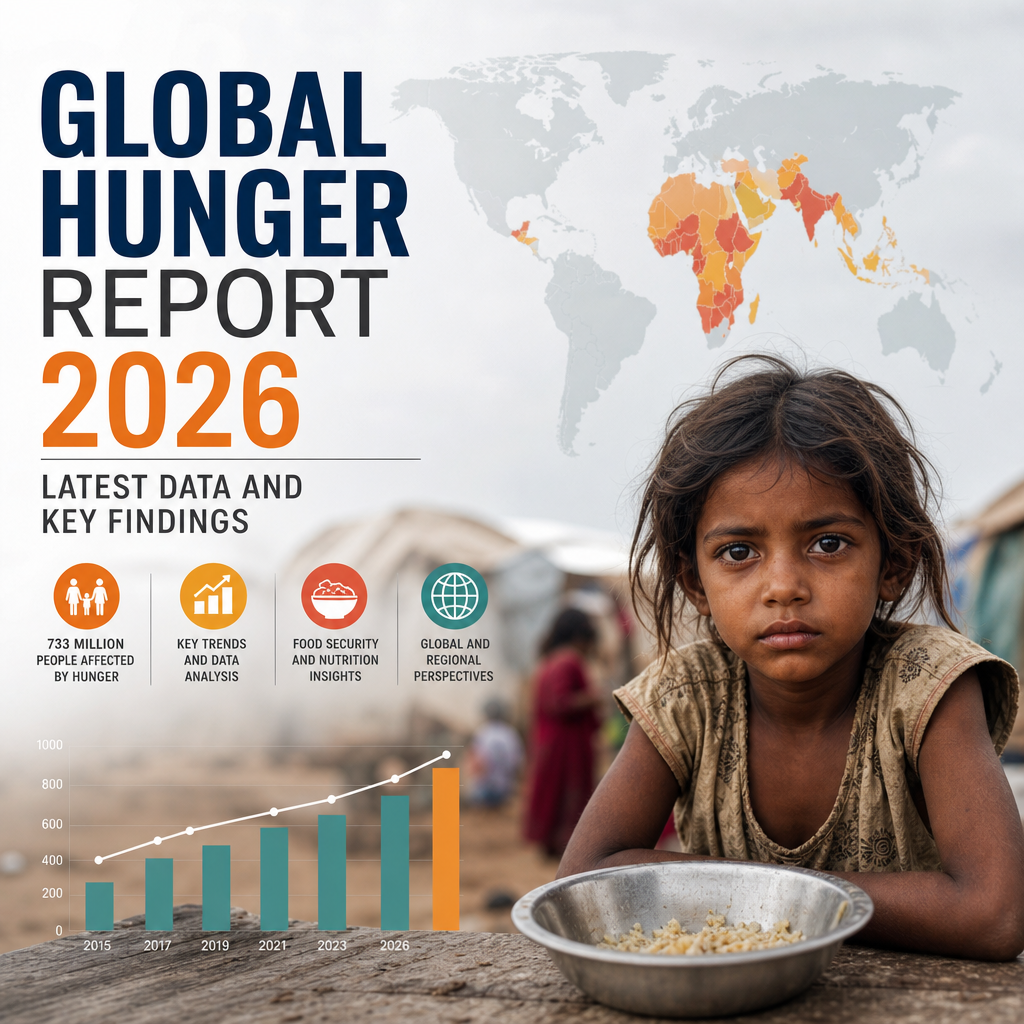
The global hunger report reveals that progress against food insecurity is possible, but fragile, as conflict, climate shocks, and rising costs continue to leave millions without reliable access to nutritious food. By showing where hunger is worsening and why, the report points to the urgent need for coordinated, long-term solutions.
By: Peter B on July 24, 2026
The Global Hunger Report 2026 paints a sobering but important picture: hunger remains one of the world’s most urgent and unevenly distributed challenges. While some regions have made progress in food access, conflict, climate shocks, economic instability, and inequality continue to push millions of people into food insecurity. The latest data reveal not only where hunger is most severe, but also why it persists and what types of solutions are gaining traction.
Understanding the Global Hunger Report 2026 matters because hunger is never just about food supply. It is tied to income, transportation, governance, agriculture, health systems, and emergency response. When families cannot rely on stable access to nutritious food, the effects spread quickly across education, productivity, public health, and long-term development.
What the Global Hunger Report 2026 Shows
The Global Hunger Report 2026 highlights a world where progress is possible, but fragile. In some countries, stronger harvests, school feeding programs, and social protection systems have helped reduce food stress. In others, ongoing conflict, displacement, and extreme weather have reversed years of improvement.
A few broad trends stand out:
Hunger is increasingly concentrated in conflict-affected and climate-vulnerable regions.
Food insecurity often rises alongside inflation, currency shocks, and supply chain disruption.
Children, pregnant women, older adults, and displaced populations remain among the most at-risk groups.
Nutrition is becoming as important as calories, with hidden hunger and poor diet quality still widespread.
The report reinforces a key lesson: global hunger is not a single crisis. It is a cluster of connected crises that require coordinated action.
Global Hunger Report 2026 and the Main Drivers of Food Insecurity
The Global Hunger Report 2026 makes clear that the biggest drivers of hunger are often interconnected. A drought can weaken crops, but if markets are unstable and households lack savings, the impact becomes much worse. Likewise, a war can destroy farmland, roads, and storage systems, while also blocking aid delivery.
Conflict and displacement
Conflict remains one of the strongest predictors of severe hunger. When violence disrupts farming, trade routes, markets, and humanitarian access, food systems break down quickly. Displaced families often lose land, livestock, income, and support networks all at once.
In many settings, hunger is not caused by a shortage of food worldwide, but by the inability to safely produce, move, or afford it locally.
Climate change and extreme weather
Droughts, floods, heat waves, and shifting growing seasons continue to affect agriculture in every region. Smallholder farmers are especially exposed because they may depend on rain-fed crops and have limited irrigation, insurance, or savings.
The report underscores how climate stress can trigger a chain reaction:
Crop yields fall.
Market prices rise.
Livestock losses increase.
Household incomes shrink.
Diets become less diverse and less nutritious.
Economic shocks and inflation
Even where food is available, many families cannot afford it. Inflation, debt pressure, unemployment, and currency volatility can quickly reduce purchasing power. When food prices rise faster than wages, households often cope by skipping meals, buying less nutritious food, or reducing portion sizes.
This is one reason the Global Hunger Report 2026 emphasizes affordability, not just availability.
Weak infrastructure and fragile food systems
Food insecurity is often worsened by poor roads, inadequate storage, limited cold chains, and weak local markets. These gaps increase food loss after harvest and make it harder for producers to reach consumers.
Investing in infrastructure can have a direct hunger-reduction effect by connecting farms to markets and lowering transport costs.
Regions Facing the Highest Risk
The Global Hunger Report 2026 shows that hunger remains most severe in places where multiple risk factors overlap. These include conflict zones, drought-prone areas, and countries facing repeated economic disruption.
Sub-Saharan Africa
Many countries in Sub-Saharan Africa continue to face high levels of food insecurity due to a combination of climate shocks, conflict, poverty, and reliance on rain-fed agriculture. Population growth and urbanization are also increasing demand for affordable food, putting additional pressure on local food systems.
Parts of the Middle East and North Africa
In parts of the Middle East and North Africa, conflict, water scarcity, and economic stress combine to create serious food access problems. Import dependence can make these countries especially vulnerable to global price spikes and trade disruption.
South Asia
South Asia has seen progress in several areas, but hunger persists in communities affected by poverty, unequal access to land, poor sanitation, and limited nutrition services. The report points to the importance of improving maternal and child nutrition, since early-life deprivation has long-term consequences.
Displaced and urban poor populations
The report also highlights a growing concern: hunger among displaced people and low-income urban households. These groups may not grow their own food, so they depend heavily on markets and wages. When prices rise or jobs disappear, their food security can deteriorate fast.
Nutrition Matters as Much as Calories
One of the most important insights from the Global Hunger Report 2026 is that hunger is not only about how much people eat. It is also about what they eat. A person can consume enough calories and still suffer from micronutrient deficiencies, poor growth, weakened immunity, and chronic illness.
The rise of hidden hunger
Hidden hunger refers to deficiencies in essential vitamins and minerals such as iron, vitamin A, zinc, and iodine. It often affects children and pregnant women most severely. Because the symptoms may not always be obvious at first, hidden hunger can go unnoticed until it causes serious harm.
Child malnutrition remains a major concern
Child wasting, stunting, and underweight status remain key indicators of severe food insecurity. These conditions can affect learning, physical development, and future earning potential.
Practical interventions that help include:
Breastfeeding support
Supplementation programs
School meals
Fortified foods
Access to clean water and healthcare
Nutrition-focused programs work best when they are paired with broader poverty reduction and food system reforms.
What the Data Reveal About Progress
The Global Hunger Report 2026 does not only identify problems. It also shows that progress is possible when governments, communities, and aid organizations act together.
Social protection helps families stay afloat
Cash transfers, food assistance, unemployment support, and school meal programs can help families avoid crisis-level coping strategies. These measures do more than reduce immediate hunger; they also protect long-term health and schooling outcomes.
Local agriculture matters
Supporting smallholder farmers remains one of the most effective ways to strengthen food security over time. This includes:
Better seeds and crop varieties
Access to irrigation
Training in climate-smart practices
Farm credit and insurance
Better market access
When local producers can grow and sell food reliably, communities become more resilient.
Emergency response must be faster and better targeted
In humanitarian crises, timing matters. Early warning systems, pre-positioned food stocks, and flexible funding can reduce the severity of hunger before it turns catastrophic.
The report suggests that the best responses combine immediate relief with long-term resilience building.
What Governments and Organizations Can Do Now
The Global Hunger Report 2026 points toward a practical policy agenda. No single solution will end hunger, but coordinated action can make a measurable difference.
1. Protect food access during crises
Governments should strengthen safety nets that can expand quickly during emergencies. That may include temporary cash support, food vouchers, school feeding, and targeted nutrition assistance.
2. Invest in climate-resilient agriculture
Farmers need tools to adapt to changing weather. That means drought-tolerant crops, water management, soil restoration, and extension services that help farmers apply new techniques effectively.
3. Improve conflict-sensitive humanitarian access
Where conflict blocks food deliveries, diplomatic and logistical efforts must prioritize safe corridors and protection of civilians. Food aid is most effective when it reaches people before famine conditions take hold.
4. Reduce food loss and waste
A significant share of food can be lost after harvest or wasted before consumption. Better storage, transport, refrigeration, and consumer education can help make food systems more efficient.
5. Focus on women and children
Women often play central roles in food production and household nutrition, yet they may face barriers to land ownership, credit, and decision-making. Supporting women’s economic security improves food security for entire families.
How Communities Can Respond Locally
While the Global Hunger Report 2026 focuses on global trends, local action still matters. Communities can play a meaningful role by supporting food banks, community gardens, school meal initiatives, and local advocacy for nutrition programs.
Examples of community-level action include:
Donating to trusted hunger-relief organizations
Volunteering at food pantries
Supporting farmers markets and local growers
Starting school breakfast or backpack meal programs
Advocating for food assistance and anti-poverty policies
Local action is especially important because hunger often becomes visible first at the neighborhood level.
Why the Global Hunger Report 2026 Matters for the Future
The Global Hunger Report 2026 is more than a data summary. It is a warning, a planning tool, and a call to action. Hunger affects not just individual households, but the stability and future of entire societies. When children are undernourished, when adults cannot work productively, and when communities are trapped in cycles of crisis, development slows for everyone.
The report also shows that the world already has many of the tools needed to reduce hunger:
Better early warning systems
Stronger social protection
Climate-smart farming
Nutrition-specific interventions
Fairer and more resilient food systems
What is needed now is sustained political will, funding, and coordination.
Frequently Asked Questions
1. What is the Global Hunger Report 2026?
The Global Hunger Report 2026 is a summary of the latest available data on food insecurity, malnutrition, and hunger trends around the world. It examines the causes of hunger, which populations are most affected, and what policies or programs are helping reduce risk.
2. What are the biggest causes of hunger in 2026?
The biggest causes include conflict, displacement, climate shocks, inflation, poverty, weak infrastructure, and limited access to nutritious food. In many places, these factors overlap, making hunger worse and harder to solve.
3. Why does the report focus on nutrition and not just food supply?
Because hunger is not only about having enough food. Nutrition quality matters too. People can eat enough calories but still lack essential vitamins and minerals, which can lead to stunted growth, poor health, and weaker immune systems.
4. Which groups are most vulnerable to hunger?
Children, pregnant and breastfeeding women, displaced families, low-income urban households, smallholder farmers, and communities in conflict or drought-prone areas are among the most vulnerable groups. These populations often have fewer resources to cope with shocks.
5. What can individuals do to help reduce hunger?
Individuals can support trusted food banks, donate to reputable relief groups, advocate for nutrition and anti-poverty policies, reduce food waste, and support local farms and community meal programs. Public awareness and civic engagement can also help drive long-term solutions.
The Global Hunger Report 2026 makes one thing clear: hunger is still a global emergency, but it is not an unsolvable one. The latest data show that food insecurity is driven by a combination of conflict, climate disruption, poverty, and weak food systems, with the greatest burden falling on people who already face the most barriers. At the same time, the report also points to practical solutions that work when they are sustained and coordinated.
Protecting food access, strengthening local agriculture, improving nutrition programs, and building more resilient markets can all reduce hunger over time. Just as importantly, these efforts must center the people most affected, especially children, women, displaced families, and communities living on the front lines of climate and economic shocks.
If you want to understand the future of global development, the fight against hunger belongs at the center of the conversation. The data are a reminder that progress is possible, but only if governments, organizations, and communities act with urgency and consistency.
Peter B holds a degree in Journalism and has 5 years
of experience covering U.S. economic policy, labor markets, and
financial news. He writes data-driven news content on topics
like inflation, interest rates, and employment trends.