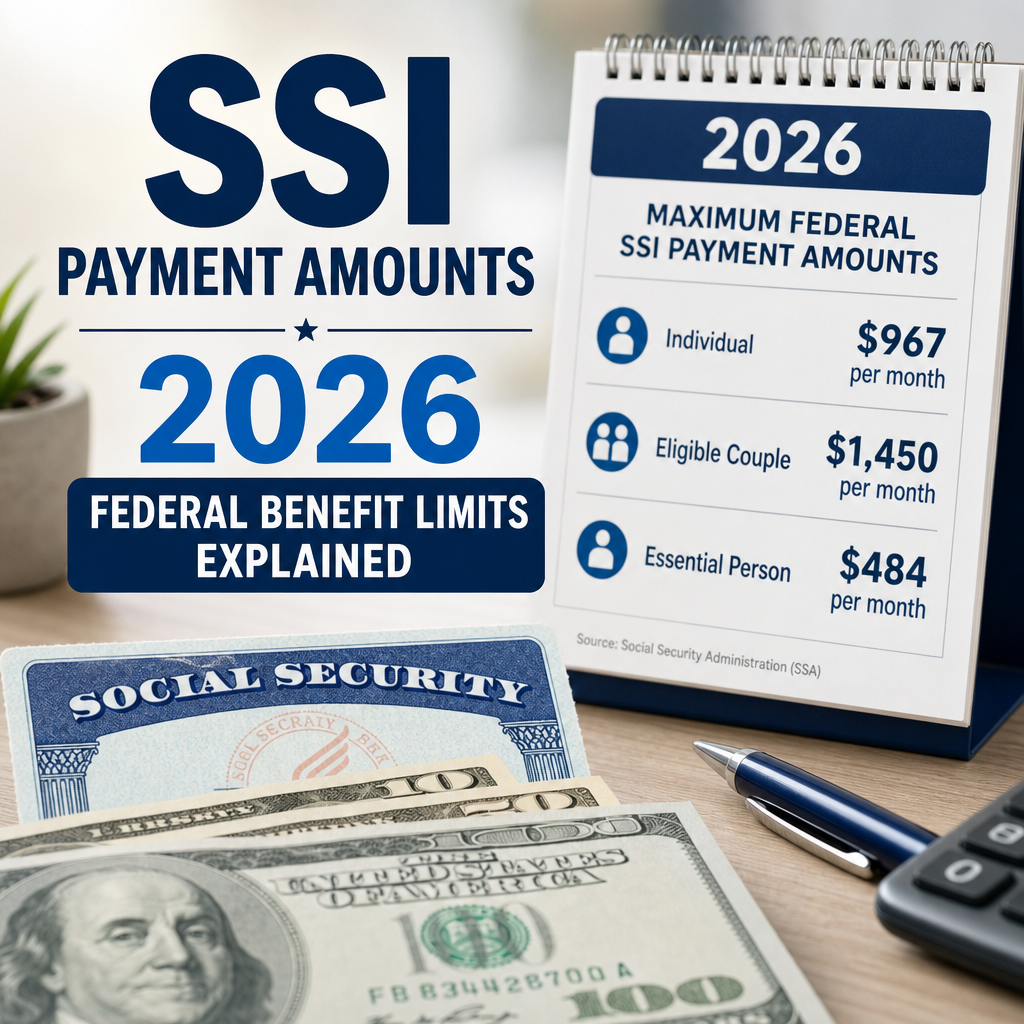
SSI Payment Amounts 2026: Federal Benefit Limits Explained
SSI payment amounts 2026 will depend on the updated federal benefit limits, which help determine how much SSI recipients can receive each month. Understanding these rates can make it easier to plan ahead and see how income, living arrangements, and other factors may affect your check.
By: Emilly Adams on July 24, 2026
If you rely on Supplemental Security Income, understanding SSI payment amounts 2026 is one of the most important parts of planning your year. SSI helps people with limited income and resources who are aged, blind, or disabled cover basic needs like food, clothing, and shelter. Because the program is tied to federal benefit limits, even small changes can affect your monthly check.
In this guide, we’ll break down how SSI works, what the federal benefit rates are, how payments are calculated, and what can change your benefit in 2026. We’ll also cover common questions, practical examples, and official resources you can trust.
What SSI Is and Why Federal Benefit Limits Matter
Supplemental Security Income, or SSI, is a federal program run by the Social Security Administration (SSA). It is different from Social Security retirement or disability insurance because it is based on financial need, not work history.
That means the amount you receive depends on:
Your living arrangement
Your countable income
Your countable resources
Whether you also receive state supplements
The federal benefit limits are the maximum monthly SSI amounts set by the federal government. Many people refer to these as the federal benefit rate or FBR. These limits matter because they set the ceiling for monthly SSI payments before any reductions for income or living situation.
SSI Payment Amounts 2026: How the Federal Benefit Rates Work
The SSA typically updates SSI payments each year through a cost-of-living adjustment, or COLA. That adjustment helps benefits keep pace with inflation. For 2026, the exact SSI payment amounts depend on the official SSA COLA announcement and any changes to federal law or policy.
The key point is this: SSI payment amounts 2026 are based on the federal benefit rate, but most people do not receive the maximum amount. Your actual monthly payment can be lower if you have other income or if someone helps pay for your food or shelter.
The Two Main Federal Benefit Limits
SSI has two standard federal payment categories:
Individual benefit rate
This applies to one person receiving SSI.
Couple benefit rate
This applies when both spouses qualify for SSI and live together.
These rates are the starting point. From there, SSA subtracts countable income or adjusts for certain living arrangements.
What Affects Your Final SSI Check
Your payment may be reduced by:
Wages from a job
Pension income
Other disability benefits
In-kind support and maintenance, such as free food or housing
Unearned income from some sources
Some income is not counted or is only partially counted. That is why two people with the same federal benefit rate can receive very different monthly SSI checks.
How SSI Payments Are Calculated
The SSA uses a structured formula to determine your monthly payment. While the details can get technical, the basic idea is simple: start with the federal benefit rate, then subtract countable income.
Step-by-Step Example
Here is a simplified example:
Federal benefit rate for an individual: assume a monthly maximum set by SSA
Countable monthly income: $250
SSI payment: federal rate minus $250
If someone receives free rent or free groceries, SSA may count part of that support as in-kind income. That can also reduce the monthly payment.
What Counts as Income?
SSA generally divides income into two categories:
Earned Income
This includes:
Wages
Self-employment income
Net earnings from certain work activities
Unearned Income
This includes:
Other government benefits
Pension income
Unemployment benefits
Gifts of cash
Not all income is treated the same. SSI rules exclude certain types of income and provide disregards that lower the amount counted against your benefit.
Living Arrangements Can Change SSI Payment Amounts
One of the most overlooked parts of SSI is how much your living arrangement affects the payment.
If You Live Alone
If you live alone and pay your own food and housing costs, your payment may be closer to the full federal benefit rate, assuming you have little or no countable income.
If You Live With Others
If you live with family or friends and do not contribute your fair share toward household expenses, SSA may reduce your payment because it assumes you receive help with shelter or food.
If Someone Pays for Your Food or Housing
This is where many recipients see a reduction. For example:
A relative pays your rent
A friend lets you live in their home for free
Someone buys your groceries regularly
SSA may treat that support as in-kind maintenance and reduce your benefit accordingly.
State Supplement Payments May Increase Your Total Benefit
Some states add a state supplement to the federal SSI payment. These supplements can raise your overall monthly amount, sometimes significantly.
Why State Supplements Matter
If your state offers an SSI supplement:
Your monthly total may be higher than the federal amount alone
The rules can vary by state
Payment processing may be handled by SSA or the state agency
Because state rules differ, it’s smart to check with your state’s human services agency or the SSA field office to learn whether you qualify for extra help.
SSI Payment Amounts 2026 and the COLA
The annual COLA is one of the biggest reasons SSI payment amounts change from year to year. The adjustment is designed to reflect changes in consumer prices.
What the COLA Means for You
If there is a COLA increase for 2026:
The federal benefit rate should rise
Many SSI recipients may see a higher monthly payment
Some people may still lose part of the increase if other income rises too
That last point matters. A COLA can help, but it does not always produce the same net gain for every recipient.
Why the Official SSA Announcement Is Important
Always check the SSA’s official COLA notice before relying on any estimate. Payment amounts can change based on federal law, and unofficial online figures may be outdated or inaccurate.
Practical Scenarios: What SSI Payment Amounts 2026 Could Look Like
The following examples are illustrative, not official rates. They show how the formula works in real life.
Example 1: Single Person With No Countable Income
Lives alone
No wages
No unearned income
Pays own rent and food
This person may receive close to the full federal SSI payment amount for an individual, plus any applicable state supplement.
Example 2: Person With Part-Time Work
Works a few hours per week
Earns modest wages
Meets SSI financial rules
SSA applies work exclusions and only counts part of the earnings. The benefit may be reduced, but the person may still qualify for SSI.
Example 3: Couple Where Both Spouses Receive SSI
Both spouses qualify
Live together
Limited income and resources
The couple rate is generally lower than two individual payments combined, so the household amount is based on the couple federal benefit rate and any applicable state supplement.
Important Rules That Can Affect Your SSI Benefit
SSI is not just about monthly income. Several other rules can affect eligibility and payment amounts.
Resource Limits
To qualify, you must stay under the SSI resource limit, which includes things like:
Cash
Bank account balances
Certain investments
Additional property that is not excluded
Some assets do not count, such as a primary home and one vehicle in many cases. Still, keeping track of resources is essential.
Reporting Changes Promptly
You must report changes that may affect your SSI payment, including:
New or changed income
Change in living arrangement
Marriage or separation
Changes in resources
Hospitalization or entering a facility
Reporting late can lead to overpayments, underpayments, or interruptions in benefits.
Increases in Other Benefits
If you start receiving more money from another source, your SSI could go down. That includes some disability payments, pensions, and other countable income.
How to Estimate Your Own SSI Payment
You can make a rough estimate of your SSI amount by following these steps:
Find the current federal benefit rate for your category.
Add up your countable monthly income.
Subtract applicable income exclusions.
Reduce the remaining amount from the federal benefit rate.
Add any state supplement, if your state offers one.
Simple Checklist
Before you estimate, gather:
Monthly wages
Benefit statements
Housing costs
Proof of who pays for food or shelter
State supplement information
If your situation is complicated, a benefits counselor or SSA representative can help you understand the calculation.
Common Mistakes People Make About SSI Payment Amounts
Many SSI recipients and applicants misunderstand how the program works. Here are a few frequent mistakes to avoid:
Assuming everyone gets the same check
Forgetting that free housing may reduce benefits
Missing reporting deadlines
Ignoring state supplements
Confusing SSI with Social Security Disability Insurance
Relying on unofficial payment charts without checking SSA
Being proactive can prevent surprises and help you avoid overpayments.
Why SSI Payment Amounts 2026 May Differ From Month to Month
In some cases, your SSI payment can change after it has already been set for the year. That happens when:
Your income changes
Your living arrangement changes
Your spouse’s income changes
SSA corrects a prior payment
You receive a retroactive adjustment
This is why it helps to keep records and review your award letter carefully. Even small changes in income or support can affect future checks.
How to Stay Informed About SSI Changes
The best way to stay current is to use official sources. SSA publishes updates about cost-of-living adjustments, benefit rules, and payment dates.
Good Habits for Recipients
Read all SSA letters right away
Keep copies of income and housing records
Report changes as soon as they happen
Check your my Social Security account
Review state supplement rules if you live in a state that offers one
Frequently Asked Questions
1. What are SSI payment amounts 2026 based on?
SSI payment amounts 2026 are based on the federal benefit rate set by the Social Security Administration, along with any applicable cost-of-living adjustment, income reductions, and state supplements. Your final payment depends on your income, resources, and living arrangement.
2. Will everyone get the same SSI payment in 2026?
No. The federal maximum is the starting point, but actual payments vary from person to person. Countable income, free housing or food, and couple status can all change the amount you receive each month.
3. Does working reduce SSI benefits?
It can, but not always dollar for dollar. SSI has work incentives and income exclusions that may allow you to work part-time and still receive benefits. Only part of your earnings may count against your SSI payment.
4. Can state supplements increase my SSI check?
Yes. Some states provide an extra payment on top of the federal SSI amount. The size of the supplement and the payment method vary by state, so it’s important to check local rules.
5. How can I find my exact SSI payment amount?
Your SSA award letter, my Social Security account, or a call to SSA can help you confirm your exact monthly payment. If your income or living situation changes, the amount may change too, so it’s a good idea to review it regularly.
Understanding SSI payment amounts 2026 is about more than memorizing a single number. The federal benefit limits give you a baseline, but your actual monthly payment depends on income, living arrangements, state supplements, and the annual cost-of-living adjustment. That’s why two people who both receive SSI can end up with very different checks.
If you are receiving SSI or helping someone who does, the best approach is to stay organized and stay informed. Keep income records, report changes quickly, and check official SSA updates instead of relying on rumors or outdated charts. A little attention to the rules can help you avoid overpayments, protect your benefits, and plan more confidently for the months ahead.
As 2026 approaches, continue watching for the official SSA announcement on federal benefit rates and COLA changes. Knowing how the system works puts you in a stronger position to understand your monthly payment and make smart decisions about work, housing, and budgeting.
Emily A, holds a Master's degree in Public Administration (MPA) and has over 7 years of experience researching federal and state assistance programs. She writes educational content focused on government benefits, public policy, and community resources, using information from official agencies to help readers understand available programs and eligibility requirements.