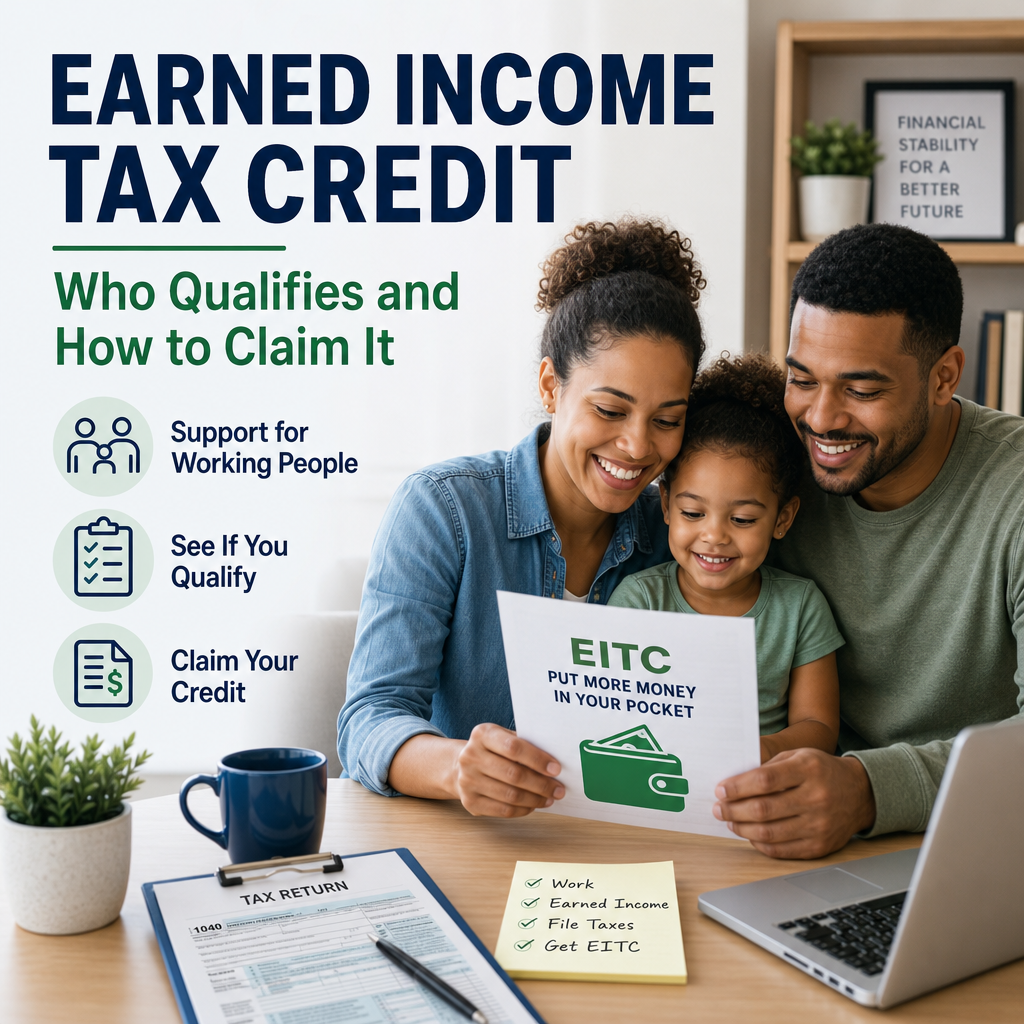
Earned Income Tax Credit: Who Qualifies and How to Claim It
The Earned Income Tax Credit can be a valuable boost for working individuals and families, but qualifying depends on your income, filing status, and other IRS rules. Learn who may be eligible and how to claim the credit so you don’t miss out on a bigger refund.
By: Emilly Adams on July 24, 2026
The Earned Income Tax Credit is one of the most valuable tax benefits available to working individuals and families, yet many people who qualify never claim it. If you earned income during the year and meet certain rules, this credit could reduce the tax you owe or even increase your refund. For some households, the Earned Income Tax Credit can make a meaningful difference at tax time.
Understanding who qualifies, how the credit is calculated, and how to claim it can help you avoid missing out. This guide explains the basics in plain language, with practical examples and clear steps to follow when filing your tax return.
What Is the Earned Income Tax Credit?
The Earned Income Tax Credit (often called the EITC) is a refundable federal tax credit designed to support workers with low to moderate income. “Refundable” means the credit can lower your tax bill below zero and result in a refund, even if you don’t owe much tax.
The IRS created the credit to help working taxpayers, especially those raising children. But childless workers may also qualify if they meet the income and filing requirements.
Why the Earned Income Tax Credit matters
The credit can help by:
Reducing the amount of federal income tax you owe
Increasing your refund
Offering extra support to working families
Helping eligible taxpayers keep more of their earnings
Because eligibility depends on several factors, it’s important to check the rules every year. Income limits, filing status rules, and qualifying child requirements can change from year to year.
Who May Qualify for the Earned Income Tax Credit?
To qualify for the Earned Income Tax Credit, you generally must have earned income and meet certain IRS rules related to residency, filing status, investment income, and dependent status.
Basic eligibility requirements
You may qualify if you:
Have earned income from work, such as wages, salary, tips, or self-employment income
File a tax return, even if you are not otherwise required to
Meet the IRS income limits for the tax year
Have a valid Social Security number that allows work
Do not file as “married filing separately”
Are a U.S. citizen or resident alien for the full year, or meet certain special rules
Income from work
The credit is based on earned income, not passive income such as interest, dividends, or rental income. Common examples of earned income include:
Pay from an employer
Tips reported to your employer
Net income from self-employment
Certain disability payments in limited situations
Investment income limit
You also must stay below the IRS investment income threshold for the year. This includes certain interest, dividends, capital gains, and other investment earnings.
Filing status rules
Most taxpayers can qualify if they file using one of these statuses:
Single
Head of household
Married filing jointly
Qualifying surviving spouse
You generally cannot claim the credit if you file married filing separately.
Qualifying Children and the Earned Income Tax Credit
Many people associate the Earned Income Tax Credit with parents, and for good reason. Having a qualifying child can increase the credit amount significantly. Still, childless workers may also qualify.
What counts as a qualifying child?
A child must meet IRS rules for:
Relationship
Age
Residency
Joint return status
In general, a qualifying child must be your:
Son or daughter
Stepchild
Foster child
Brother, sister, half sibling, or descendant of one of these relatives
The child usually must live with you in the United States for more than half the year and be under a certain age, depending on whether they are a student or have a disability.
Childless workers can qualify too
If you do not have a qualifying child, you may still be eligible for the Earned Income Tax Credit if you:
Meet the income limits
Are between the IRS-required age range for the year
Are not claimed as a dependent on someone else’s return
Meet the citizenship or residency requirements
This is an important point because many eligible childless workers assume they do not qualify and never check.
Common Reasons Taxpayers Miss the Credit
Many taxpayers leave money on the table because they assume they don’t qualify. Others make simple filing mistakes.
Frequent issues include:
Forgetting to claim the credit on the tax return
Using the wrong filing status
Failing to include a qualifying child
Misreporting earned income
Exceeding the investment income limit
Being claimed as someone else’s dependent
Not having a valid Social Security number
If you are unsure whether you qualify, it’s worth reviewing the IRS rules or using tax preparation software that screens for EITC eligibility.
How to Claim the Earned Income Tax Credit
To claim the Earned Income Tax Credit, you must file a federal tax return and complete the required forms. Even if you don’t owe federal income tax, you may still want to file in order to receive the credit.
Step 1: Gather your tax documents
Before filing, collect documents such as:
W-2 forms from employers
1099 forms for self-employment or contract work
Records of tips
Social Security numbers for yourself, your spouse, and any qualifying children
Proof of residency for qualifying children, if needed
Records of dependent care or child-related expenses if you’re also claiming related tax benefits
Step 2: Confirm your eligibility
Review the IRS rules for:
Earned income
Adjusted gross income
Filing status
Investment income
Qualifying child requirements
A quick eligibility check can prevent mistakes that slow down your refund.
Step 3: File your federal tax return
You generally claim the credit on Form 1040 or Form 1040-SR. If you have qualifying children, you will also need to complete Schedule EIC.
If you are self-employed, you may need to report your business income and expenses on additional schedules before the credit can be calculated correctly.
Step 4: Double-check for accuracy
Accuracy matters. The IRS may delay refunds or ask for more information if your return contains errors. Before filing, confirm:
Names match Social Security cards
Social Security numbers are correct
Dependent information is complete
Income totals are accurate
Filing status is correct
Step 5: Choose direct deposit
If you are eligible for a refund, direct deposit is usually the fastest and safest way to receive it. You can deposit your refund into one account or split it among multiple accounts in some cases.
How the Earned Income Tax Credit Is Calculated
The amount of the credit depends on your income, filing status, and number of qualifying children. As your earned income increases, the credit generally rises to a point, reaches a maximum, and then gradually phases out as income climbs higher.
Factors that affect the amount
The IRS calculates the credit based on:
Earned income
Adjusted gross income
Filing status
Number of qualifying children
Tax year rules
Because the formula changes periodically, it’s best to check the current IRS tables or use reliable tax software when estimating your credit.
Simple example
Imagine a married couple with two qualifying children. They both work and meet the residency and age rules for the children. If their income falls within the eligible range, they may qualify for a substantial credit that reduces their tax liability and increases their refund.
Now compare that with a single worker without children. That taxpayer may still qualify, but the credit amount will usually be smaller and the income range narrower.
Special Situations That Can Affect Eligibility
The Earned Income Tax Credit includes rules that can surprise taxpayers in certain life situations.
Self-employed workers
If you run a small business, freelance, or do gig work, you may qualify as long as you report your net earnings correctly. Keep good records of income and expenses, because your net profit affects the credit.
Military members
Special rules may apply to certain military pay and combat pay. If you are in the armed forces, it’s smart to review the IRS guidance carefully or use a tax preparer familiar with military tax issues.
Taxpayers with disabilities
Some disability income may affect the credit differently depending on the source and your age. Eligibility can be complex, so check the IRS instructions if this applies to you.
Separated or divorced parents
If parents share custody, only one taxpayer can claim the child for EITC purposes in a given year. The IRS rules determine which parent may qualify based on the child’s residency and other factors.
How to Avoid Errors When Claiming the Credit
Because the Earned Income Tax Credit is closely reviewed by the IRS, avoid rushed filing. A careful return helps prevent delays and audits.
Best practices
Use your legal name exactly as it appears on your Social Security card
Verify every Social Security number
Keep records that support your qualifying child claim
Report all earned income
Do not guess if you are unsure about dependency rules
Review the return before submitting it
If you are filing for the first time or have a complicated family situation, consider asking a tax professional or a trusted volunteer tax assistance program for help.
When to Get Help With Your Tax Return
You may want extra help if you:
Have more than one job
Are self-employed
Recently got married or divorced
Share custody of children
Received notices from the IRS in the past
Are unsure whether a relative can claim your child
Tax help can reduce mistakes and increase your confidence that you are claiming the Earned Income Tax Credit correctly.
Frequently Asked Questions
1. Can I claim the Earned Income Tax Credit if I do not owe any taxes?
Yes. The Earned Income Tax Credit is refundable, which means you may receive it even if your tax bill is zero. In many cases, the credit can create or increase your refund.
2. Do I have to have children to qualify?
No. Childless workers may still qualify if they meet the age, income, filing status, and residency requirements. However, the credit amount is typically smaller than for taxpayers with qualifying children.
3. Can I get the credit if I am self-employed?
Yes, self-employed workers may qualify if they report net earned income and meet the other IRS rules. Accurate records are important because your business profit determines eligibility and the amount of the credit.
4. What if my child lives with me part-time?
The child must generally live with you in the United States for more than half the year to be a qualifying child for the Earned Income Tax Credit. Shared custody situations can be tricky, so it’s important to review the IRS residency rules carefully.
5. How do I know if I was claimed as someone else’s dependent?
If another taxpayer can claim you as a dependent, that may affect your eligibility. This often happens with college students or adults supported by family members. Review your personal situation and compare it with IRS dependency rules before filing.
The Earned Income Tax Credit can be a powerful tax break for workers who meet the IRS requirements. Whether you have children or are claiming the credit as a childless worker, it is worth checking your eligibility every year. The rules can seem complicated at first, but the basic idea is simple: if you earned income and fall within the IRS limits, you may qualify for meaningful tax relief.
The key is to file accurately and review the details carefully. Gather your income records, confirm your filing status, and make sure any dependents meet the IRS criteria. If your situation is complicated, a tax professional or trusted volunteer tax service can help you avoid errors and claim the credit correctly.
Taking a little time to understand the Earned Income Tax Credit can pay off at tax time. For many households, it is not just a line on a return—it is an important financial boost that can help cover essentials, build savings, or reduce stress. If you think you may qualify, don’t leave it unclaimed.
Emily A, holds a Master's degree in Public Administration (MPA) and has over 7 years of experience researching federal and state assistance programs. She writes educational content focused on government benefits, public policy, and community resources, using information from official agencies to help readers understand available programs and eligibility requirements.