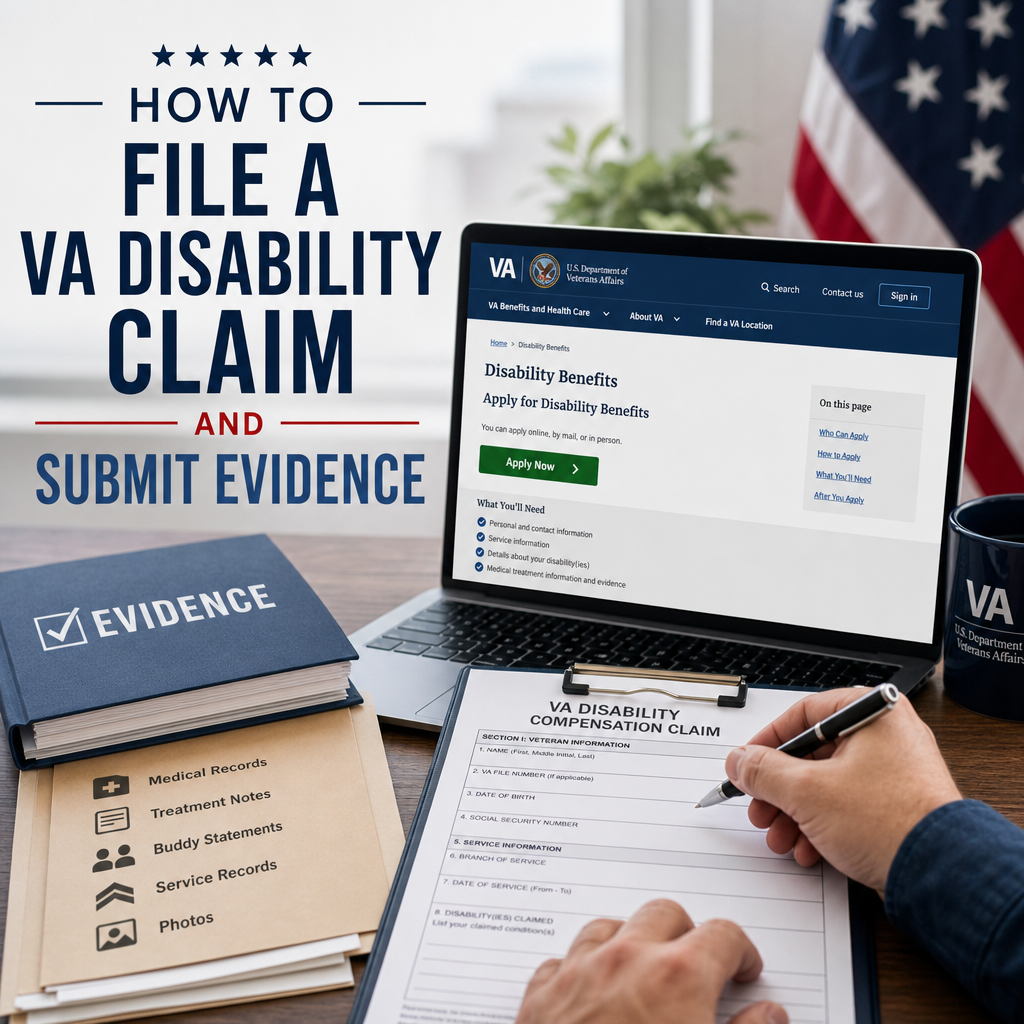
How to File a VA Disability Claim and Submit Evidence
Filing a VA disability claim can feel overwhelming, but it becomes much easier when you know what evidence the VA needs and how to present it clearly. In this guide, you’ll learn how to file a VA disability claim and submit evidence that helps strengthen your case from the start.
By: Emilly Adams on July 24, 2026
If you’re trying to understand how to file a VA disability claim and submit evidence, you’re not alone. Many veterans feel overwhelmed by the paperwork, deadlines, and medical records involved in the process. The good news is that the VA claims process becomes much more manageable when you break it into clear steps and gather the right evidence early.
A strong claim is not just about telling the VA that you have a disability. It’s about showing three things clearly:
You have a current condition.
Something happened in service that caused or worsened it.
There is a connection between the two.
This article walks you through the claims process, what evidence matters most, how to submit supporting documents, and how to avoid common mistakes that delay a decision.
What a VA Disability Claim Is
A VA disability claim is a formal request for benefits based on an illness, injury, or condition related to military service. The VA reviews your claim to determine whether your condition is service-connected and, if so, what disability rating to assign.
You may file a claim for:
A new condition that began during or after service
A condition made worse by service
A condition that has worsened since your last rating
A secondary condition caused by a service-connected disability
Understanding the basics helps you prepare a stronger claim from the start.
How to File a VA Disability Claim and Submit Evidence
The VA allows veterans to file a disability claim in several ways, but the overall process is similar no matter which method you use. Your goal is to submit a complete application with enough evidence for the VA to review without unnecessary delays.
Step 1: Gather Your Basic Information
Before you begin, collect the documents and personal details you’ll need. This includes:
Your military service information
Social Security number
Direct deposit information
Medical records and treatment notes
Names of hospitals, clinics, or doctors who treated you
Any existing VA claim numbers or decision letters
If you have multiple conditions, make a list of each one separately. That helps you stay organized and makes it easier to match evidence to each issue.
Step 2: Identify the Condition You’re Claiming
Be specific. Instead of filing a vague claim for “back pain,” explain the condition as clearly as possible, such as:
Lumbar strain
Herniated disc
Sciatica
PTSD
Hearing loss
Migraines
Knee injury
The more clearly you identify the condition, the easier it is to gather evidence that supports it.
Step 3: Choose the Right Form or Online Filing Method
Most veterans now file online through VA.gov, but paper forms are still available.
In person: Work with a VA regional office or accredited representative
The main application form for disability compensation is typically VA Form 21-526EZ for a standard claim. If you are filing for an increase or reopening a claim, the VA may use a different process depending on your situation.
Step 4: Submit Your Claim
When filing, you’ll enter your personal information, list your conditions, and provide details about how the condition is connected to service. If you file online, you can often upload supporting documents at the same time.
A complete claim should include:
Your completed application
A list of claimed conditions
Supporting medical evidence
Service records or incident reports, if available
Any lay statements from people who know about your condition
After submission, save your confirmation number or receipt. This proves when you filed.
What Evidence the VA Looks For
The VA does not decide claims based only on a diagnosis. It looks for evidence that supports the connection between your condition and your service. That’s why learning how to file a VA disability claim and submit evidence correctly matters so much.
Medical Evidence
Medical records are often the most important part of a claim. These can include:
Diagnosis notes
Treatment records
Hospital discharge summaries
Imaging results like X-rays or MRIs
Mental health evaluations
Prescriptions and therapy notes
If your condition has been treated by both VA and private doctors, include records from both sources.
Service Records
Service records can help prove that something happened during active duty, training, or deployment. Useful records may include:
Service treatment records
Personnel records
Line of duty reports
Injury reports
Deployment records
Awards or duty assignments that help explain exposure or events
If your records don’t explicitly mention the condition, they may still support your claim by showing where and when the injury or event occurred.
Lay Statements
Lay statements are written statements from people who observed your symptoms or know about the event that caused your condition. These can come from:
Family members
Friends
Fellow service members
Supervisors
Caregivers
A strong statement should describe what the person saw, when they saw it, and how your condition affects your daily life.
Personal Statement
Your own statement matters too. Explain:
When the condition began
What happened in service
How symptoms have continued
How the condition affects work, sleep, movement, or daily activities
Be honest and detailed, but keep it focused. Clear timelines and specific examples help the VA understand your claim.
How to Organize Evidence for a Stronger Claim
Good evidence is easier for the VA to review when it is organized well. Even if you have plenty of supporting documents, a messy submission can slow things down.
Create a Simple Evidence Packet
Consider separating your documents into categories:
Application form
Service records
Medical records
Lay statements
Personal statement
Other supporting documents
For each claimed condition, label the documents so the VA can connect them to the correct issue.
Match Evidence to Each Condition
If you are filing for multiple disabilities, avoid sending one general pile of records without explanation. Instead, connect the dots.
For example:
PTSD claim: include mental health treatment records, buddy statements, and a personal account of the stressful event
Knee claim: include service injury records, orthopedic notes, imaging, and statements about pain and limited mobility
Hearing loss claim: include audiology results, noise exposure history, and service records showing duty around loud equipment or firearms
Make Copies of Everything
Always keep copies of what you submit. Save digital files and paper copies. If you mail documents, use a trackable mailing method when possible.
When and How to Submit Additional Evidence
You do not always have to wait until the initial filing to submit evidence. In many cases, veterans can send additional evidence after the claim is filed, especially if new records become available.
Submit Evidence as Soon as You Have It
If you receive a new diagnosis, treatment note, or statement while your claim is pending, upload or mail it promptly. Earlier submission gives the VA more time to review it before making a decision.
Respond Quickly to VA Requests
The VA may send a letter asking for more information, a medical release, or updated evidence. Read these letters carefully and respond by the deadline listed.
If the VA requests a release form, use it to allow access to private treatment records. This can help the VA get records directly from your doctor or hospital.
Use the Right Upload or Mail Method
Depending on how you filed, you may be able to submit evidence through VA.gov or through an uploaded document portal. If mailing, include identifying information such as:
Your full name
VA file number or Social Security number
Claim type
A short cover note listing what is enclosed
That reduces the chance of misplaced documents.
Common Mistakes to Avoid
Even strong claims can be delayed by avoidable errors. When learning how to file a VA disability claim and submit evidence, it helps to know the most common problems.
Filing Without Enough Detail
If your claim does not explain the condition well, the VA may need additional information. Be specific about symptoms, onset, and service connection.
Missing Deadlines
If the VA asks for evidence or forms, don’t wait until the last minute. Missing a deadline can slow your claim or affect the effective date of benefits.
Forgetting Private Medical Records
Many veterans assume the VA can access all records automatically. That is not always true. If you were treated by private providers, you may need to submit the records yourself or complete a release form.
Submitting Unrelated Documents
Only send evidence that supports the condition you’re claiming. Too many unrelated pages can make the file harder to review.
Not Explaining Secondary Conditions
If one service-connected disability caused another problem, explain that relationship. For example, chronic knee pain may lead to back issues or altered gait problems. Secondary claims often need a clear medical explanation.
What Happens After You File
After filing, the VA reviews your application and evidence. In some cases, the VA may schedule a compensation and pension exam, also called a C&P exam.
The C&P Exam
This exam helps the VA evaluate your condition. The examiner may ask about:
Symptoms
Medical history
How the condition affects your daily life
Service-related events
Functional limitations
Be truthful and consistent. Describe your worst days, but do not exaggerate. Explain how often symptoms occur and how they limit your ability to work or function.
The Decision
The VA may:
Grant the claim
Deny the claim
Approve some conditions and deny others
Assign a rating that is lower or higher than expected
If you disagree with the decision, you may be able to file an appeal or request a review, depending on the type of decision and the available options.
Practical Example: Filing a Knee Injury Claim
Here’s a simple example of how evidence can support a claim.
Imagine you injured your knee during training and now have chronic pain and limited movement.
Your evidence packet might include:
A service treatment record showing the injury
Follow-up notes from a doctor after discharge
An MRI or orthopedic report
A personal statement describing flare-ups and limitations
A buddy statement from someone who saw you limping during service
Together, these documents help show that the injury happened, the condition still exists, and the symptoms affect your life today.
Tips for a Smoother Filing Process
A few simple habits can make a big difference:
Start gathering evidence early
Keep a timeline of symptoms and treatment
Use plain language in your personal statement
Include records from both VA and private providers
Double-check names, dates, and contact details
Save copies of everything you send
If you’re unsure what to submit, consider working with an accredited Veterans Service Organization representative, attorney, or claims agent.
Frequently Asked Questions
1. What is the best way to file a VA disability claim?
The easiest way for most veterans is to file online through VA.gov. The online system lets you complete the application, track your claim, and upload evidence in one place. You can also file by mail or with help from an accredited representative.
2. What evidence is most important for a VA disability claim?
The strongest claims usually include medical evidence, service records, and a clear explanation of how the condition is connected to service. Lay statements and your own personal statement can also be very helpful, especially when the condition is not fully documented in service records.
3. Can I submit evidence after I file my claim?
Yes. You can usually submit additional evidence after filing, especially if you receive new medical records or statements. It’s best to send important evidence as soon as possible so the VA can review it before making a decision.
4. Do I need a diagnosis before filing?
A diagnosis is very helpful, and in many cases it is necessary. However, if you believe you have a condition related to service, you should not delay getting started. If your records are incomplete, a VA exam or additional medical review may help confirm the condition.
5. What happens if the VA denies my claim?
If the VA denies your claim, review the decision carefully. You may be able to submit new evidence, request a higher-level review, or appeal the decision depending on the circumstances. Understanding why the claim was denied is the first step toward fixing the issue.
Filing for VA disability benefits can feel intimidating, but it becomes much more manageable when you focus on the essentials: identify the condition, connect it to your service, and submit clear supporting evidence. A complete claim includes medical records, service documentation, and personal or buddy statements that explain how the condition affects your life.
If you’re learning how to file a VA disability claim and submit evidence, remember that organization and accuracy matter. Take time to label your records, respond quickly to VA requests, and keep copies of everything. A thoughtful submission can reduce delays and help the VA understand your case more clearly.
The process may take time, but you do not have to approach it blindly. Start with the strongest evidence available, continue collecting records as you go, and seek accredited help if you need support. The more complete and consistent your claim, the better positioned you are to move forward with confidence and pursue the benefits you earned through your service.
Emily A, holds a Master's degree in Public Administration (MPA) and has over 7 years of experience researching federal and state assistance programs. She writes educational content focused on government benefits, public policy, and community resources, using information from official agencies to help readers understand available programs and eligibility requirements.